Road line marking is one of the most essential elements of any well-planned traffic infrastructure. Whether on a busy highway, a commercial facility, or a large parking area, clearly defined road markings guide drivers, protect pedestrians, and ensure smooth traffic flow. In the UAE, where infrastructure standards are high and road safety is a national priority, professional road line marking services play a vital role. This blog explores how road marking works, where it is applied, and why choosing experienced road marking contractors matters for your project. For businesses and project managers looking for dependable road line marking services in the UAE, understanding the full scope of what professional marking entails is the first step toward a compliant and lasting result.
Key Takeaways
- Road line marking improves safety and organization across highways, parking areas, and commercial zones.
- Different surfaces require different types of road markings, including thermoplastic, paint-based, and raised markings.
- Working with qualified road marking contractors ensures compliance with UAE traffic standards and long-lasting results.
What Is Road Line Marking and Why Does It Matter?
Road line marking refers to the application of painted or thermoplastic lines, symbols, and patterns on road surfaces to direct and control traffic. These markings communicate rules without the need for physical signs or personnel.
In the UAE, road markings must align with standards set by relevant transport and municipal authorities. Properly applied markings reduce confusion at intersections, guide lane discipline on highways, and define safe zones in parking and commercial areas. Poor or faded markings, on the other hand, can increase the risk of accidents and reduce operational efficiency on any site. Projects that prioritize traffic management solutions alongside road marking consistently achieve better safety outcomes.
According to the World Health Organization’s road safety guidelines, clear road delineation is a proven factor in reducing traffic-related incidents. This reinforces why investing in professional-grade road line marking is not just a compliance requirement but a safety priority.
Types of Road Markings Used Across Different Applications
Not all road markings serve the same purpose. The type of marking used depends on the surface, traffic volume, and regulatory requirements of each project.
Thermoplastic Road Markings for High-Traffic Highways
Thermoplastic markings are the most widely used solution for highway applications. These markings are heated and applied as a molten material that bonds firmly to the road surface. They offer excellent durability, reflectivity, and resistance to heavy vehicle loads.
For UAE highways, where traffic volume is consistently high and weather conditions include intense heat, thermoplastic road line marking is a preferred choice. It maintains visibility under sunlight and artificial lighting, making it suitable for both day and night driving conditions. Reflective glass beads are often embedded into the thermoplastic material to improve retroreflectivity, which is critical for nighttime safety.
Paint-Based Road Markings for Parking Areas
For parking areas and lower-traffic zones, paint-based road markings offer a cost-effective and versatile solution. Water-based or solvent-based paints can be applied quickly and are well-suited for interior or covered parking structures.
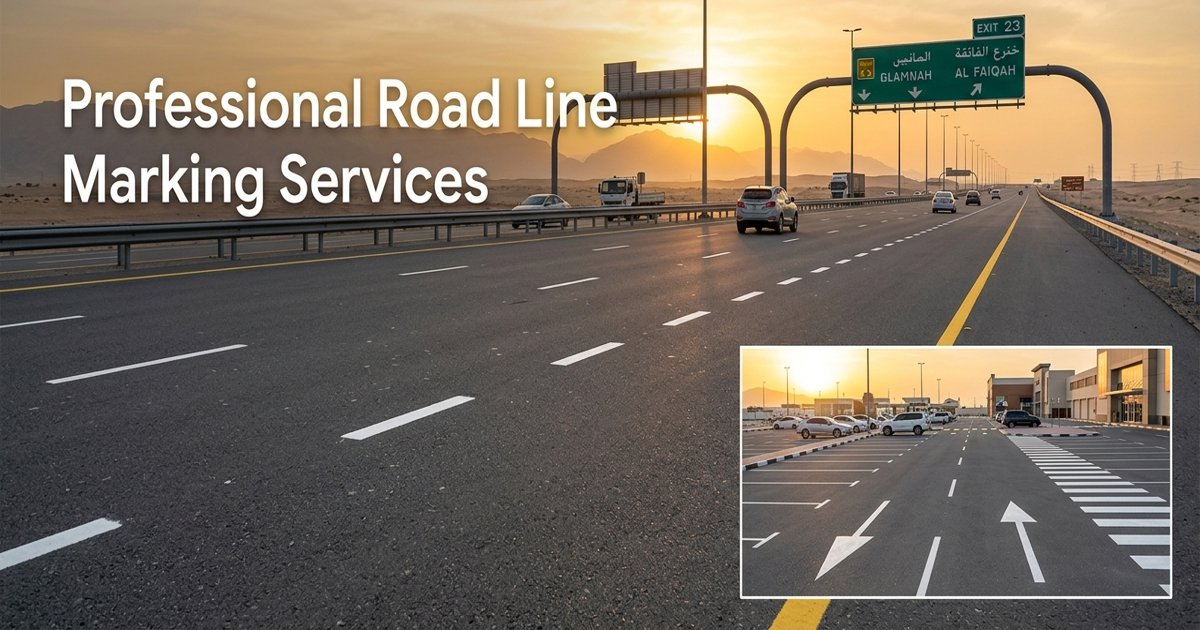
Parking lot markings typically include directional arrows, bay dividers, pedestrian walkway lines, disabled parking symbols, and no-stopping zones. A professional layout by experienced road marking contractors ensures that space is used efficiently, entry and exit flows are logical, and all regulatory symbols are correctly placed. This directly impacts user experience and facility management. Contractors who also offer comprehensive parking solutions can integrate road marking with broader layout planning for a fully optimized parking facility.
Road Line Marking for Commercial and Industrial Projects
Commercial facilities such as warehouses, logistics hubs, manufacturing plants, and retail complexes have unique marking requirements. These environments often have heavy vehicle movement, forklift traffic, and pedestrian zones that must be clearly separated.
In industrial settings, color-coded road line marking systems are commonly used. Yellow lines may indicate caution zones, red markings may define fire lanes, and white lines may separate vehicle and pedestrian corridors. Clear markings reduce internal accidents, improve workflow, and support regulatory inspections.
Key Factors That Define Quality Road Line Marking
Not all road line marking services deliver the same standard of quality. Several technical and material factors determine how well markings perform over time.
- Material selection: Thermoplastic, cold plastic, and paint each have different durability and application requirements.
- Surface preparation: A clean, dry, and properly primed road surface ensures strong adhesion and longer marking life.
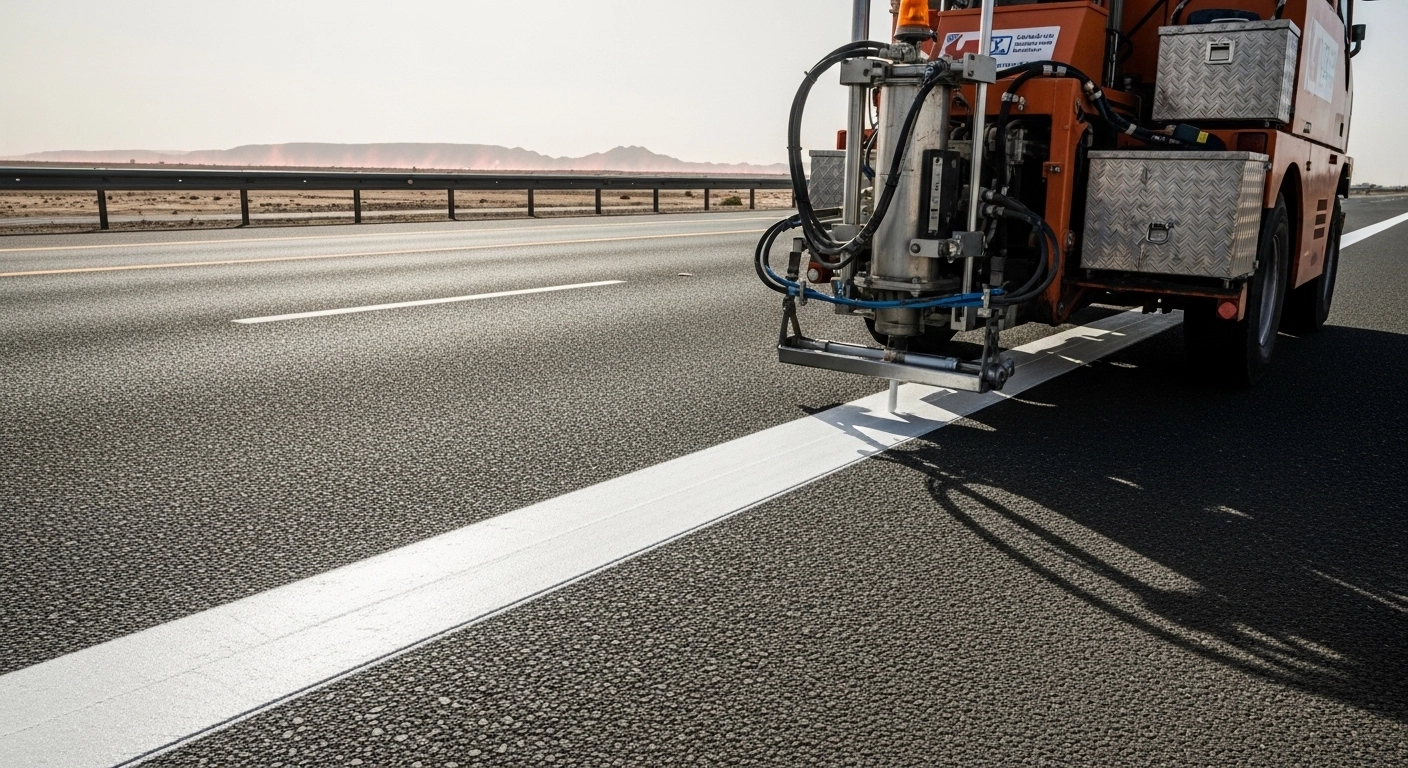
- Application technique: Machine-applied markings provide consistent width, thickness, and edge definition compared to manual methods.
- Retroreflectivity: Glass bead integration ensures visibility at night and in wet conditions.
- Regulatory compliance: Markings must conform to UAE traffic authority specifications in terms of color, dimensions, and placement.
Choosing qualified road marking contractors who understand these variables is essential for achieving results that last and meet standards. Professional-grade equipment and technical expertise are both necessary for delivering road line marking that performs reliably in the UAE’s demanding climate conditions. Teams that specialize in infrastructure maintenance services bring additional value by monitoring marking condition and scheduling timely reapplication to preserve compliance.
How Road Marking Contractors Plan and Execute Projects
A professional road line marking project begins long before the first line is applied. Contractors assess the site, review layout plans, and coordinate with traffic management teams if the work involves live roads.
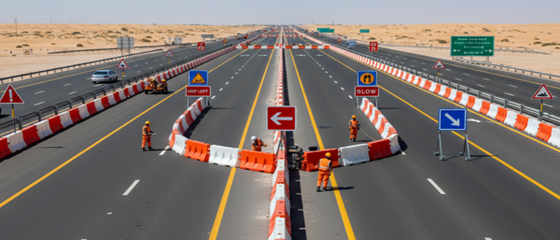
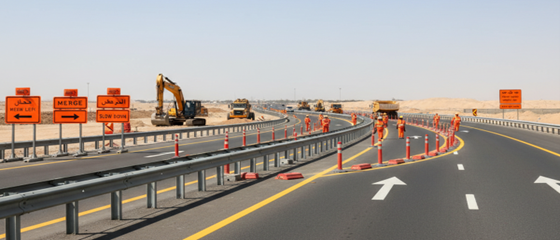
Site surveys help identify the current condition of the surface, existing markings that need to be removed, and access constraints. A detailed layout plan is then prepared, specifying marking types, dimensions, colors, and sequencing. For highway projects, lane closures and safety setups including traffic cones, barriers, and signage are arranged in advance.
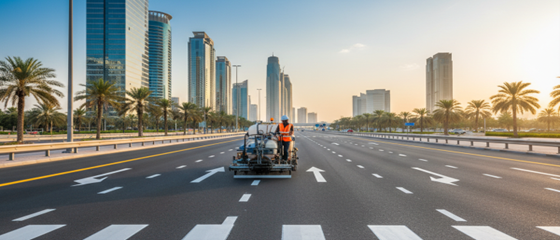
Once on site, marking machines apply lines with precision. Quality checks are conducted during and after application to confirm that all dimensions and placements meet the approved plan. Final inspections ensure that retroreflectivity levels and edge clarity meet the specified standards before the site is handed over.
Why UAE Infrastructure Projects Rely on Professional Road Line Marking
The UAE has one of the most developed road networks in the region. As the country continues to expand its urban and industrial infrastructure, the demand for professional road line marking services grows alongside it.
Government authorities, municipalities, and private developers all require road markings that comply with national traffic standards. Substandard markings fade quickly in the UAE’s harsh climate, creating safety hazards and requiring costly reapplication. Professional contractors use materials engineered for high-temperature environments and UV exposure, ensuring that markings remain clear and effective for extended periods.
Beyond highways, new residential communities, commercial complexes, and logistics hubs all require structured internal road layouts. Businesses and government bodies looking to set up compliant, durable, and clearly defined road systems benefit from engaging experienced road marking contractors who bring full-service capability to every project type.
Industry bodies such as the International Road Federation consistently highlight the critical role of road surface markings in national road safety programs, further underscoring the value of high-quality marking services.
Conclusion
Road line marking is far more than paint on asphalt. It is a structured system of communication that keeps roads safe, organized, and efficient. From thermoplastic markings on busy UAE highways to painted bay lines in commercial parking areas, every marking has a purpose and must be executed with precision. Working with professional road marking contractors ensures that your project meets regulatory standards, uses the right materials, and delivers results that last. Whether you manage a highway contract, a commercial facility, or a large parking area, investing in quality road line marking is an investment in safety, compliance, and long-term performance. To discuss your road marking requirements with a qualified team, contact Revive Middle East and get expert guidance tailored to your specific project needs.
Frequently Asked Questions
What is road line marking and how is it applied?
What types of road markings are used on highways?
How long do road markings typically last?
What qualifications should road marking contractors have?
What is the difference between thermoplastic and paint-based road markings?
Are road line marking services required for commercial properties in the UAE?
What colors are used in commercial road line marking systems?
How do road markings improve parking area safety?
Can road line marking be done on existing roads without full resurfacing?
What factors affect the cost of road line marking projects?