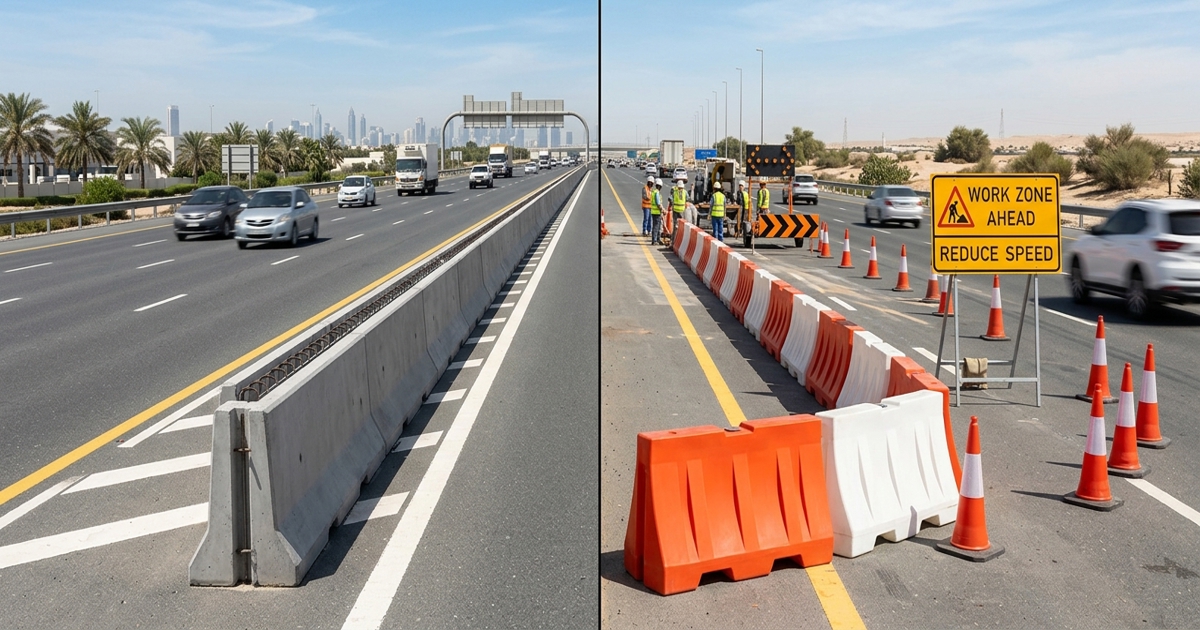
Traffic barriers are one of the most essential components of any road infrastructure or construction project. Whether you are managing a long-term highway installation or a short-term work zone, selecting the right type of barrier directly impacts road safety, project efficiency, and compliance with local regulations. In the UAE, where infrastructure development is rapid and ongoing, this decision carries even greater weight. This guide will walk you through the core differences between permanent and temporary barriers, helping you choose what works best for your project.
Key Takeaways
- Traffic barriers come in two main types: permanent and temporary, each suited for different project durations and risk levels, and both must meet UAE regulatory standards regardless of installation type.
- Choosing the right barrier type depends on project scope, traffic volume, budget, and the level of road safety required for your specific site conditions.
- Working with an experienced road safety contractor in the UAE ensures your barriers meet both safety and compliance requirements from the outset.
Understanding Traffic Barriers and Their Purpose
Traffic barriers serve a fundamental role in separating vehicle lanes, protecting pedestrians, and guiding drivers safely through construction zones, highways, and public spaces. They reduce the risk of vehicle intrusion into restricted areas and help manage traffic flow effectively.
In the UAE, authorities such as the Roads and Transport Authority (RTA) and various municipal bodies set strict guidelines on how and where barriers must be installed. According to the Roads and Transport Authority, road infrastructure must meet specific safety standards to minimize accidents and protect all road users. Understanding what type of barrier fits your project begins with knowing what each category offers.
What Are Permanent Traffic Barriers?
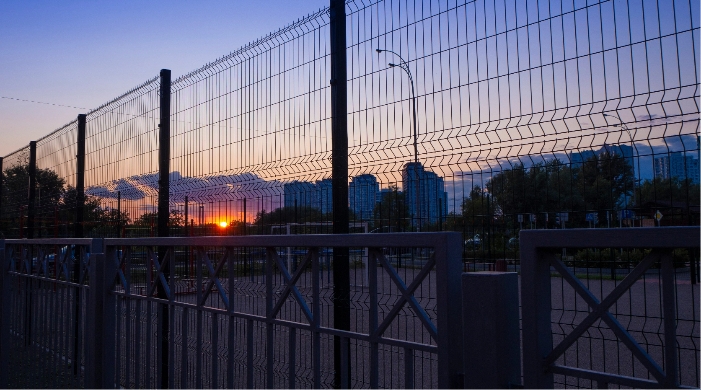
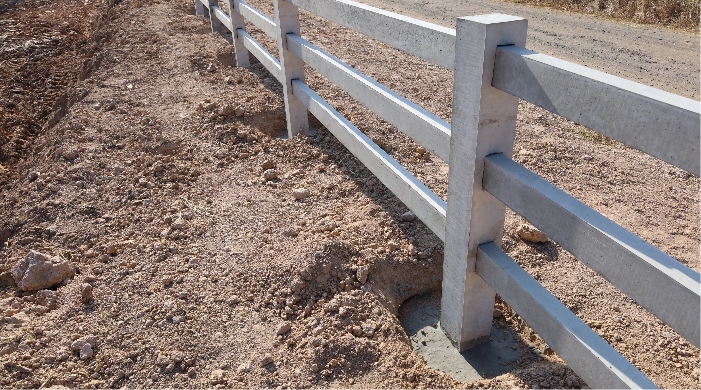
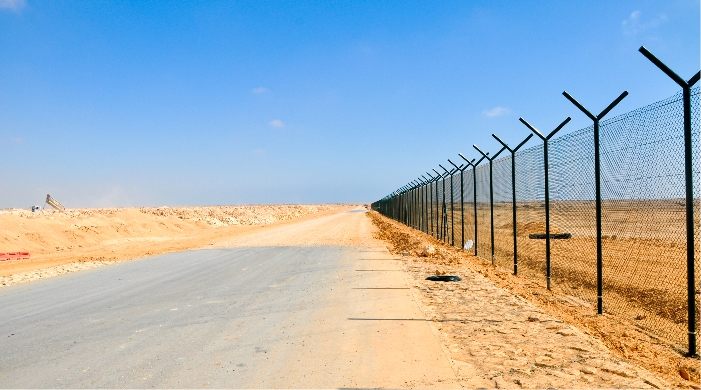
Permanent traffic barriers are fixed installations designed to remain in place for extended periods, often for the lifetime of a road or infrastructure project. They are typically constructed from reinforced concrete or heavy-gauge steel and are embedded into the road surface.
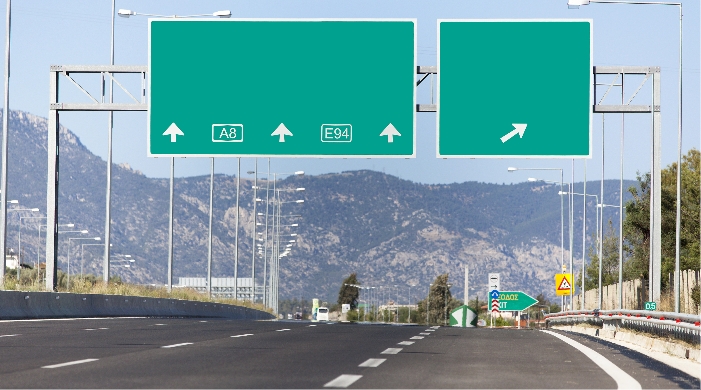
Common examples include concrete median barriers on highways, steel guardrails on bridges, and reinforced roadside barriers on major expressways. These structures are built to absorb significant impact forces and redirect vehicles away from dangerous areas.
Key Advantages of Permanent Barriers
- High durability and long service life
- Superior impact resistance for high-speed traffic environments
- Low long-term maintenance cost once installed
- Consistent road safety performance over years of use
- Ideal for high-volume, high-speed motorways and expressways
Permanent barriers are the preferred choice for projects where the infrastructure will remain unchanged for many years. They offer the highest level of protection in demanding road environments. However, they require significant upfront investment and cannot be easily relocated once installed.
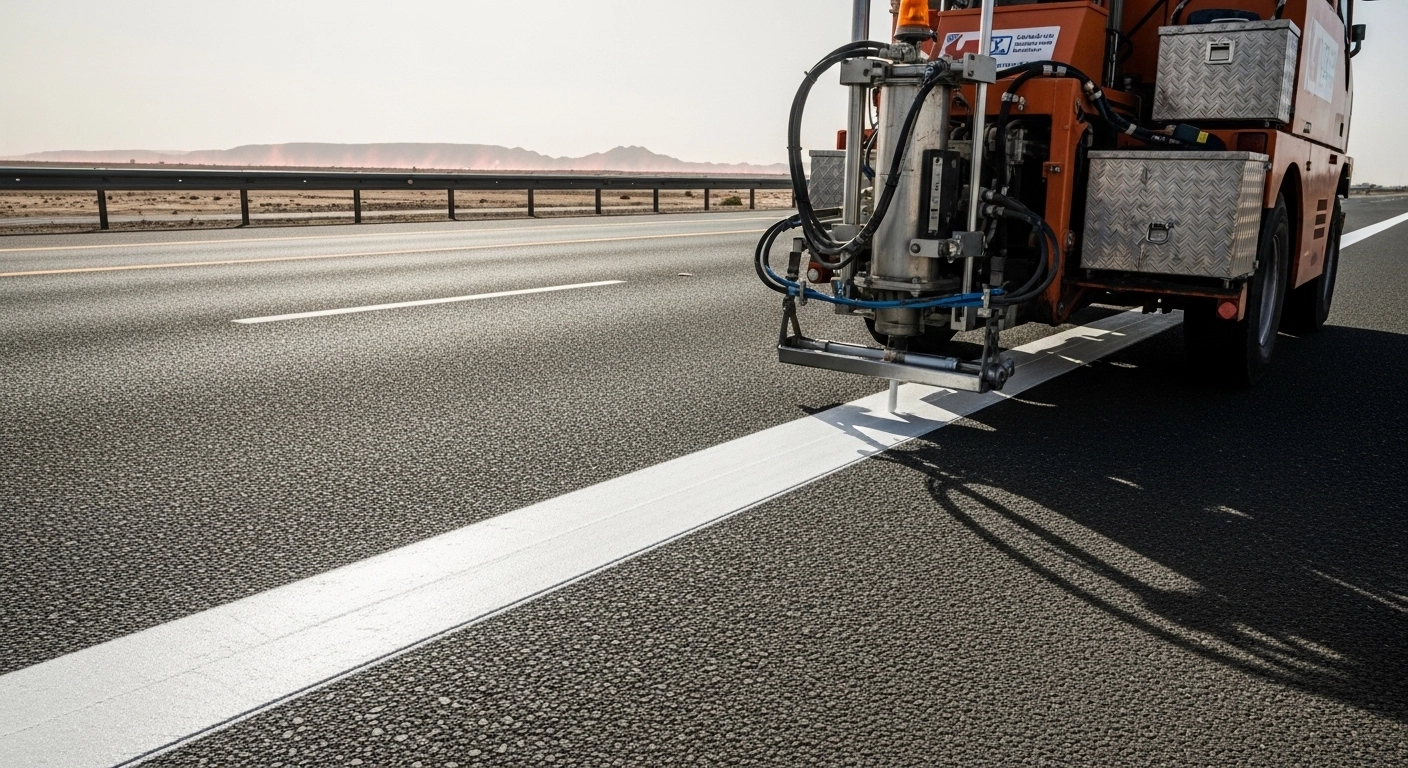
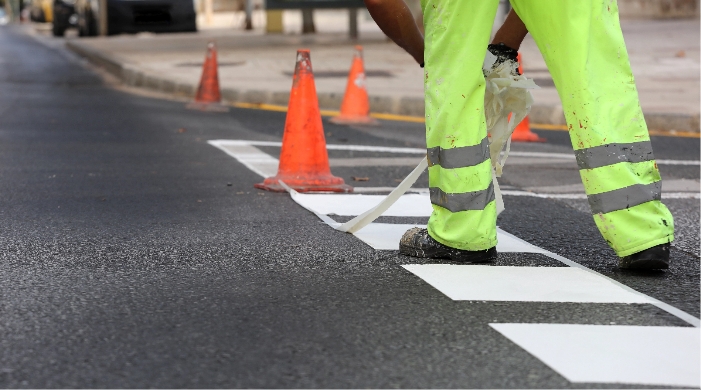
For projects involving guardrails, highway safety structures, or road furniture, understanding how these elements interact is critical. You can explore more about how quality road markings support traffic safety alongside barrier systems to create a comprehensive road safety environment.
What Are Temporary Traffic Barriers?
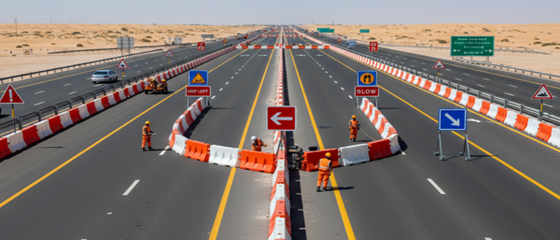
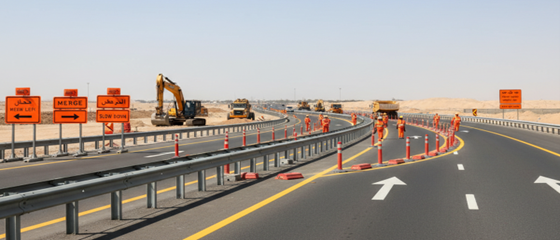
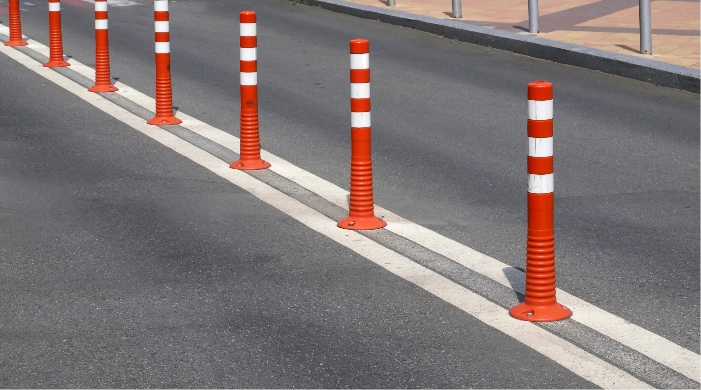
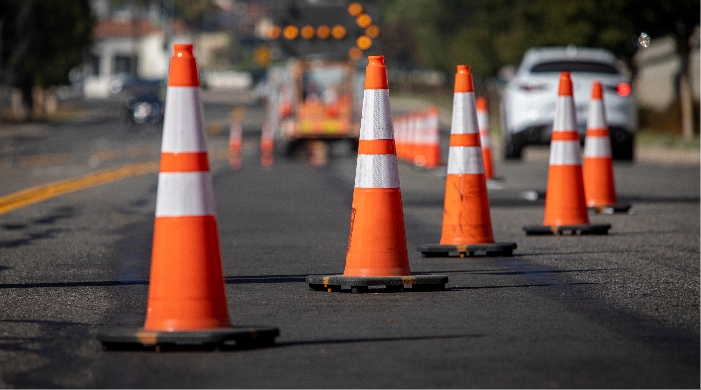
Temporary traffic barriers are movable, reusable structures designed for short to medium-term use. They are most commonly deployed in construction zones, event management scenarios, emergency road closures, and lane diversions.
Materials used for temporary barriers include high-density polyethylene (HDPE), water-filled plastic units, and lightweight steel frames. These barriers can be quickly installed, repositioned, and removed, making them highly flexible for dynamic project requirements.
Key Advantages of Temporary Safety Barriers
- Fast deployment and removal
- Reusable across multiple projects
- Lower upfront cost compared to permanent solutions
- Flexible placement for changing site conditions
- Suitable for short-duration road closures and construction zones
Temporary safety barriers are an ideal solution for contractors managing evolving project sites. They allow teams to adapt quickly to changing traffic patterns while maintaining a safe working environment. Water-filled barriers, for example, are popular in the UAE for their ease of transport and visible presence on road sites.
It is worth noting that even temporary barriers must comply with UAE safety standards. Working with a professional traffic management company in the UAE ensures that your temporary barrier setup meets all applicable regulatory requirements.
Permanent vs Temporary Traffic Barriers: A Direct Comparison
When evaluating which type of traffic barrier is right for your project, several factors must be considered. Below is a structured comparison to help guide your decision.
Project Duration and Scope
Permanent barriers are best suited for long-term infrastructure projects such as highways, bridges, and expressways that require fixed safety structures for decades. Temporary barriers are better for short-term needs such as construction phases, road maintenance work, or planned events that last days, weeks, or months.
Traffic Volume and Speed
High-speed, high-volume environments such as motorways demand the superior impact resistance of permanent concrete or steel barriers. Lower-speed construction zones and urban work areas can be effectively managed with temporary water-filled or HDPE barriers.
Cost Considerations
Permanent barriers carry higher upfront costs due to materials, installation, and civil works. However, their long-term cost per year of service is often lower. Temporary barriers have lower initial costs and offer reusability, making them cost-effective for multiple short-term projects.
Regulatory Compliance and Road Safety
Both permanent and temporary safety barriers must meet UAE infrastructure regulations. Non-compliance can result in project delays, fines, or increased accident risk. Consulting with experienced professionals ensures your barrier selection aligns with local authority standards. For a broader understanding of compliance in road infrastructure, refer to this detailed overview on UAE traffic management standards and compliance.
Flexibility and Repositioning Needs
If your project requires frequent adjustments to traffic flow or barrier placement, temporary barriers provide the necessary flexibility. Permanent barriers, once installed, require significant effort and cost to modify or remove.
How to Choose the Right Traffic Barrier for Your Project
Selecting the most appropriate traffic barrier is not a one-size-fits-all decision. Here are the key questions to ask before making your choice.
- How long will the barrier need to be in place?
- What is the maximum vehicle speed in the area?
- What level of impact resistance is required?
- What are the local regulatory requirements for this type of installation?
- What is the total project budget, including installation and maintenance?
- Does the project require the barrier to be repositioned during its lifespan?
Answering these questions with the guidance of a qualified road safety professional will help you make a confident, well-informed decision. Revive Middle East manufactures and supplies both permanent and temporary traffic management solutions tailored to UAE project requirements.
Understanding the full range of how traffic safety equipment reduces accidents and improves road safety can further inform your barrier selection process and help you build a safer, more compliant project site.
Industry Applications in the UAE
The UAE’s infrastructure landscape presents a wide variety of barrier use cases. Major highway expansion projects, urban road construction, and large-scale real estate developments all rely on properly selected and installed traffic barriers.
Government authorities and municipalities commonly specify permanent concrete barriers for national highway projects, while contractors working on phased developments or maintenance contracts rely heavily on temporary barrier solutions. Industrial parks, port access roads, and event venues are other environments where both types may be used simultaneously.
According to guidance from the Transportation Research Board, proper barrier selection based on site-specific conditions is one of the most effective ways to reduce road-related incidents in active construction zones.
Conclusion
Traffic barriers, whether permanent or temporary, are a non-negotiable part of any responsible road safety strategy. Permanent barriers deliver long-term strength and structural reliability for major highways and fixed infrastructure. Temporary safety barriers offer the flexibility, cost efficiency, and rapid deployment needed for construction zones and short-term projects. Both require careful planning, regulatory compliance, and professional installation to maximize road safety outcomes. If you are planning a road infrastructure project in the UAE and need expert guidance on barrier selection and installation, contact Revive Middle East to discuss your specific requirements with our experienced team.
Frequently Asked Questions
What is the main difference between permanent and temporary traffic barriers?
When should I use temporary safety barriers instead of permanent ones?
Are temporary traffic barriers compliant with UAE road safety regulations?
Yes, but compliance depends on the product specifications and installation method. Temporary traffic barriers must meet UAE authority guidelines, including those from the RTA. Partnering with certified suppliers ensures your barriers align with current UAE contractor safety equipment standards and regulations.
What materials are used for permanent traffic barriers in the UAE?
Permanent traffic barriers in the UAE are typically made from reinforced concrete or heavy-gauge steel. Concrete median barriers are common on highways, while steel guardrails are frequently used on bridges and elevated roads where high impact resistance is essential.
How long do temporary traffic barriers last before replacement?
What factors determine which type of traffic barrier I need?
Key factors include project duration, traffic speed and volume, budget, repositioning needs, and local road safety regulations. Consulting a professional helps ensure the selected barrier type suits the specific risk level and operational requirements of your UAE infrastructure project.
Can permanent and temporary traffic barriers be used together on the same project?
How do traffic barriers contribute to road safety in construction zones?
What is the installation process for permanent traffic barriers?
Permanent traffic barriers require civil engineering work including ground preparation, anchoring or embedding into the road surface, and precise alignment. Professional installation teams follow authority-approved drawings and specifications to ensure structural integrity, regulatory compliance, and long-term performance across high-traffic UAE road environments.
How do I get a quote for traffic barriers for a UAE project?