Thermoplastic road marking application methods are usually treated as a contractor decision, but they belong in the specification. The method chosen sets the film thickness that can physically be delivered, and it changes the edge quality, the output rate and the cost. Specifying a thickness without naming a method leaves an ambiguity that will be resolved in the contractor favour. This article explains the three methods and where each one belongs.
Key Takeaways
- Method and film thickness are linked. Spray cannot deliver a screed thickness, so specifying both together avoids disputes.
- Screed suits wide markings and symbols. Extrusion gives the best edge on long runs. Spray covers area quickly at lower build.
- Bead application timing matters more than the method itself for night time performance.
Why the Method Decides the Thickness
Each application method has a physical range of film thickness it can achieve, set by how the material is metered onto the road rather than by any choice on the day.
A screed box carries a reservoir of molten material and drags a shaped opening along the surface, so build is high by design. An extrusion unit pushes material through a die under pressure, which gives a similar build with sharper geometry. A spray unit atomises the material and lays it as a much thinner film, because that is the only way it can pass through the nozzle. Asking a spray unit to deliver a screed thickness is not a matter of turning up a dial.
This is why a specification that states a thickness but not a method creates an argument. Name both, and the requirement becomes enforceable.
Equipment scale is the other constraint the method brings with it. Screed and extrusion both require a heated kettle, transfer arrangements and a crew trained on that plant. Spray requires a different unit again. A contractor who owns only one type will tend to propose the method that suits their yard rather than the method that suits your specification, which is another reason to name it before tender.
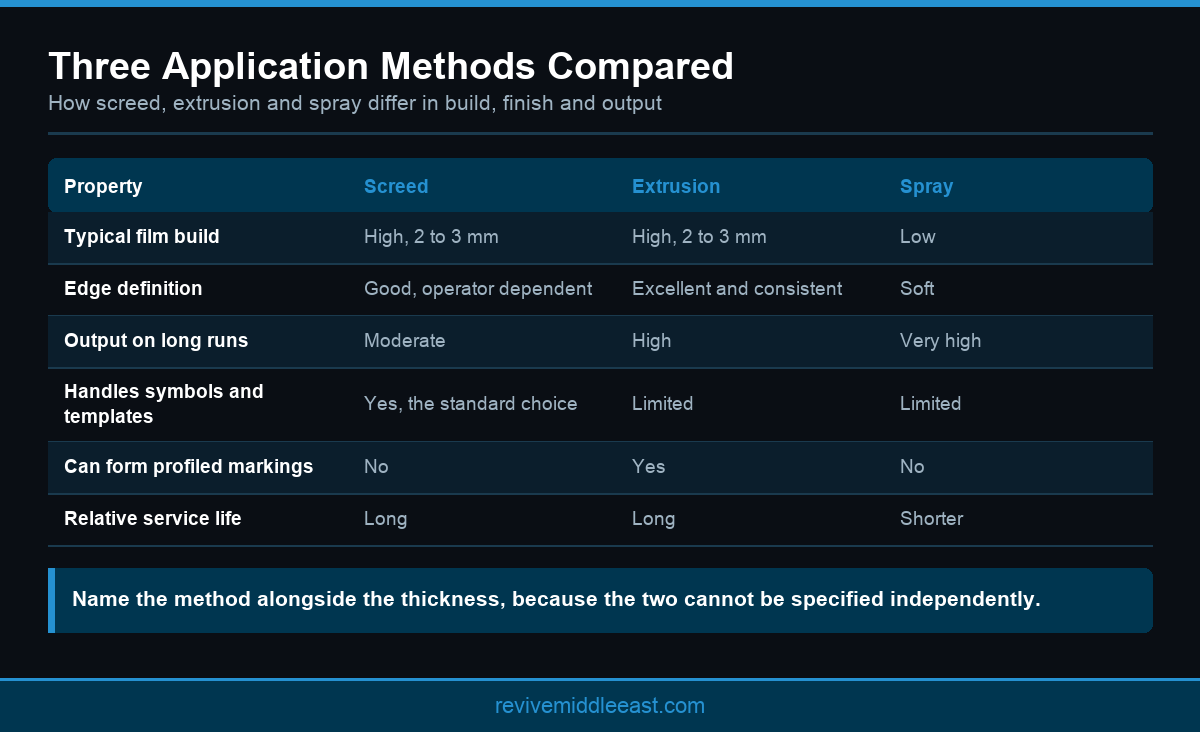
The three application methods compared on the properties that affect specification
Screed Application
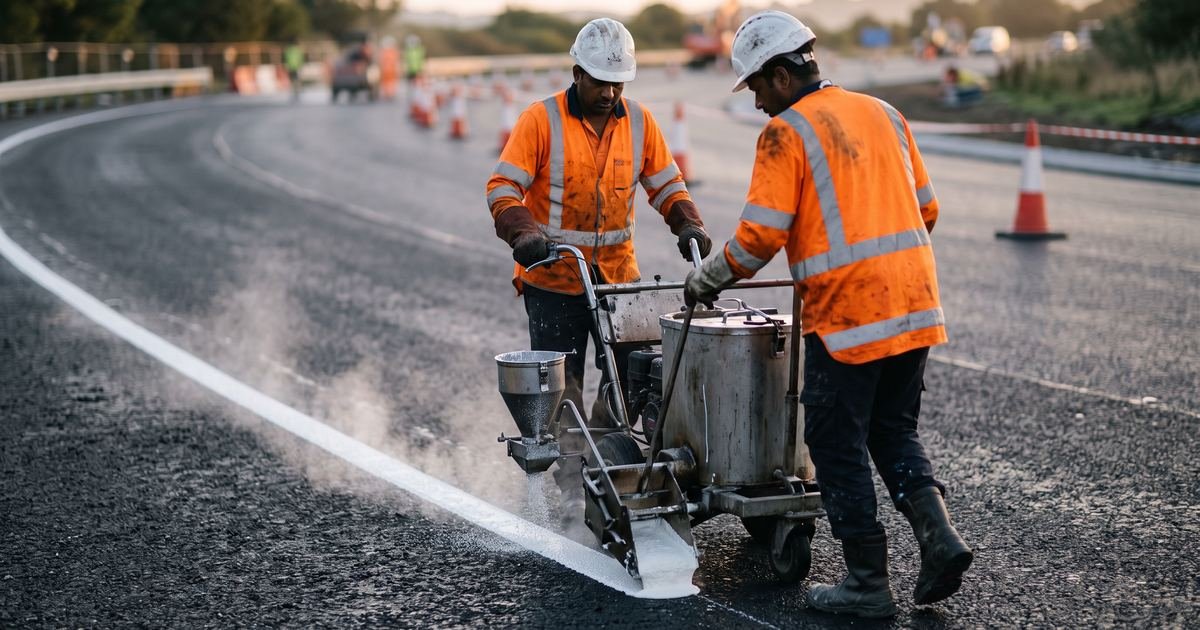
Screed application uses a heated box, either hand propelled or machine mounted, that is drawn along the marking line and lays material through a shaped aperture.
It delivers the highest build of the three methods, typically in the 2 to 3 mm range, which makes it the standard choice where longevity matters most. It handles wide markings comfortably and it is the practical method for symbols, arrows, letters and hatched areas where a template is used. Output per hour is lower than extrusion on long straight runs, and edge definition depends more on operator skill, but the depth of material it lays is hard to beat.
On most UAE schemes, screed is what goes down at junctions, on crossings, on stop bars and wherever a template is involved.
Template work deserves particular mention. Arrows, legends, cycle symbols and hatched areas are all laid through a template, and screed is the only method that handles them well at full film build. Where a scheme carries a lot of symbol work, the programme has to allow for it, because template marking is far slower per square metre than running a line.
Operator skill has more influence on screed work than on the other two methods. The box has to be drawn at a consistent speed to keep the film build even, and the finish at starts, stops and joins depends entirely on technique. On a scheme with a lot of screed work, the experience of the crew is a fair question to ask at tender stage.
Extrusion Application
Extrusion forces material through a shaped die under pressure, producing a line with very consistent geometry and a clean vertical edge.
Film thickness sits in a similar range to screed, so durability is comparable, but the finish is noticeably crisper and the output on long runs is higher. The die also allows profiled and ribbed markings to be formed, which raise sections of the line above the surrounding surface. Those profiles shed water better in rain, hold their retroreflectivity in wet conditions and can generate an audible warning when a vehicle crosses them.
For long carriageway runs, edge lines and lane lines on road line marking packages, extrusion is normally the most efficient choice.
Profiled markings are worth specifying deliberately rather than accepting as an option. Raised ribs formed by the die keep part of the line above a water film, which preserves night visibility in rain when a flat marking loses most of it. They also produce a rumble effect that alerts a driver drifting out of lane. The principle is the same one behind road surface markings generally, applied to wet weather performance.
Die condition is the equivalent variable for extrusion. A worn die produces a ragged edge and inconsistent build, and it deteriorates gradually enough that a crew can stop noticing. Asking when the dies were last replaced is a small question that says a good deal about how a contractor maintains its plant.
Spray Applied Thermoplastic
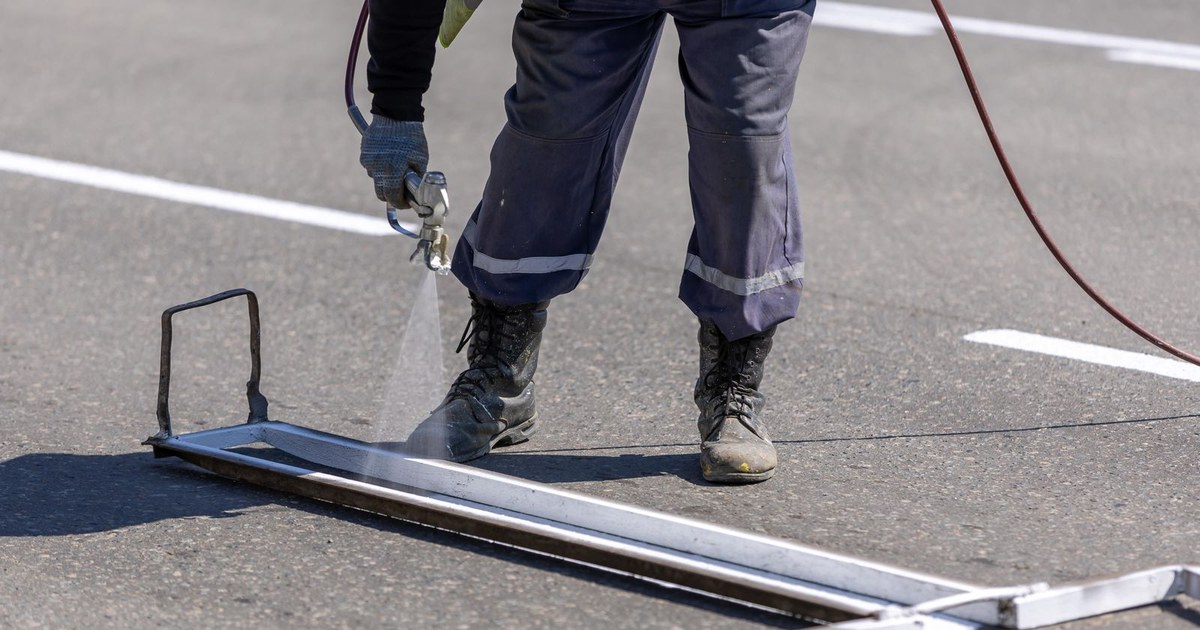
Spray application atomises molten material through a nozzle and lays it as a thin film across the surface, at a considerably lower build than the other two methods.
Its advantages are speed and coverage. Large areas can be marked quickly, the unit is lighter and more mobile, and material consumption per square metre is lower. The trade off is service life, since there is simply less material resisting abrasion and holding beads. Spray also copes better with slightly irregular surfaces, because it follows texture rather than bridging it.
It suits large area applications, refresh work over sound existing markings and situations where speed of installation outweighs longevity. It is not the right method for a marking expected to last for years under heavy traffic.
Spray also has a role that is often overlooked, which is marking large areas that are not lines at all. Coloured surfacing at bus boxes, hatched exclusion zones and wide area treatments are all impractical to screed and straightforward to spray. Judged on that work rather than on carriageway lines, its lower film build is a reasonable trade rather than a weakness.
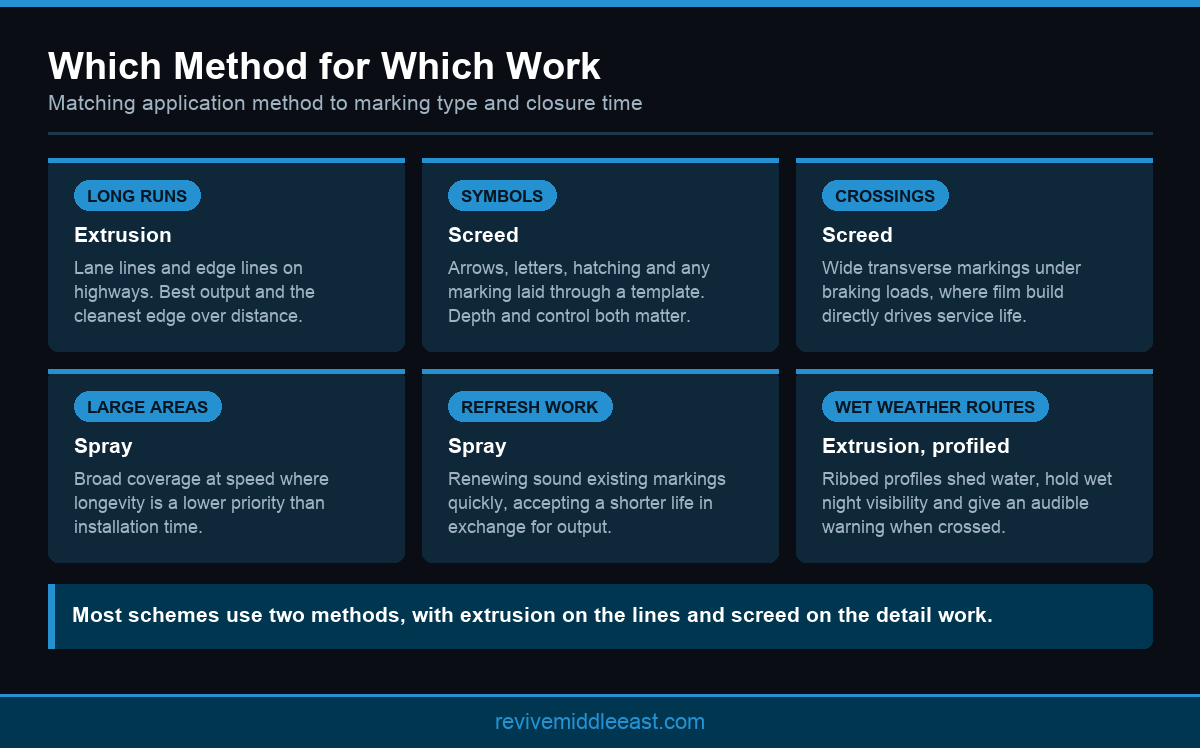
Selecting the application method by the type of marking being laid
Matching the Method to the Work
The choice comes down to three questions. How long must the marking last, what shape is it, and how much time is available inside the closure.
Long straight runs on a highway favour extrusion for output and edge quality. Symbols, arrows and wide transverse markings favour screed, because templates and depth both matter. Large area work and refresh passes favour spray, accepting the shorter life in exchange for speed. Many schemes use two methods on the same site, with extrusion running the lines and screed handling the detail work at junctions.
Whichever method is used, bead application timing is what decides night performance. Beads must land while the surface is still hot enough to accept them, as explained in our article on glass beads and retroreflectivity.
Finally, check that the method proposed matches the thickness the contractor has priced. A tender offering spray application against a screed thickness is either a misunderstanding or a deliberate ambiguity, and it is far easier to resolve at bid stage than after the first section is laid. The same logic applies across the whole thermoplastic specification.
Where a scheme is large enough to justify it, ask the contractor to lay a trial section using the proposed method and measure it before the main works begin. It settles thickness and finish questions cheaply, while there is still time to change the approach.
Naming the thermoplastic road marking application methods in the specification, alongside the required film thickness, removes the most common source of dispute at handover.
Conclusion
Thermoplastic road marking application methods are not interchangeable, and the choice belongs in the specification rather than on site. Screed delivers depth and handles templates. Extrusion delivers edge quality and output on long runs. Spray delivers speed at lower build. Name the method alongside the thickness and you remove the most common source of dispute at handover. Contact Revive Middle East Paints to discuss the right method for your works.