
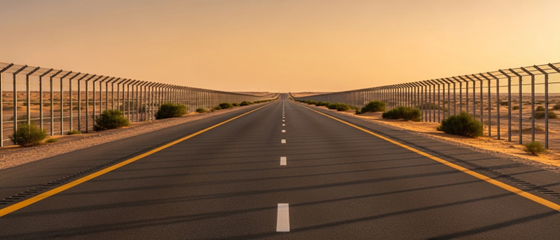
Camel fencing in the UAE infrastructure projects depend on is far more than a simple boundary marker. Across the UAE, where camels roam vast desert landscapes and highways cut through open terrain, animal intrusion on roads is a documented and serious concern. Installing proper camel fencing protects lives, preserves livestock, and supports responsible land management. This blog explores the top 7 benefits of camel fencing and why it is an essential investment for government bodies, municipalities, and private landowners across the Emirates.
Across the UAE, the intersection of expanding road networks and traditional camel farming has created a unique infrastructure challenge. As highways stretch deeper into desert regions, the risk of camel movement crossing into high-speed traffic zones continues to rise. This makes camel fencing in the UAE not just a precautionary measure, but a critical component of modern road safety and land management strategies, ensuring both human safety and animal protection are maintained side by side.
With increasing focus on road safety, infrastructure resilience, and efficient land use, authorities and landowners across the UAE are prioritizing preventive solutions over reactive measures. Camel fencing plays a key role in this shift, offering a practical and scalable way to manage risks while supporting the country’s long-term development goals.
Key Takeaways
- Camel fencing along UAE highways and desert roads reduces animal-vehicle collision risks significantly.
- Purpose-built fencing solutions support livestock management, land boundary protection, and regulatory compliance.
- Durable materials designed for harsh desert environments ensure long-term performance with minimal maintenance.
- Choosing a reliable camel fencing supplier ensures proper installation, compliance with UAE safety standards, and long-term performance across challenging terrains.
- Camel fencing improves operational efficiency by reducing the need for constant livestock monitoring and minimizing risks of property damage or road incidents.
- Strategically installed camel fencing enhances project value by improving safety standards, supporting infrastructure planning, and increasing land usability across the UAE.
What Is Camel Fencing and Why Does the UAE Need It?
Camel fencing is a specialized barrier system designed to contain camels and other large livestock within designated areas, preventing them from straying onto roads, farmlands, or urban zones.
The UAE is home to a significant camel population, with animals kept for racing, breeding, and cultural purposes. Many of these camels are housed on farms or open land adjacent to major highways and desert roads. Without proper fencing, stray camels pose serious collision risks for drivers, particularly during night hours when visibility is limited. UAE road safety authorities have identified animal-related road incidents as a recurring concern in rural and desert regions.
Camel fencing provides a structured, long-term solution to this challenge. It combines physical containment with property definition, making it a practical investment for a wide range of stakeholders. From municipalities and transport authorities to farm owners and real estate developers, the demand for robust fencing solutions continues to grow across the Emirates.
Top 7 Benefits of Installing Camel Fencing in the UAE
1.1.1. Prevents Camels from Straying onto Highways
One of the primary reasons camel fencing UAE projects are prioritized is highway safety. Stray camels on desert roads create severe collision hazards, particularly on high-speed routes connecting cities and towns. A single animal on a highway can cause fatal accidents, vehicle damage, and significant traffic disruption.
Properly installed camel fencing along road corridors acts as a physical deterrent, keeping livestock contained and away from traffic lanes. This is especially important in emirates such as Abu Dhabi, Dubai, and Ras Al Khaimah, where desert highways pass through active camel farming regions. Road and transport authorities across the UAE regularly invest in perimeter fencing to reduce these incidents and protect both drivers and animals.
1.1.2. Enhances Overall Road Safety
Beyond preventing direct collisions, camel fencing contributes to a broader road safety strategy. When used alongside guard rails and barriers, camel fencing creates multi-layer protection along vulnerable road stretches.
Road safety infrastructure in the UAE must address multiple risk scenarios, and animal intrusion is among the most unpredictable. Installing camel fencing along desert road perimeters reduces emergency braking incidents, lowers the risk of multi-vehicle pile-ups, and supports consistent traffic flow. For infrastructure contractors and municipalities, fencing is often part of a comprehensive road safety plan that includes signage, lighting, and barrier systems working in coordination.
1.1.3. Protects Agricultural and Farming Land
Camel fencing is not only a road safety tool; it plays a vital role in protecting agricultural areas as well. In the UAE, farms and cultivation zones are expanding as part of national food security initiatives. Stray camels grazing on crops or entering active farming areas can cause significant economic loss.
Farmers and agri-project managers use camel fencing to create secure perimeters around their land. This prevents damage to crops, irrigation systems, and farm equipment. A well-installed fence also reduces the time and labour involved in managing stray animals, allowing farm operations to run more efficiently. The long-term cost savings from protecting farmland make camel fencing a sound and practical investment.
1.1.4. Defines Clear Property and Land Boundaries
In a country experiencing rapid infrastructure development, clear land boundaries are essential. Camel fencing UAE landowners depend on to define property limits helps prevent encroachment disputes, supports legal land registration, and aids in structured project planning.
For real estate developers and construction companies, installing perimeter fencing at the start of a project establishes the site clearly and reduces the risk of livestock or unauthorized access. Municipalities and government-managed zones also use camel fencing to demarcate protected areas, utility corridors, and conservation zones. Clear boundaries make urban planning more transparent and less prone to costly disputes.
1.1.5. Built to Withstand Harsh Desert Conditions
Standard fencing materials are not always suited to the UAE’s extreme climate. High temperatures, sandstorms, UV radiation, and coastal humidity can quickly degrade inferior products. Camel fencing designed for UAE conditions typically uses galvanized steel, high-tensile wire, or treated metal posts that resist corrosion, heat, and physical impact from large animals.
This durability translates directly into lower maintenance costs and a longer service life. Infrastructure projects in the UAE require materials that perform reliably over years without frequent replacement. Investing in purpose-built camel fencing ensures that the barrier remains structurally sound through harsh desert conditions, delivering consistent containment performance over the long term.
1.1.6. Supports Responsible Livestock Management
For camel farmers, breeders, and those involved in the camel racing industry, proper fencing is a core component of daily livestock management. It allows owners to organize herds into separate paddocks, control breeding cycles, and monitor animal health more effectively.
Well-structured fencing systems reduce herd stress caused by overcrowding and uncontrolled movement. They also simplify routine management tasks, making it easier for caretakers to access specific animals for veterinary care or training. Camel fencing that is correctly planned and installed reflects a professional standard of animal husbandry, which is increasingly important as the UAE’s camel industry continues to grow. Explore our traffic management and infrastructure product range to understand how we support large-scale infrastructure requirements.
1.1.7. Supports Compliance with UAE Infrastructure Standards
UAE authorities maintain specific standards for road safety infrastructure, land use, and animal containment. Installing compliant camel fencing helps landowners, contractors, and project managers meet the requirements set by relevant government bodies, including transport authorities and municipal departments.
Non-compliance can result in penalties, project delays, or legal liability in the event of an accident caused by a stray animal. Using properly engineered camel fencing that meets UAE specifications reduces legal exposure and demonstrates a commitment to responsible infrastructure management. For government-facing and public sector projects, compliance is not optional; it is a baseline requirement.
Choosing the Right Camel Fencing Solution in the UAE
Selecting the right camel fencing depends on several factors, including terrain type, required fence height, proximity to roads, and the type of livestock being contained. Projects near highways typically require taller, more robust fencing with deeper foundation posts to withstand both animal pressure and desert wind loads.
Working with an experienced supplier ensures that the fencing system is correctly specified and professionally deployed. Proper installation matters as much as material quality. A fence that is poorly anchored or incorrectly tensioned can fail under pressure, negating its safety and containment benefits entirely.
Our team offers professional installation services across the UAE, covering everything from site assessment and design to full installation and after-service support. Each project is approached with the specific terrain and safety requirements in mind, ensuring that the final system delivers reliable, long-term performance.
Another important factor to consider is long-term maintenance and lifecycle cost. While initial pricing may vary across suppliers, investing in high-quality camel fencing in the UAE reduces the need for frequent repairs, replacements, and operational disruptions. Look for solutions that offer corrosion-resistant materials, strong anchoring systems, and professional installation support. A well-executed fencing system not only performs reliably over time but also ensures consistent safety standards, especially in high-risk zones such as highways and active livestock areas.
Conclusion
Camel fencing UAE infrastructure projects depend on serves a wide range of critical functions, from highway safety and livestock management to land boundary definition and regulatory compliance. In a country where desert roads, camel farms, and rapid development intersect, purpose-built fencing is not a luxury; it is a necessity. Whether you are a municipality, contractor, farm owner, or infrastructure developer, investing in quality camel fencing protects people, animals, and property. To learn more about available fencing systems and how we can support your project, contact us today.
In a rapidly developing nation like the UAE, where infrastructure expansion meets traditional livestock practices, investing in reliable camel fencing is a forward-thinking decision. It not only addresses immediate safety concerns but also contributes to long-term sustainability, operational efficiency, and regulatory alignment. As road networks expand and land use becomes more structured, the demand for high-quality camel fencing in the UAE will continue to grow, making it a critical component of modern infrastructure planning.
A well-planned camel fencing system not only improves immediate safety but also delivers long-term value through reduced risks, lower maintenance, and better land control. As infrastructure and development continue to expand across the UAE, investing in reliable fencing solutions becomes a strategic decision rather than just a preventive measure. Choosing the right materials and an experienced installation partner ensures your project meets both performance expectations and regulatory standards.
FAQ
Q1: What is camel fencing in the UAE?
Answer: Camel fencing in the UAE is a purpose-built barrier system designed to contain camels and prevent them from straying onto highways, farms, or urban areas. It is widely used by landowners, municipalities, and road authorities across the Emirates for livestock control and road safety management.
Q2: Why is camel fencing important for UAE road safety?
Answer: Camel fencing along UAE roads helps prevent animal-vehicle collisions on desert highways, where stray camels pose serious accident risks, especially at night. It creates a reliable physical barrier along road perimeters, reducing incidents and protecting both drivers and livestock from harm.
Q3: What materials are used in camel fencing for the UAE?
Answer: Camel fencing in the UAE typically uses galvanized steel posts, high-tensile wire, or treated metal panels. These materials are selected for their durability in extreme heat, resistance to corrosion, and ability to withstand sustained physical pressure from large and heavy livestock animals.
Q4: How tall should camel fencing be in the UAE?
Answer: Standard camel fencing in the UAE is generally between 1.8 and 2.4 metres in height, depending on terrain and purpose. Road-adjacent fencing often requires deeper foundation posts and greater height to ensure effective containment and alignment with infrastructure guidelines.
Q5: Who installs camel fencing in the UAE?
Answer: Camel fencing installation is carried out by specialist infrastructure companies with expertise in road safety and livestock containment. Quality providers offer site assessment, design, full installation, and ongoing maintenance, as seen through our completed projects across the UAE.
Q6: Is camel fencing required by UAE regulations?
Answer: While specific regulations vary by emirate, UAE road authorities and municipalities often mandate protective fencing along highways passing through camel farming regions. Compliance helps prevent accidents and reduces legal liability for landowners, contractors, and public sector project managers.
Q7: Can camel fencing be used to contain other livestock?
Answer: Yes, camel fencing systems can also contain other large livestock such as goats, sheep, and cattle. The fence design may be adjusted in terms of wire spacing and post height depending on the specific animal being managed and the terrain requirements of the site.
Q8: How long does camel fencing last in UAE desert conditions?
Answer: High-quality camel fencing made with galvanized or corrosion-resistant materials can last 15 to 25 years with proper installation and basic maintenance. UAE-specific environmental factors such as UV exposure, sandstorms, and temperature extremes are factored into the material and design selection.
Q9: What is the cost of installing camel fencing in the UAE?
Answer: The cost of camel fencing varies based on fence length, material type, terrain complexity, and installation requirements. A professional site assessment and detailed quotation is the most reliable way to determine accurate pricing for your specific project scope and location.
Q10: Where can I get camel fencing installed in the UAE?
Answer: Revive Middle East provides camel fencing and road safety infrastructure solutions across the UAE, offering manufacturing, supply, and installation services. Learn more about us and how we support government, municipal, and private sector projects throughout the Emirates.