
Safety equipment is the foundation of every well-managed road, traffic system, and construction site. In the UAE, where infrastructure development moves at a rapid pace, the demand for reliable road safety equipment has never been greater. From high-traffic urban corridors to large-scale construction zones, having the right tools and products in place can mean the difference between order and chaos, or worse, preventable accidents. This blog explores the essential categories of safety equipment, their applications, and why selecting the right supplier matters for long-term project success.
Key Takeaways
- Safety equipment is critical for protecting road users, workers, and infrastructure across the UAE.
- Traffic safety equipment such as guard rails, road signs, and road markings are core components of any effective traffic management system.
- Choosing a qualified manufacturer and installer ensures compliance, durability, and long-term performance on every project.
What Is Safety Equipment and Why Does It Matter?
Safety equipment refers to any product, system, or device designed to protect people and infrastructure from harm. In road and traffic contexts, this includes physical barriers, signage, road markings, lighting structures, and more. These products work together to create environments where drivers, pedestrians, and workers can operate with a reduced risk of injury.
In the UAE, rapid urban expansion and large-scale infrastructure projects have made road safety equipment a national priority. Authorities and contractors are increasingly required to meet strict standards for road design, construction zone protection, and traffic control. Without proper safety systems, projects face regulatory delays, liability risks, and higher incident rates. To understand how traffic safety equipment directly reduces accidents, visit how traffic safety equipment helps reduce accidents and improve road safety.
Core Categories of Road Safety Equipment
Road safety equipment is not a single product. It is an integrated system of tools and structures, each serving a specific function. Understanding these categories helps project managers, contractors, and government authorities make informed procurement decisions.
Traffic Signs and Road Signage
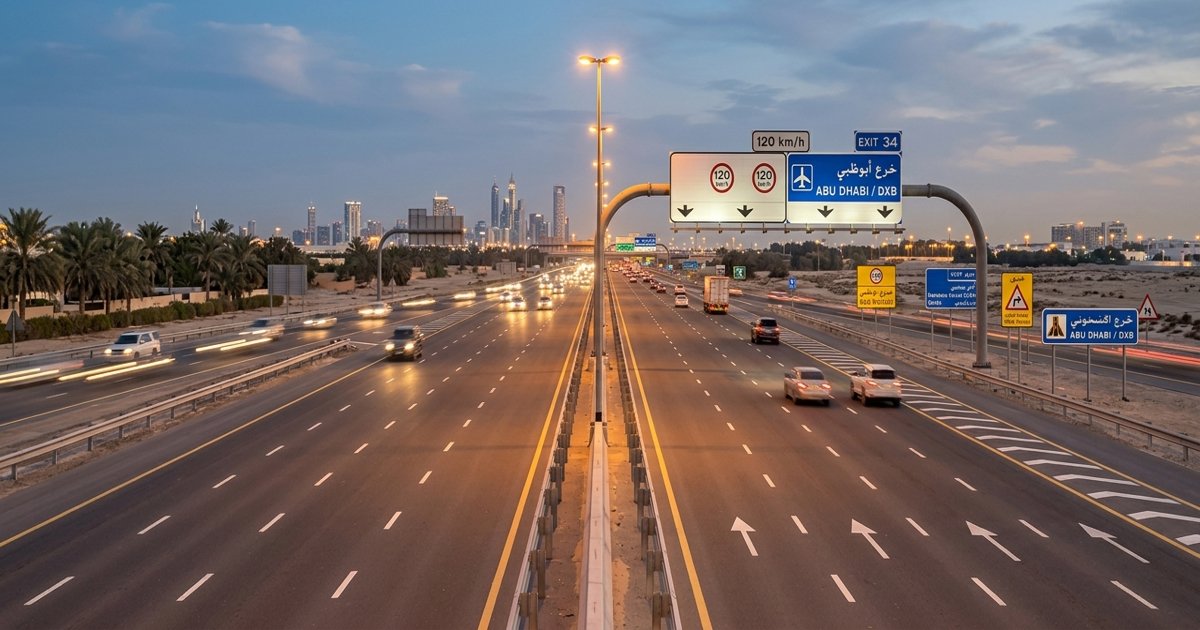
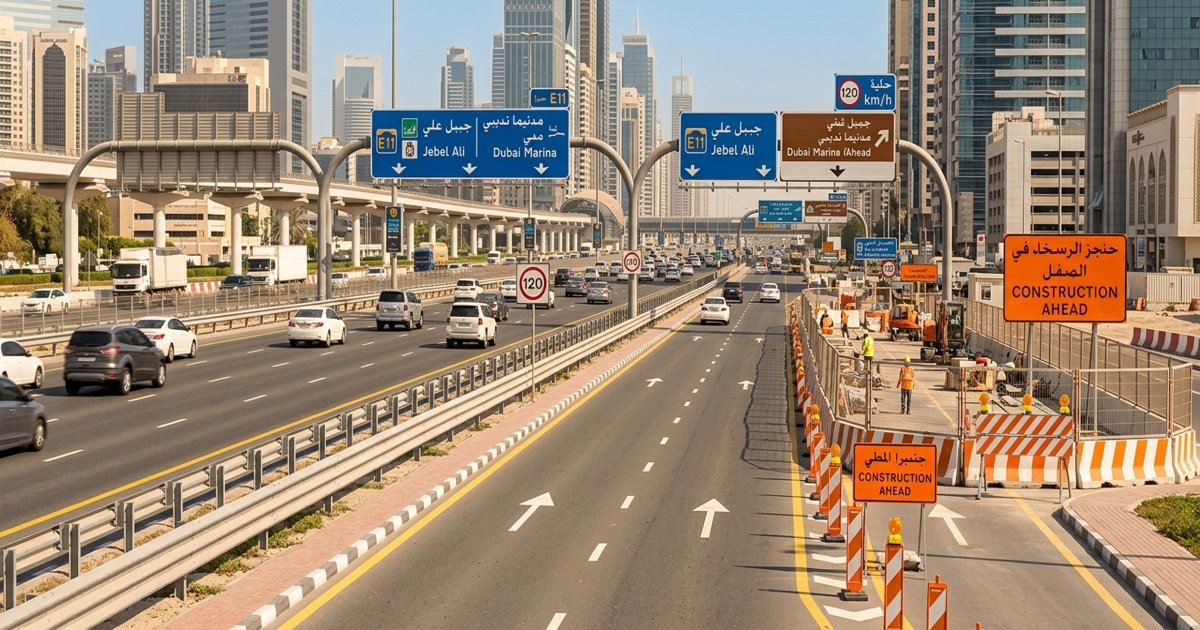
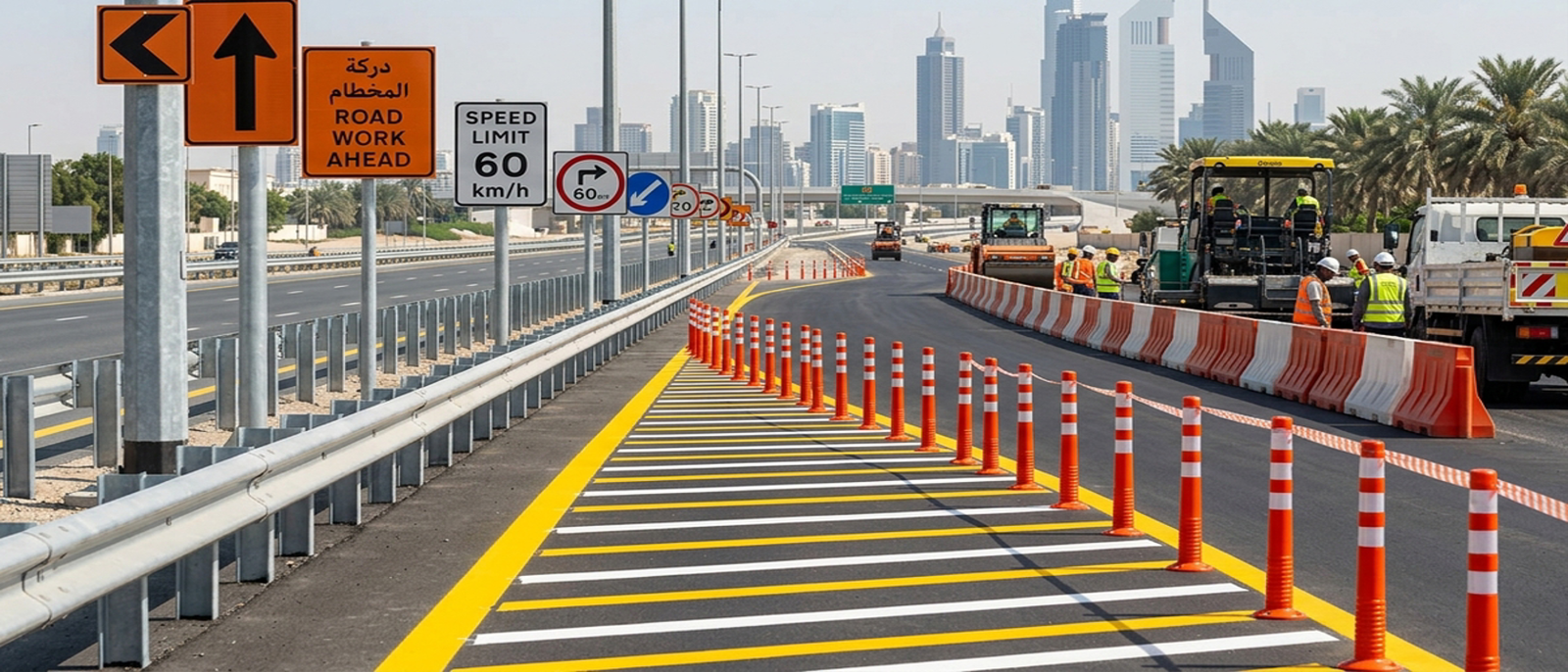
Traffic signs are among the most visible forms of safety equipment on any road network. They communicate speed limits, hazard warnings, directional guidance, and regulatory instructions to drivers. Properly designed and installed signs reduce driver confusion and help maintain traffic flow. In construction zones, temporary signage is equally important to redirect vehicles safely around active work areas. Revive Middle East manufactures and supplies a wide range of road signage solutions tailored to UAE infrastructure requirements.
Sign placement, reflectivity, and material quality all play a role in effectiveness. Signs that are poorly positioned or made from substandard materials lose their communicative value quickly, especially in the UAE’s intense sunlight and sandstorm conditions. Contractors and authorities should always source signage from manufacturers who understand local environmental demands. For a deeper look at installation best practices, refer to key factors to consider when installing traffic signs.
Guard Rails and Safety Barriers
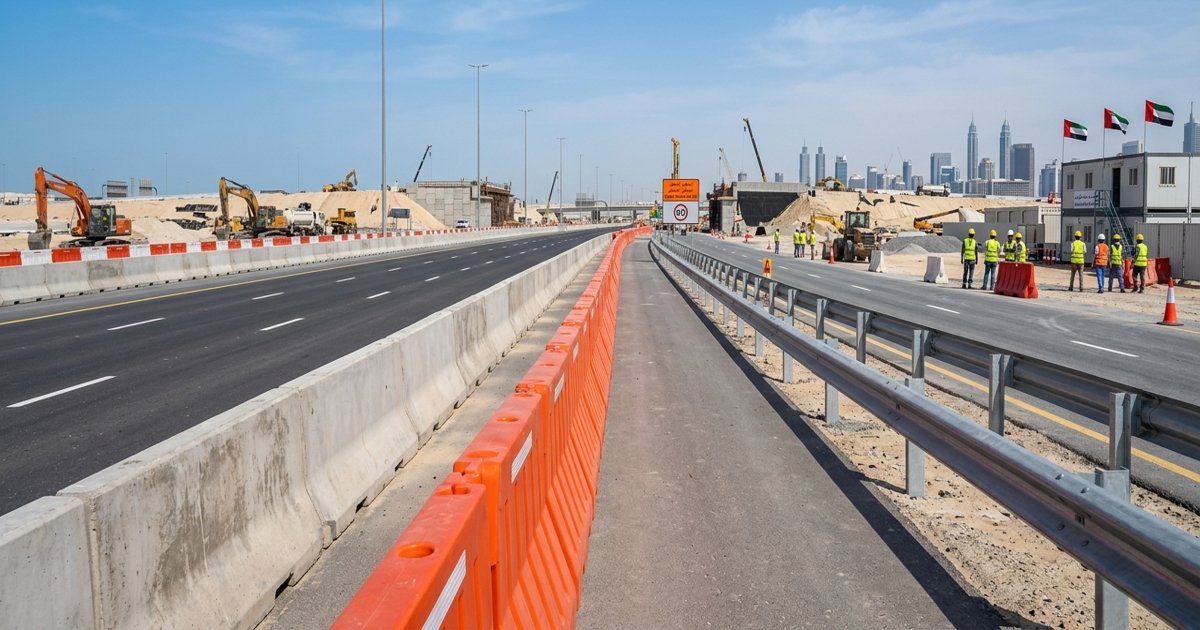
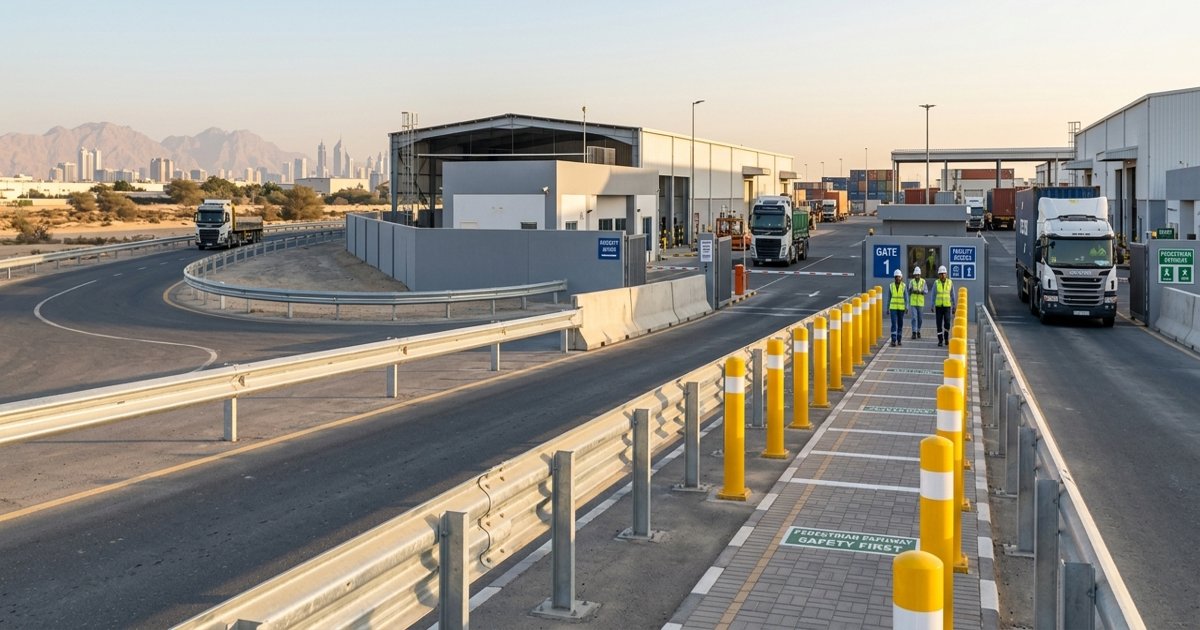
Guard rails and safety barriers are physical structures that prevent vehicles from crossing into oncoming lanes, off-road areas, or pedestrian zones. They are among the most critical components of road safety equipment on highways, bridges, and construction sites. When installed correctly, they absorb and redirect impact energy, significantly reducing the severity of accidents.
In industrial and commercial facilities, safety barriers serve a dual purpose: protecting infrastructure assets and managing vehicle movement within confined spaces. Revive Middle East supplies guard rails and barrier systems built to withstand the conditions typical of UAE roads and project sites. For more information on barrier applications in commercial settings, see road safety barriers for industrial and commercial facilities.
Road Line Marking
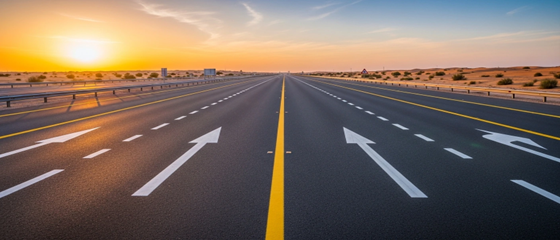
Road line marking is a foundational element of traffic management. Painted or thermoplastic markings on road surfaces define lanes, pedestrian crossings, stop lines, parking zones, and directional arrows. Without clear markings, drivers struggle to interpret road layouts, especially in complex intersections or multi-lane roads.
In the UAE, thermoplastic road marking materials are widely preferred due to their durability and high visibility under harsh weather conditions. Traffic safety equipment that includes quality road markings contributes directly to accident prevention and smoother traffic flow. Revive Middle East offers professional road line marking services using materials designed for long-lasting performance in extreme heat. The use of quality thermoplastic paint ensures markings remain visible and effective across the full project lifespan.
Street Lamp Poles and Road Furniture
Adequate lighting is a safety requirement, not an aesthetic one. Street lamp poles along highways, intersections, and construction zones ensure that road users can see clearly during nighttime conditions. Poor lighting is a contributing factor in a significant number of nighttime road incidents.
Road furniture, which includes items like bollards, rumble strips, delineators, and channel markers, helps guide traffic and signal changes in road conditions. These items work as part of a broader safety equipment system, reinforcing the messages communicated by signs and markings. Selecting road furniture that meets UAE specifications is essential for durability and compliance.
Safety Equipment for Construction Project Zones
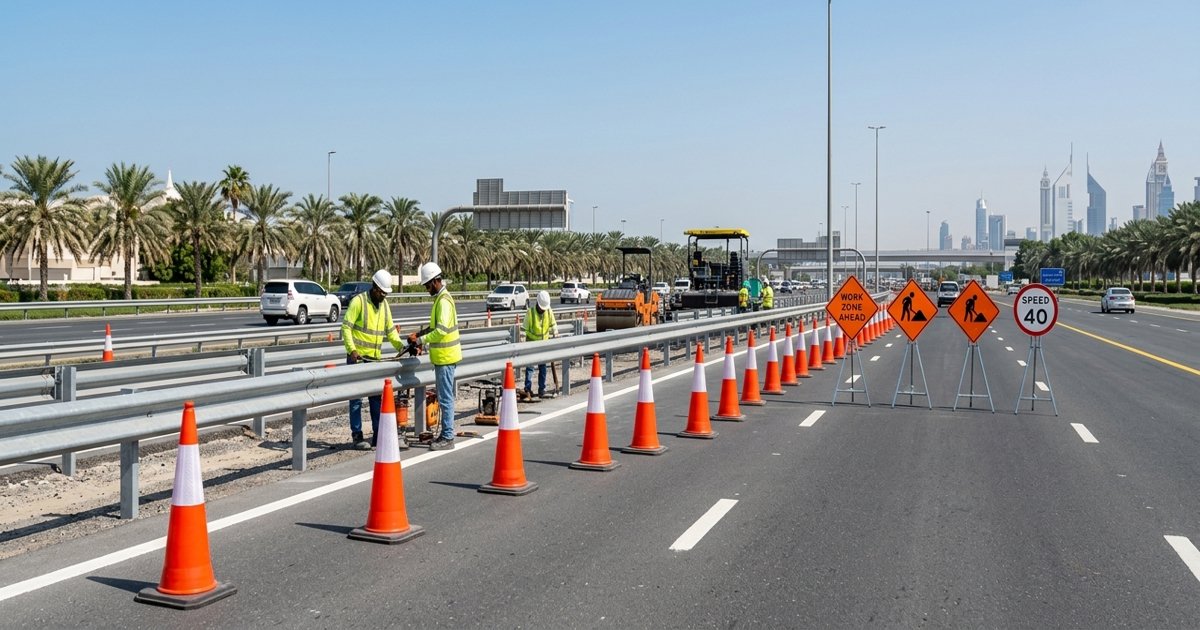
Construction zones present unique safety challenges. Active worksites exist alongside live traffic, creating hazard exposure for both workers and road users. Effective traffic safety equipment in these environments must account for changing site conditions, shifting work boundaries, and diverse road user types.
Key safety equipment used in construction zones includes temporary barriers, cones, warning signs, delineators, and reflective gear. These products must be set up in accordance with local traffic management plans approved by relevant authorities. Compliance with UAE safety standards is not optional. It is a legal requirement for contractors operating on public roads or near public infrastructure. For a comprehensive overview of the standards contractors must follow, refer to safety equipment standards every UAE contractor should know.
The International Road Federation consistently highlights that standardized safety measures in construction zones reduce worker fatalities and public road incidents by a measurable margin. Planning these zones with appropriate equipment is not just good practice. It is a professional and legal obligation.
How to Choose the Right Safety Equipment Supplier in the UAE
Not all suppliers offer the same level of product quality, compliance assurance, or after-service support. When selecting a supplier for road safety equipment in the UAE, consider the following criteria.
- Manufacturing capability: Does the supplier produce their own products or resell imported goods? Local manufacturing often means faster delivery and the ability to customize products for specific project needs.
- Compliance knowledge: Does the supplier understand UAE regulatory requirements and design products accordingly?
- Installation services: Can the supplier handle professional installation, or will you need to coordinate a separate contractor?
- After-service support: Are maintenance and replacement services available after initial installation?
- Project experience: Has the supplier successfully delivered products for comparable infrastructure projects?
Revive Middle East checks all of these boxes. As a UAE-based manufacturer and supplier, the company provides end-to-end solutions covering production, supply, installation, and ongoing service support. Their portfolio spans government infrastructure projects, commercial developments, and industrial facilities. Explore the full range of offerings on the products page.
The Role of Traffic Management in Road Safety
Effective traffic management is inseparable from safety equipment. Systems that regulate vehicle flow, warn of hazards, and delineate road boundaries collectively reduce congestion, conflict points, and accident risk. This is why infrastructure planners treat traffic management as a discipline rather than a checklist item.
In the UAE, municipalities and road authorities work closely with certified suppliers to design and implement traffic management systems that meet national standards. The integration of signs, markings, barriers, and lighting into a unified plan is what makes roads genuinely safer. According to the World Health Organization, road traffic injuries remain a leading cause of death globally, and infrastructure-based interventions are among the most effective prevention strategies available.
For project managers and contractors, understanding the full scope of traffic safety equipment requirements before a project begins helps avoid costly retrofits and regulatory penalties later. Working with an experienced partner from the outset is always the smarter investment.
Conclusion
Safety equipment is not a commodity purchase. It is a critical investment in public protection, regulatory compliance, and project success. Whether you are managing a highway expansion, setting up a construction zone, or upgrading traffic infrastructure in a commercial development, the quality and suitability of your road safety equipment will determine outcomes for years to come. Revive Middle East offers UAE-based manufacturing, supply, and installation services across the full spectrum of traffic and road safety products. Contact the team today to discuss your project requirements and find solutions built for the UAE environment.
Frequently Asked Questions
What types of safety equipment are used in road construction zones?
Road construction zones typically require temporary barriers, cones, delineators, warning signs, and reflective gear. These products protect both workers and road users from hazards caused by active construction activities. Proper setup must follow approved traffic management plans aligned with UAE regulatory requirements.
Why is thermoplastic paint preferred for road line marking in the UAE?
Thermoplastic paint is preferred because it offers superior durability and high visibility in extreme heat and sandstorm conditions common across the UAE. It bonds firmly to road surfaces and maintains its reflective properties far longer than standard road paint, reducing maintenance costs over time.
How do guard rails improve highway safety?
Guard rails act as physical barriers that absorb and redirect vehicle impact energy during collisions. They prevent vehicles from crossing into oncoming lanes or leaving the road entirely. When correctly installed, they significantly reduce the severity of accidents on highways, bridges, and sharp curves.
What is the difference between road safety equipment and traffic safety equipment?
Road safety equipment refers broadly to all products protecting road users and infrastructure, including barriers and lighting. Traffic safety equipment focuses specifically on tools that regulate and guide vehicle flow, such as signs, road markings, and lane delineators. Both categories overlap and work together in practice.
How do I ensure my construction site meets UAE safety equipment standards?
Contractors should review the safety equipment standards every UAE contractor should know before starting any project near public roads. Sourcing compliant products from a certified local manufacturer like Revive Middle East also helps ensure your site meets all regulatory requirements.
What role does road signage play in traffic management?
Road signage communicates critical information to drivers, including speed limits, hazard warnings, and directional guidance. In traffic management systems, signs are the primary tool for regulating driver behavior. Well-designed and correctly positioned signage reduces confusion, prevents accidents, and maintains smooth traffic flow on all road types.
Can safety barriers be used in commercial and industrial facilities?
Yes, safety barriers are widely used in warehouses, parking structures, and industrial sites to manage vehicle movement and protect infrastructure. They prevent accidental damage to walls, equipment, and pedestrian zones. Revive Middle East supplies barrier systems suited for both road and facility applications across the UAE.
How often should road line markings be maintained or replaced?
Road line markings should be inspected regularly, typically every 12 to 24 months depending on traffic volume and environmental conditions. Faded or damaged markings reduce driver guidance and increase accident risk. Using quality thermoplastic materials extends marking lifespan, as detailed in guidance on the importance of clear road line marking in high traffic areas.
What factors affect the durability of road safety equipment in the UAE?
Key factors include material quality, UV resistance, heat tolerance, and installation precision. The UAE climate features extreme temperatures, sand abrasion, and intense sunlight that degrade inferior materials quickly. Selecting products manufactured specifically for these conditions and installed by experienced professionals extends equipment lifespan considerably.
Does Revive Middle East handle both supply and installation of safety equipment?
Yes, Revive Middle East provides end-to-end services covering manufacturing, supply, professional installation, and after-service support. Clients managing complex infrastructure work can explore completed examples through the our projects portfolio, which demonstrates the full scope of road and traffic safety solutions delivered across the UAE.