Complete Guide to Road Line Marking Standards and Types

Road line marking is one of the most essential elements of any functional road network. Without clear, well-maintained markings, drivers would struggle to navigate lanes, intersections, crosswalks, and speed zones safely. In the UAE, where road infrastructure standards are among the highest in the region, proper road marking systems are not optional. They are a regulatory requirement. This guide walks through the key types of road line markings, the standards that govern them, the materials used, and why working with a qualified road marking company in the UAE matters for every infrastructure project.

Key Takeaways

  • Road line marking plays a vital role in directing traffic, preventing collisions, and organizing road use across all types of roads in the UAE.
  • Different road marking types serve specific purposes, from lane dividers and stop lines to pedestrian crossings and hazard warnings.
  • Material choice, retroreflectivity standards, and regulatory compliance are critical factors when planning any road marking project in the UAE.

What Is Road Line Marking and Why Does It Matter

Road line marking refers to the painted or thermoplastic symbols, lines, and patterns applied to road surfaces to guide, warn, and inform drivers and pedestrians. These markings work in combination with traffic signs and signals to create a complete traffic management system. Understanding how safety signage and road markings complement each other is essential for designing effective traffic environments.

In the UAE, road markings must comply with standards set by relevant authorities including the Ministry of Infrastructure Development and local road authorities. Poor or faded markings lead to confusion, near-misses, and accidents. Regular inspection and timely reapplication are essential to road safety performance.

According to research published by the World Health Organization, clear road markings directly contribute to reduced traffic fatality rates, particularly in high-speed and complex intersection environments. This underscores why investing in quality marking materials and professional installation is not just a compliance issue but a public safety priority. For a deeper look at why standards matter, see why quality road markings are critical for traffic safety.

Types of Road Line Markings Used in UAE Roads

Understanding the different categories of road line marking helps engineers, contractors, and project managers select the right marking for each application. Below are the primary types commonly used across UAE road infrastructure. Reviewing established road marking guidelines and best practices is a valuable step before planning any new marking project.

Longitudinal Markings for Lane Management

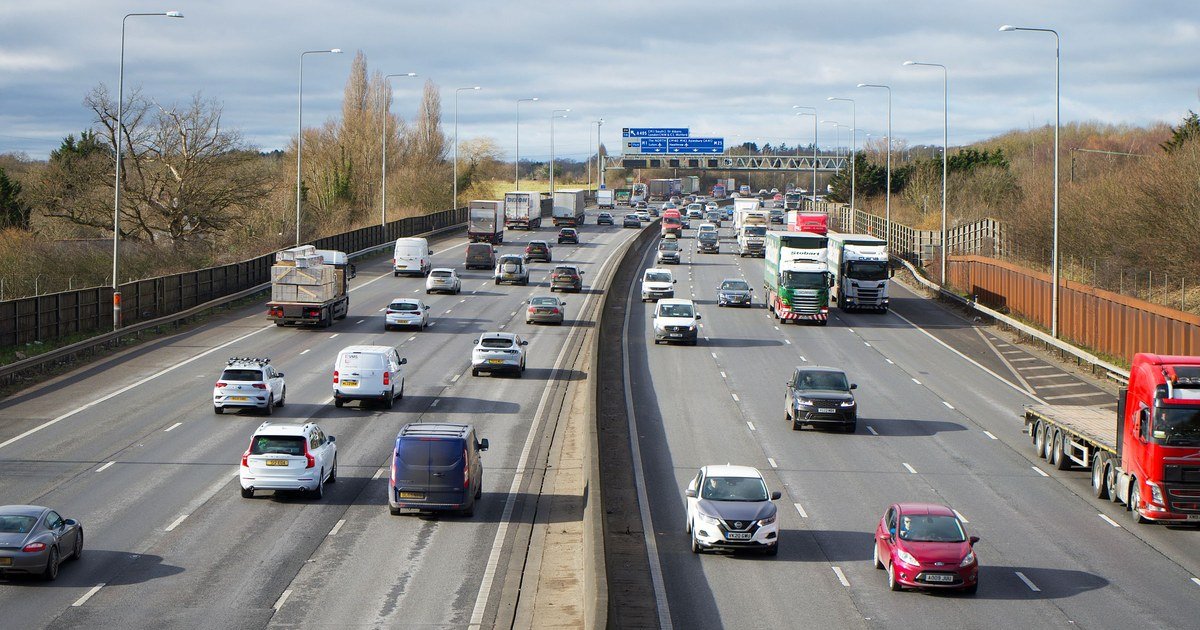
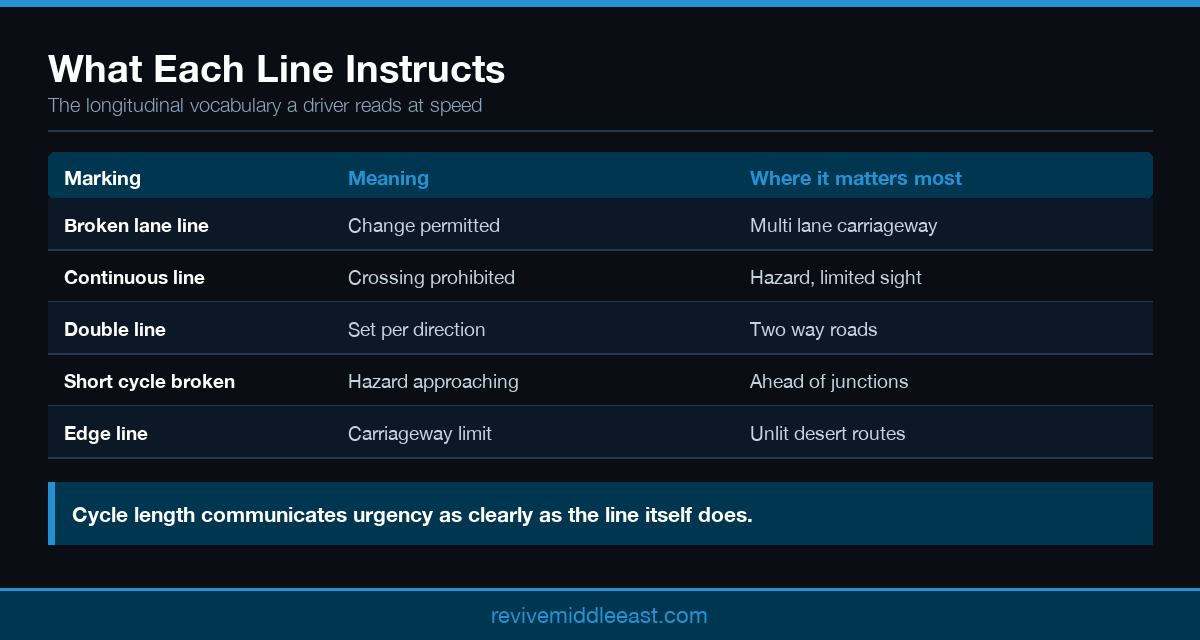
Longitudinal markings run parallel to the direction of traffic flow. They are the most commonly seen markings on any road. These include center lines, lane lines, edge lines, and no-overtaking zones. In UAE highways and urban roads, these markings are typically applied in white or yellow using thermoplastic materials for durability and retroreflectivity. White lines generally separate traffic moving in the same direction, while yellow lines indicate areas where overtaking is prohibited or where opposing traffic directions are separated.

  • White broken lines indicate lane boundaries where lane changes are permitted.
  • Solid white lines indicate that lane changes are discouraged or restricted.
  • Double solid yellow lines prohibit overtaking in both directions.
  • Edge lines in white define the boundary between the travel lane and the road shoulder.

Transverse Markings for Intersections and Crossings

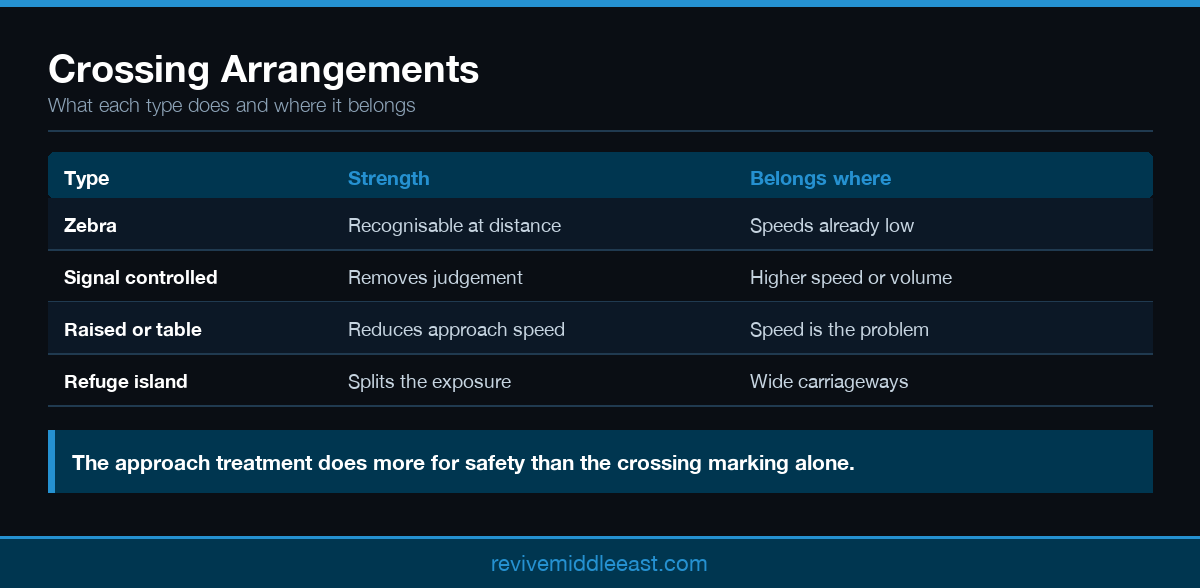
Transverse markings run perpendicular or at an angle to the direction of travel. They are critical at intersections, pedestrian crossings, and stop-controlled junctions. Stop lines are solid white lines placed across lanes to indicate where vehicles must stop before a junction or traffic signal. Pedestrian crossing markings, often referred to as zebra crossings, use alternating white stripes across the road width. These markings must meet specific width and spacing requirements under UAE road design standards. Give-way lines, often in dashed or triangular patterns, indicate zones where drivers must yield to oncoming traffic.

Symbolic and Text Markings for Guidance

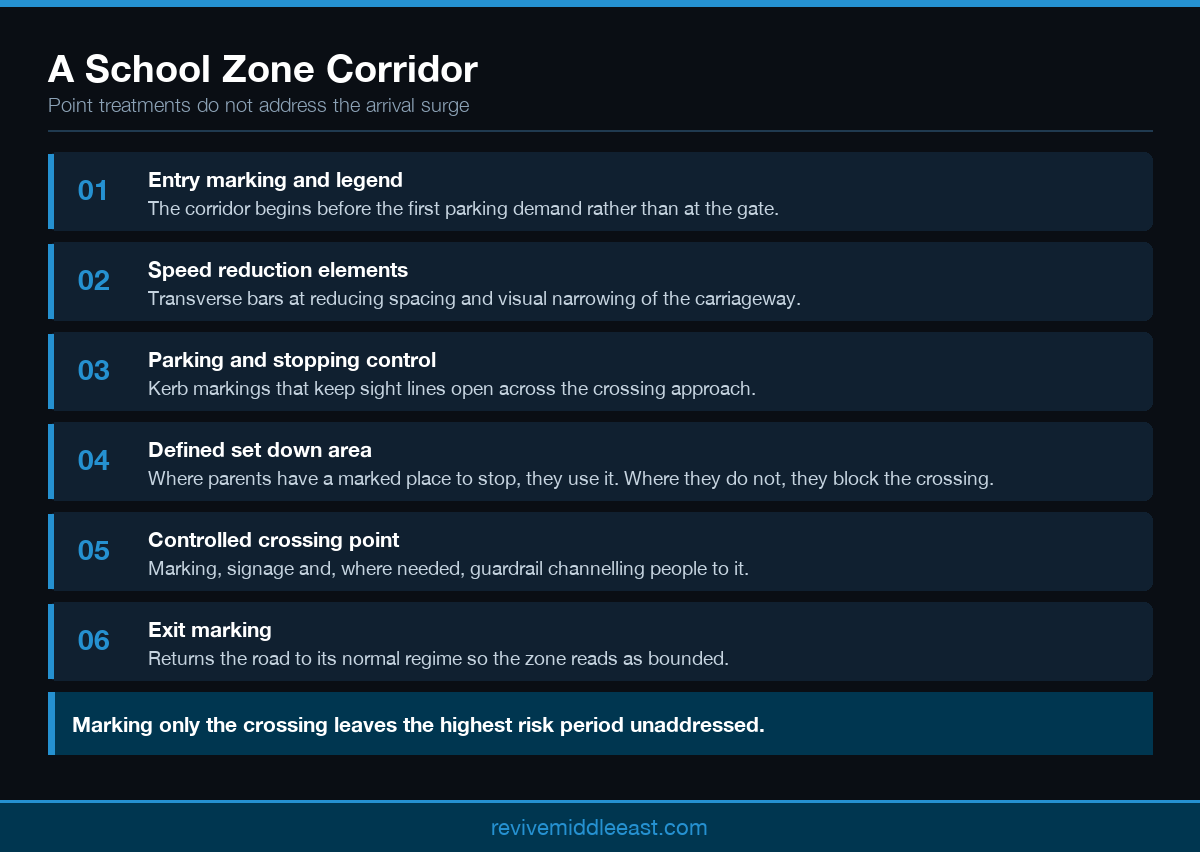
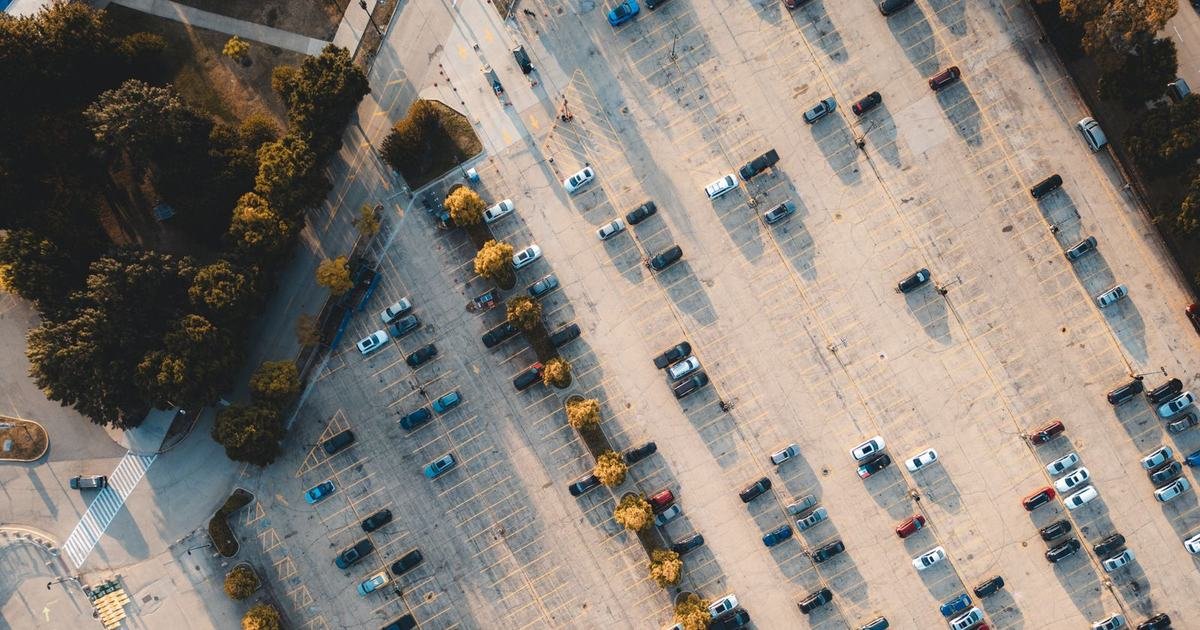
Symbolic markings include arrows, speed limit numerals, lane designation text, and parking bay outlines. These markings are used to supplement sign messaging directly on the road surface. In complex intersections, turn arrows guide drivers into the correct lane before they reach the junction. Speed limit numerals painted on the road surface reinforce posted sign limits and are especially useful in school zones, construction areas, and residential streets. Bus lane markings, bicycle lane markings, and taxi bay outlines fall under this category as well. Each of these requires precise stenciling and accurate paint application to remain legible over time.

Raised Pavement Markers and Rumble Strips

Beyond painted lines, road line marking systems often incorporate raised pavement markers (RPMs) and rumble strips. RPMs are small reflective devices embedded into or applied onto the road surface at regular intervals along lane lines and edge lines. They enhance visibility at night and in wet conditions far better than paint alone. Rumble strips are textured patterns milled into or applied onto the road surface. They produce a tactile and audible alert when a driver drifts out of their lane. Both solutions are widely used on UAE highways and expressways where high speeds demand enhanced driver feedback mechanisms. These features work alongside road safety barriers to create comprehensive protection systems on high-speed corridors.

Road Marking Materials and Standards in the UAE

The performance of any road line marking system depends heavily on the materials used and the standards to which they are applied. UAE road authorities typically specify materials that meet or exceed international benchmarks for durability, retroreflectivity, and skid resistance.

Thermoplastic Road Marking Material

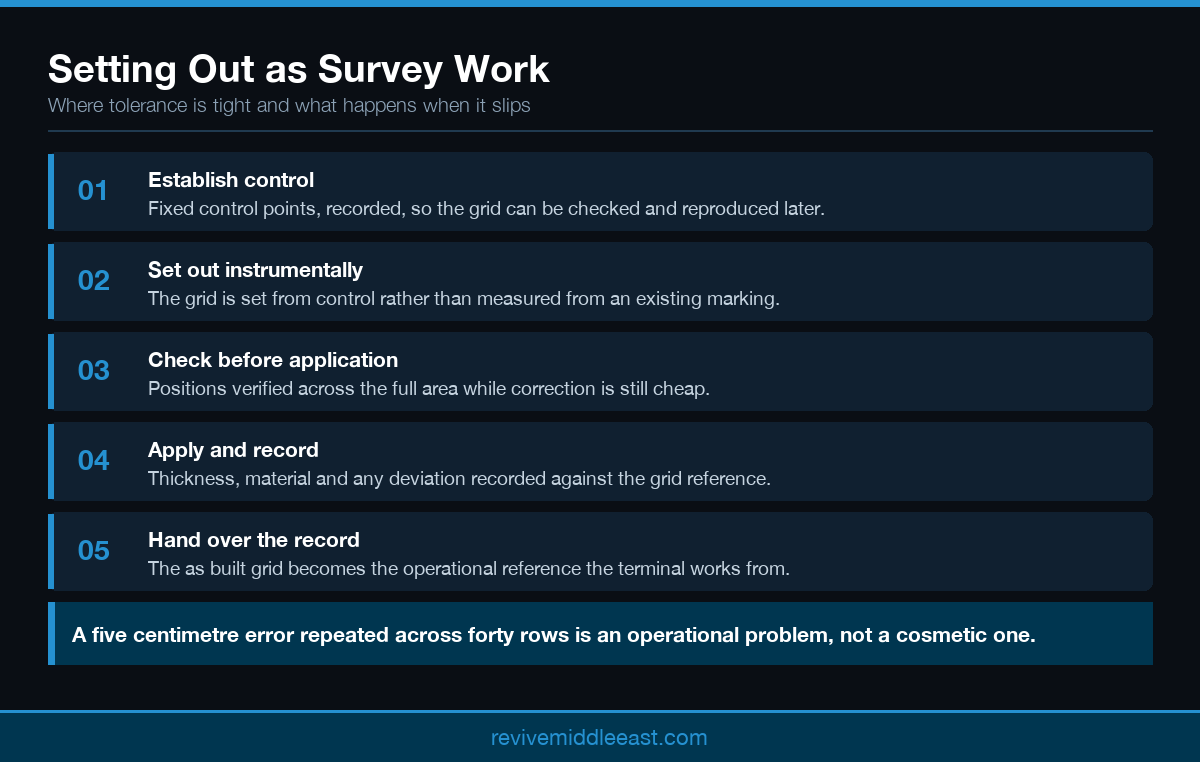
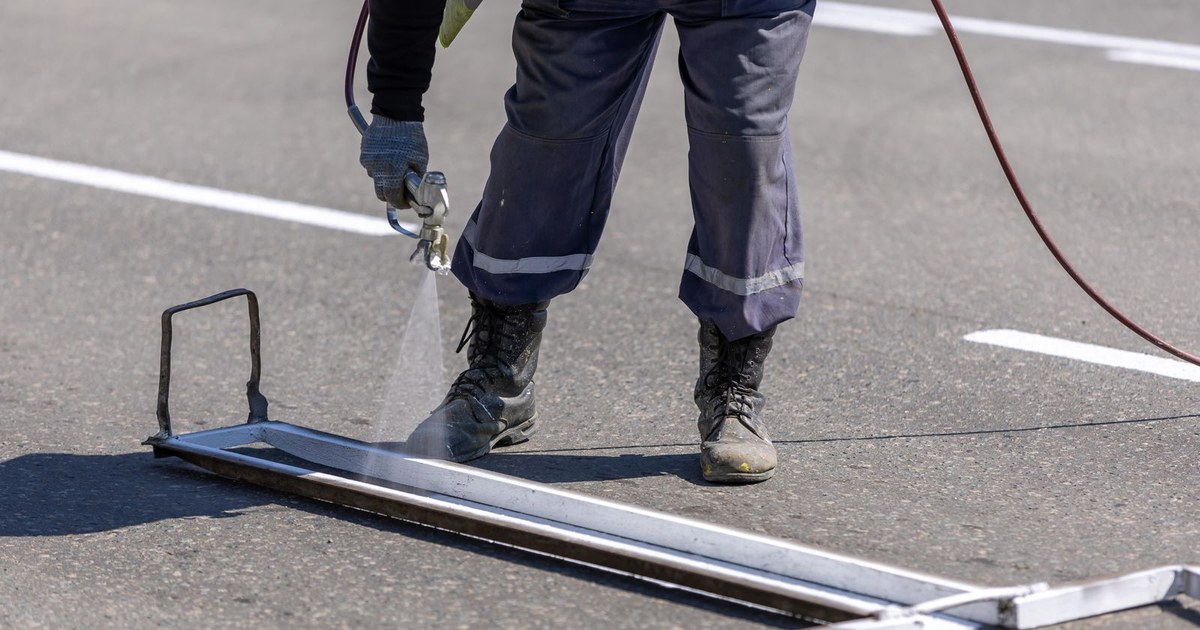
Thermoplastic is the most widely used road marking material in the UAE. It is applied in a heated molten state and bonds strongly to asphalt and concrete surfaces as it cools. Thermoplastic markings offer high durability, with a typical lifespan of three to five years depending on traffic volume and weather conditions. They also provide excellent retroreflectivity when glass beads are incorporated during application. This is critical for night visibility on high-speed roads. Many infrastructure projects in the UAE rely on thermoplastic as the primary material for longitudinal and transverse markings, and a qualified contractor with professional application equipment is essential for achieving consistent, compliant results.

Cold Paint and Water-Based Markings

Cold paint, including solvent-based and water-based formulations, is used for temporary markings, low-traffic zones, and applications where thermoplastic is not suitable. Water-based paints are increasingly preferred due to lower VOC emissions, aligning with environmental guidelines. However, cold paint has a shorter lifespan compared to thermoplastic and requires more frequent reapplication, particularly in high-traffic UAE environments. It is often used for parking lot markings, warehouse floors, and temporary construction zone delineation.

Retroreflectivity and Visibility Standards

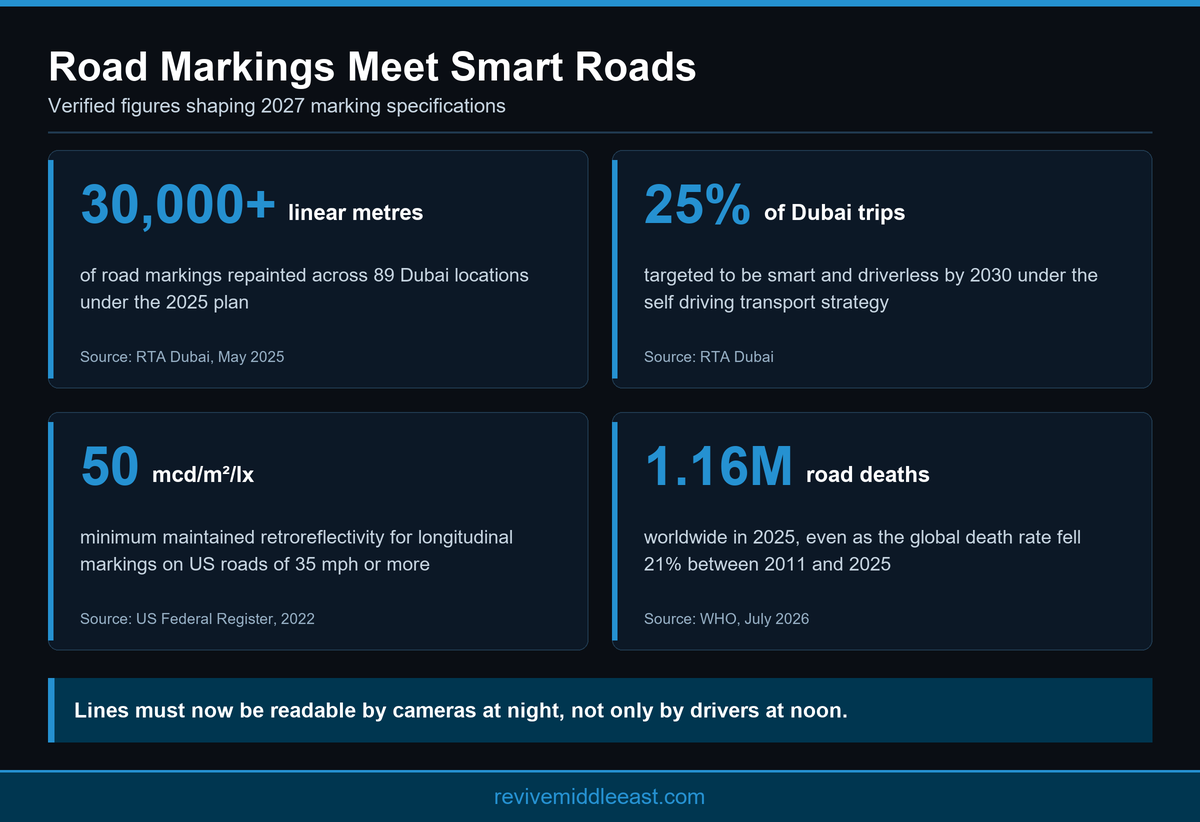
A key technical requirement for road markings in the UAE is adequate retroreflectivity. Retroreflectivity refers to the ability of a marking to reflect vehicle headlight beams back toward the driver. Standards such as EN 1436, which defines minimum retroreflectivity levels for road markings, are referenced by many UAE road authorities. Glass beads are the primary mechanism for achieving retroreflectivity in both thermoplastic and paint markings. They are either premixed into the material or drop-applied onto the surface immediately after application. Regular measurement using retroreflectometers ensures that existing markings remain within acceptable performance thresholds.

Road Marking Applications in UAE Infrastructure Projects

Road markings are not limited to public highways. They are applied across a wide range of infrastructure environments in the UAE, each with its own requirements and specifications.

  • Urban road networks: Lane management, pedestrian crossings, bus stops, and intersection control markings in cities like Dubai and Abu Dhabi.
  • Highways and expressways: High-performance thermoplastic markings with raised pavement markers for long-distance, high-speed travel corridors.
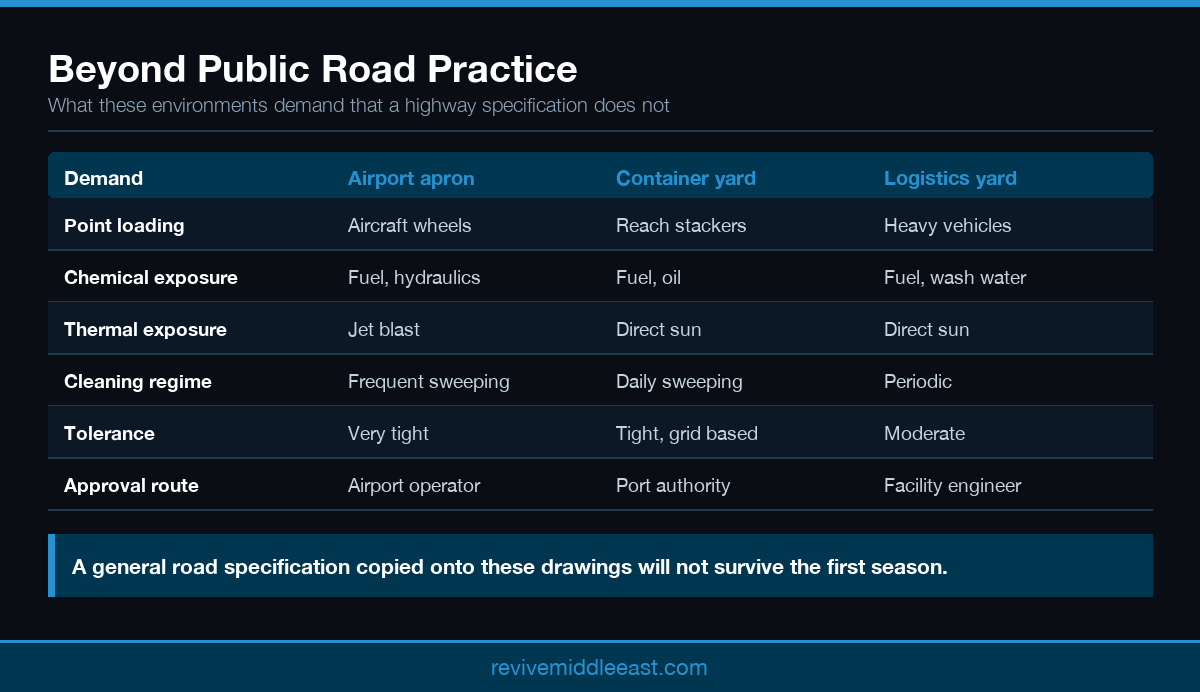
  • Industrial zones: Warehouse floor markings, loading bay delineations, and pedestrian safety lanes within industrial facilities.
  • Airports and ports: Specialized apron and tarmac markings following aviation and maritime authority standards.
  • Residential and commercial developments: Parking bay markings, speed humps, and directional arrows within private property developments.

Each of these environments requires a different approach to material selection, application method, and maintenance scheduling. A trusted road marking contractor with cross-sector experience can assess project requirements and deliver compliant, long-lasting results across all these settings. To explore the full range of available services, visit our road marking and traffic management services.

How to Choose the Right Road Marking Company in the UAE

Selecting the right contractor for your road marking project is as important as choosing the right material. Here are the key factors to evaluate when engaging a road marking company in the UAE. Understanding UAE traffic management standards and compliance requirements is a useful starting point before engaging any contractor.

  • Technical capability: Does the company use professional application equipment including thermoplastic spraying machines and line marking vehicles?
  • Material quality: Are the materials sourced from certified suppliers and tested against UAE or international standards?
  • Project experience: Has the company completed road marking projects of similar scale and complexity, including highway, urban, and industrial applications?
  • Compliance knowledge: Does the team understand UAE road authority specifications and apply markings accordingly?
  • Afterservice support: Can the company provide inspection reports, retroreflectivity measurements, and scheduled maintenance services?

Maintenance and Lifecycle of Road Markings

Even the best road markings degrade over time due to traffic wear, UV exposure, and extreme temperatures common in the UAE. A structured maintenance program is essential to keep markings within performance standards.

Routine inspection should assess marking visibility, retroreflectivity levels, and physical integrity. Faded or damaged markings should be reported and scheduled for reapplication before they create safety risks. In high-traffic zones, markings may need refreshing every one to two years. On lower-traffic roads, thermoplastic markings can last up to five years with minimal intervention.

Lifecycle planning for road markings should be incorporated into overall road asset management frameworks. This approach reduces long-term costs and ensures continuous compliance with international road safety standards. Project managers looking to build robust maintenance schedules can also explore our range of road marking products to identify the most durable solutions for their specific environments.

Conclusion

Road line marking is far more than paint on asphalt. It is a structured system of safety communication that guides millions of drivers across UAE roads every day. From longitudinal lane lines to symbolic pavement text, from thermoplastic highways to parking bay delineations, each marking type serves a specific function within the broader traffic management ecosystem. Choosing the right materials, following UAE road authority standards, and partnering with an experienced road marking company in the UAE are all critical decisions that determine the safety and longevity of any road marking investment. If you are ready to start your next project or need expert guidance on compliant road marking solutions, explore our full range of road marking and traffic management services to find the right fit for your infrastructure needs.

FAQ

Q1: What is the purpose of road line marking on UAE roads?

Road line marking guides drivers, separates traffic lanes, marks pedestrian crossings, and communicates speed limits. In the UAE, these markings are regulated by road authorities to maintain consistent safety standards across highways, urban roads, and industrial zones throughout the country.

Q2: What materials are most commonly used for road markings in the UAE?

Thermoplastic is the most widely used material for road markings in the UAE due to its durability and retroreflectivity. Cold paint is used for temporary or low-traffic applications. Both materials can incorporate glass beads to improve nighttime visibility on busy roads and expressways.

Q3: How long do thermoplastic road markings last in UAE conditions?

Thermoplastic road markings typically last three to five years under normal traffic conditions in the UAE. High-traffic zones may require reapplication every one to two years. Extreme heat and UV exposure can accelerate wear, making regular inspection and maintenance an important part of road asset management.

Q4: What is retroreflectivity and why is it important for road markings?

Retroreflectivity is the ability of a road marking to reflect vehicle headlights back toward the driver. It is critical for nighttime and wet-weather visibility. UAE road standards often reference EN 1436 benchmarks. Glass beads embedded in thermoplastic or paint markings are the primary method for achieving adequate retroreflectivity.

Q5: What types of road markings are used at pedestrian crossings?

Pedestrian crossings in the UAE use transverse white stripes known as zebra crossing markings. These must meet specific width and spacing requirements set by road authorities. Give-way lines and stop lines may also be used near crossings to improve driver awareness and pedestrian safety at busy intersections.

Q6: How are road markings maintained over their lifecycle in the UAE?

Road marking maintenance involves routine inspection for fading, physical damage, and retroreflectivity loss. Markings that fall below acceptable performance thresholds are scheduled for reapplication. Reviewing road marking best practices helps project managers build structured lifecycle plans that reduce long-term costs and ensure continuous compliance across all road types in the UAE.

Q7: What are raised pavement markers and how are they used in the UAE?

Raised pavement markers are small reflective devices applied to road surfaces along lane lines and edge lines. They enhance visibility in low-light and wet conditions. In the UAE, they are commonly used on highways and expressways where high speeds require additional driver feedback beyond standard painted road line markings.

Q8: Can road markings be applied on private property developments in the UAE?

Yes, road markings are widely applied within private residential and commercial developments in the UAE. These include parking bay lines, directional arrows, speed hump markings, and pedestrian lane indicators. Working with an experienced contractor familiar with UAE compliance standards ensures accurate and durable results for private sector projects.

Q9: What is the difference between white and yellow road line markings?

White road line markings generally separate lanes of traffic moving in the same direction, such as lane dividers and edge lines. Yellow markings indicate zones where overtaking is prohibited or where opposing traffic directions are separated. Both colors serve distinct regulatory functions standardized under UAE road marking guidelines.

Q10: How do I choose a reliable road marking company in the UAE?

When selecting a road marking company in the UAE, evaluate their technical equipment, material quality, and project experience across highway, urban, and industrial settings. Companies well-versed in UAE traffic management compliance standards are better positioned to deliver retroreflectivity measurement and reliable maintenance scheduling for long-term road safety outcomes.

Why Choosing a Reliable Thermoplastic Paint Manufacturer in the UAE Matters

Introduction

Road safety in the UAE depends on far more than traffic regulations. It begins with the quality of materials applied to every road surface. Thermoplastic paint is the backbone of durable road markings that guide drivers, pedestrians, and cyclists safely every single day. Yet the performance of those markings is only as good as the manufacturer behind them. Choosing the right thermoplastic paint manufacturer in the UAE can mean the difference between road markings that hold up for years and those that fade within months. This blog explains why that choice carries significant weight for every road infrastructure project.

Key Takeaways

  • Thermoplastic paint quality directly affects road safety, nighttime visibility, and long-term infrastructure costs.
  • UAE climate conditions demand heat-resistant, UV-stable formulations that only experienced manufacturers can consistently deliver.
  • Working with a reliable thermoplastic paint manufacturer in the UAE ensures regulatory compliance, correct application, and professional after-service support.

What Makes Thermoplastic Paint the Standard for Road Markings in the UAE. ↵

Thermoplastic paint offers superior durability, retroreflectivity, and heat resistance, making it the preferred road marking solution across UAE highways and urban roads.

Thermoplastic paint is a hot-applied road marking material composed of synthetic resins, glass beads, pigments, and fillers. Once applied to a road surface and cooled, it forms a hard, tightly bonded layer on asphalt or concrete. Unlike conventional solvent-based paints, thermoplastic markings resist wear from heavy traffic volumes, UV radiation, and extreme surface temperatures. In the UAE, where road surface temperatures can exceed 60 degrees Celsius during summer months, this thermal stability is not optional. It is essential.

The glass beads embedded within the material provide retroreflectivity, significantly improving nighttime visibility for drivers. This safety property, combined with the material’s resistance to skidding and abrasion, is why thermoplastic road markings have become the standard across UAE highways, urban intersections, parking facilities, and pedestrian zones. Explore the full range of thermoplastic paints and road markings available for infrastructure projects across the UAE.

Why UAE Climate Conditions Demand a Specialist Thermoplastic Paint Manufacturer

The UAE’s extreme heat, intense UV exposure, and coastal humidity require thermoplastic paint formulations engineered specifically for Gulf conditions.

Standard road marking materials frequently underperform in UAE conditions. Intense solar radiation, surface temperatures far exceeding those found in temperate regions, and the coastal humidity experienced in cities like Abu Dhabi and Dubai create a demanding operating environment for any road marking material. A specialist thermoplastic paint manufacturer in the UAE understands these regional demands and produces formulations with elevated heat resistance, appropriate UV stabilizers, and carefully calibrated binder-to-filler ratios.

Without these climate-specific adjustments, road markings can crack, bubble, or lose retroreflectivity rapidly, creating genuine safety hazards on busy roads and requiring costly reapplication work. Generic imported products that have not been formulated for Gulf conditions often fail within a single summer. Choosing a manufacturer with proven UAE-specific product experience is not simply a preference. It is a practical and measurable necessity for every road infrastructure project that expects long-term performance.

Quality and Compliance Standards That Every Road Project Must Meet

Road marking materials used on UAE roads must meet strict regulatory and technical standards to ensure consistent safety performance and project acceptance.

Infrastructure projects across the UAE are governed by standards set by road and transport authorities at both federal and emirate levels. These standards define acceptable parameters for thermoplastic paint composition, application thickness, retroreflectivity values, and skid resistance. A reliable thermoplastic paint manufacturer maintains product formulations that are fully compliant with these requirements and is able to supply material data sheets, test reports, and relevant certifications upon request.

Non-compliant materials can result in project rejection, expensive rework, contract disputes, and most critically, compromised road safety outcomes for end users. Working with a manufacturer who actively monitors and adheres to UAE compliance standards reduces project risk for road contractors, municipalities, and government road authorities alike. According to the UAE Federal Roads and Transport Authority, road marking standards form a critical component of road safety infrastructure planning. Compliant road markings also integrate effectively with other road safety products such as road traffic signs, creating a cohesive and legally sound safety environment.

The Role of Application Support and After-Service in Road Marking Projects

A dependable thermoplastic paint manufacturer goes beyond product supply by offering technical application guidance and structured post-installation support.

Supplying thermoplastic paint is only part of the equation. Proper application technique is equally critical to achieving durable and high-performing road markings. Factors such as substrate surface temperature, material application temperature, correct thickness, and appropriate drying conditions all influence the final bond strength and longevity of the marking. Errors at any stage of application can shorten the lifespan of markings significantly, regardless of the quality of the base material used.

A reliable manufacturer provides clear technical guidance to ensure correct application, reducing costly installation errors and ensuring the product performs as specified over its full service life. After-service support is equally important for large-scale infrastructure programs where markings require periodic assessment and reapplication across multiple project phases. Revive Middle East offers comprehensive road marking and installation services that combine quality thermoplastic products with professional technical support across the UAE.

How to Evaluate a Thermoplastic Paint Manufacturer in the UAE

Selecting the right manufacturer requires assessing their product capabilities, project track record, technical documentation, and ability to handle large-scale UAE infrastructure work.

Not every supplier operates at the same level of technical capability or project delivery. When evaluating a thermoplastic paint manufacturer in the UAE, infrastructure procurement teams should assess a number of key factors. A verifiable track record of completed road marking projects across UAE highways, municipal roads, and private developments is a strong indicator of operational reliability.

The ability to supply detailed product specifications, compliance documentation, and application guidelines demonstrates a manufacturer’s technical depth and commitment to quality assurance. The capacity to fulfill large government and municipal contracts without compromising consistency is another important criterion. Additionally, a manufacturer whose product range extends beyond thermoplastic paint to include guard rails and barriers and other road safety infrastructure signals a broader expertise valuable for full-scope road projects. Reviewing a manufacturer’s completed projects provides direct insight into their on-ground capabilities and the scale of work successfully delivered.

Long-Term Value Versus Short-Term Cost in Road Marking Projects

Choosing a lower-cost but less reliable manufacturer typically results in significantly higher overall project costs through early material failure and repeated reapplication.

Budget management is a central concern for every infrastructure project. However, selecting a thermoplastic paint manufacturer based primarily on the lowest available price frequently leads to higher total expenditure over the life of a project. Lower-quality formulations degrade faster under UAE climate conditions, requiring reapplication within one to two years rather than the five to seven years that properly formulated thermoplastic road markings can deliver.

Each reapplication cycle involves material costs, road closure and traffic management expenses, labour charges, and project administration overheads. The true cost of inferior road markings extends beyond material spend into measurable safety risks when markings lose clarity, reflectivity, or contrast. Infrastructure stakeholders who invest in a reliable thermoplastic paint manufacturer from project inception achieve better service life, fewer disruptions to road users, stronger compliance outcomes, and ultimately a lower cost per year of effective service.

Conclusion

Road safety infrastructure performs only as reliably as the materials and manufacturers behind it. In the UAE, where road networks carry high traffic volumes and endure some of the most demanding environmental conditions in the world, the choice of thermoplastic paint manufacturer directly shapes the quality, durability, and regulatory compliance of every road marking project. From climate-appropriate formulations and material compliance to professional application support and after-service reliability, the right manufacturer creates a measurable difference across the full lifecycle of a road marking program.

Revive Middle East is a trusted supplier of thermoplastic paints and road marking solutions across the UAE, backed by manufacturing capability, deep product expertise, and an enduring commitment to road safety infrastructure. Contact us today to discuss the requirements of your next road marking or road safety project.

FAQ

Q1: What is thermoplastic paint used for in road markings?

Thermoplastic paint is used to create durable road markings such as lane lines, pedestrian crossings, arrows, and stop lines. It bonds strongly to road surfaces and offers high retroreflectivity for nighttime visibility, making it the preferred material for road safety infrastructure across the UAE.

Q2: Why is thermoplastic paint preferred over regular road paint in the UAE?

Thermoplastic paint outperforms regular road paint in UAE conditions due to its superior heat resistance, UV stability, and longer service life. Standard paints fade quickly under intense solar radiation, while thermoplastic markings can last five to seven years with correct application and proper formulation.

Q3: How does UAE climate affect thermoplastic road markings?

Extreme heat, UV radiation, and coastal humidity in the UAE accelerate the degradation of poorly formulated road markings. Quality thermoplastic paint manufacturers engineer their products with climate-specific additives to ensure markings retain retroreflectivity, colour, and adhesion under harsh Gulf weather conditions throughout the year.

Q4: What standards must a thermoplastic paint manufacturer in the UAE follow?

Thermoplastic paint manufacturers in the UAE must comply with standards set by federal and emirate-level road and transport authorities. These standards govern material composition, application thickness, skid resistance, and retroreflectivity to ensure road markings meet consistent safety and performance requirements across all road types.

Q5: How long do thermoplastic road markings last in the UAE?

High-quality thermoplastic road markings applied correctly can last between five and seven years in UAE conditions. Inferior products or incorrect application can reduce this lifespan to one to two years, increasing project costs significantly. Partnering with an experienced manufacturer is key to maximising the longevity of your road safety products.

Q6: What should I look for when choosing a thermoplastic paint manufacturer in the UAE?

Look for verified project experience, product compliance documentation, technical support capability, and proven performance in UAE climate conditions. A manufacturer offering a complete range of road safety products, including road signs and guard rails, demonstrates the broader infrastructure expertise needed for comprehensive road projects.

Q7: What is the difference between hot-applied and cold-applied road markings?

Hot-applied thermoplastic paint is melted and applied at high temperature, forming a thick, durable layer that bonds strongly to road surfaces. Cold-applied markings use solvent or water-based paints at ambient temperature. Hot-applied thermoplastic is significantly more durable and is the standard for high-traffic UAE roads.

Q8: Can thermoplastic road markings be used in parking areas and private roads?

Yes. Thermoplastic road markings are widely used in parking facilities, private roads, industrial zones, and residential developments across the UAE. They offer the same durability and visibility benefits as highway markings, making them suitable for any surface requiring clear, long-lasting road markings, including areas where street bollards and other safety elements are also installed.

Q9: How is thermoplastic paint applied to road surfaces?

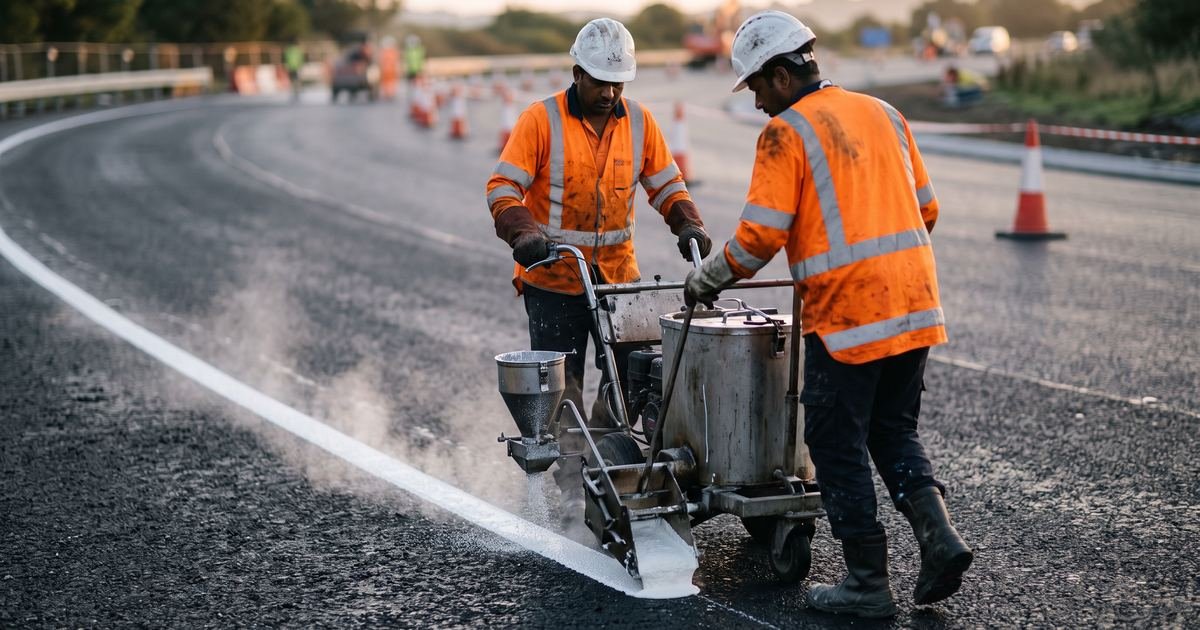
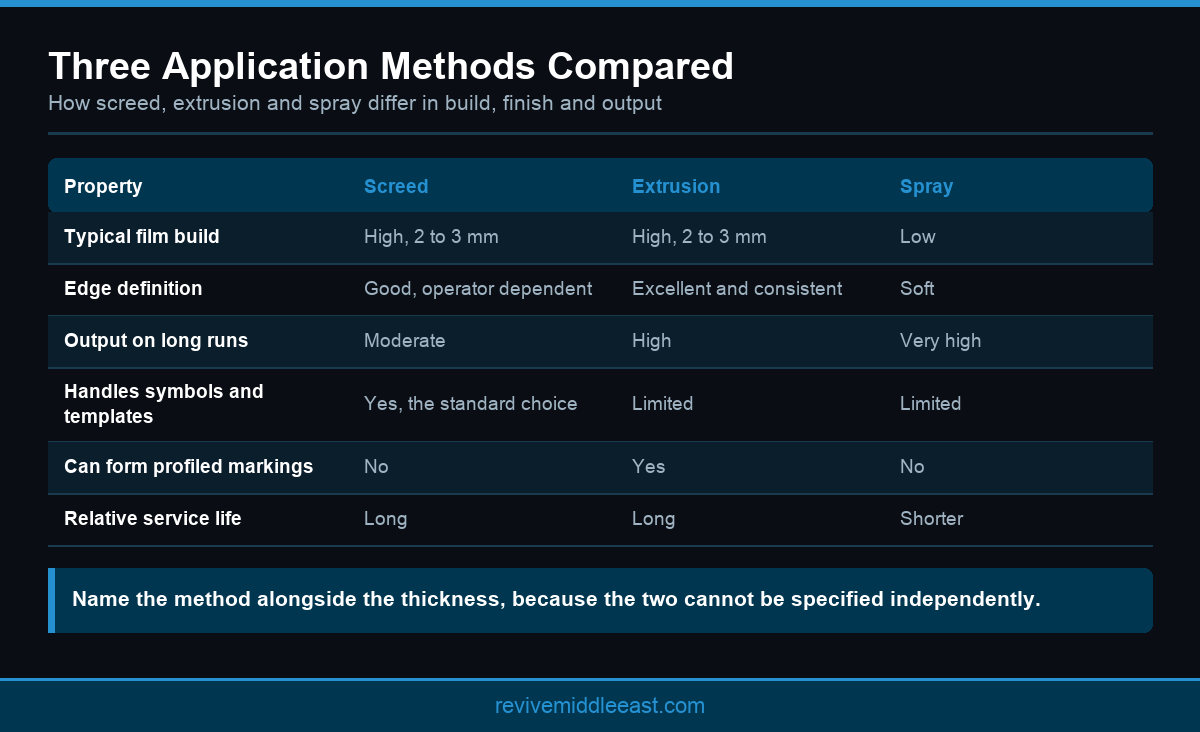
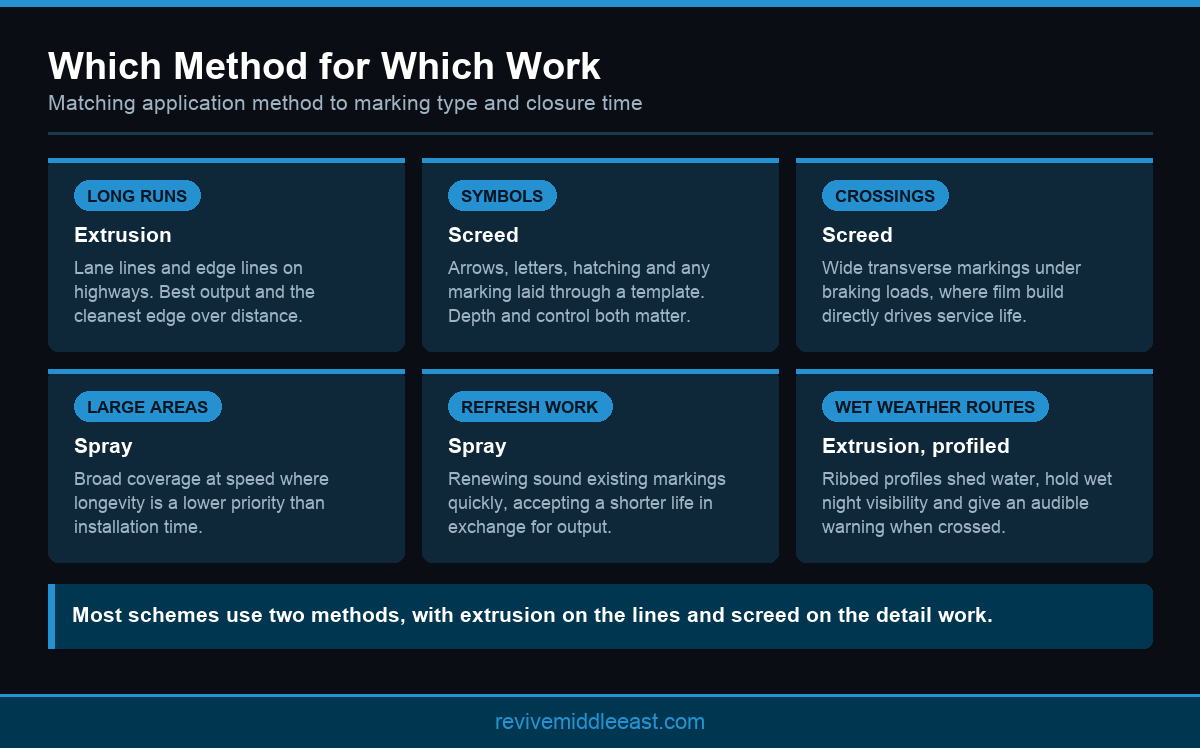
Thermoplastic paint is melted in a mobile heater unit and applied to the road surface using a screed or spray machine at temperatures between 180 and 220 degrees Celsius. Glass beads are spread over the surface to enhance retroreflectivity. The material cools and hardens within minutes, allowing roads to reopen quickly.

Q10: What other road safety products complement thermoplastic road markings?

Thermoplastic road markings work alongside road traffic signs, ground-mounted signs, street bollards, guard rails, and barriers. Using these elements together creates a complete and compliant road safety environment, especially for high-traffic highways and urban road networks across the UAE.

Tester wordpress

Tester wordpress

Types of Perimeter Fencing for Roads: Pros, Cons, and Best Uses

Introduction

Choosing the right perimeter fencing for roads is one of the most critical decisions in road safety planning. The wrong fence type can compromise security, increase maintenance costs, and fail to meet regulatory standards. Whether you are managing a highway expansion, an urban arterial road, or an industrial access route, understanding your fencing options is essential. The demand for reliable perimeter fencing for roads in the UAE has grown significantly alongside the country’s rapid infrastructure development. This blog breaks down the most common types, outlines their advantages and limitations, and helps you identify which solution best fits your project requirements.

Key Takeaways

  • Different road environments require different perimeter fencing types, each with specific strengths and limitations.
  • Material choice, visibility requirements, and load impact tolerance are key factors in selecting road fencing.
  • Proper installation and maintenance are as important as fencing type for long-term road safety performance.

Why Perimeter Fencing for Roads Is a Road Safety Priority

Perimeter fencing is not just a boundary marker. It is an active road safety infrastructure element that protects pedestrians, controls vehicle movement, and prevents unauthorized access to road corridors.

In the UAE, rapid infrastructure growth means that roads pass through urban zones, industrial areas, desert highways, and residential developments. Each of these environments places different demands on fencing systems. A fence that performs well on a desert highway may be entirely unsuitable for an urban expressway. Selecting the right type begins with understanding what each fencing solution offers and where it falls short. You can explore a range of road safety products used across UAE infrastructure projects to understand the full scope of available solutions.

According to the Global Road Safety Partnership, road infrastructure elements, including barriers and perimeter fencing, directly reduce fatalities by preventing vehicle runoffs and pedestrian intrusions. This makes fencing selection a technical and life-safety decision, not just a procurement exercise.

Chain-Link Fencing: Versatile but Visibility-Dependent

Chain-link fencing is one of the most widely used perimeter solutions in road projects due to its low cost and ease of installation.

Pros:

  • Cost-effective and fast to install across long stretches
  • Allows visibility through the fence, which supports surveillance and monitoring
  • Available in galvanized or PVC-coated variants for corrosion resistance in coastal UAE environments
  • Flexible enough to follow uneven terrain

Cons:

  • Offers limited physical impact resistance against vehicles
  • Can be cut or bent with basic tools, reducing security on high-risk corridors
  • Requires regular inspection to maintain structural integrity

Best Uses: Chain-link fencing works best along secondary roads, pedestrian boundary zones, and low-traffic perimeter areas where vehicle intrusion risk is low. It is commonly used in utility corridors adjacent to roads and around road maintenance depots. For perimeter fencing for roads UAE projects on a constrained budget, chain-link remains a practical starting point.

Concrete Panel Fencing: Maximum Durability for High-Impact Zones

Precast concrete panel fencing provides the highest level of physical protection along road perimeters and is a preferred choice for noise-sensitive or high-security road zones.

Pros:

  • Extremely durable and requires minimal maintenance over its lifecycle
  • Provides effective noise reduction for roads passing through residential areas
  • Resistant to vehicle impact and extreme weather, including sandstorms common in the UAE
  • Acts as a visual screen, reducing driver distraction

Cons:

  • High material and installation cost compared to wire-based options
  • Heavy weight requires specialized equipment during installation
  • Not suitable for terrain with frequent elevation changes
  • It limits natural ventilation, which can affect air quality in enclosed road corridors

Best Uses: Concrete panel fencing is ideal for expressways running alongside residential zones, industrial road corridors where security is critical, and areas where noise abatement is a planning requirement. It is also used alongside guardrails and barrier systems to create layered perimeter protection on high-speed roads.

Steel and Metal Panel Fencing: Strength with Aesthetic Flexibility

Steel and metal panel fencing offers a balance between structural strength and visual appeal, making it suitable for roads in urban and semi-urban environments.

Pros:

  • High tensile strength provides strong resistance to impact and forced entry
  • Available in various designs and finishes, allowing integration with urban streetscapes
  • Powder-coated or galvanized finishes offer good corrosion resistance
  • Can be customized to specific height and panel dimensions

Cons:

  • Higher upfront cost than chain-link and wire mesh options
  • Requires periodic repainting or coating maintenance in high-humidity coastal environments
  • Heavier than wire options, making transport and handling more demanding

Best Uses: Metal panel fencing is well-suited to urban arterial roads, toll plaza perimeters, bridge approaches, and areas where fencing must meet both security and aesthetic standards. It is frequently paired with road traffic signs and other road furniture to create cohesive road safety zones.

Wire Mesh and Welded Mesh Fencing: Lightweight and High-Visibility

Welded wire mesh fencing is growing in popularity across UAE road projects due to its combination of strength, visibility, and moderate pricing.

Pros:

  • High visibility through the mesh allows for easy monitoring of road perimeters
  • Welded construction provides better rigidity than chain-link
  • Lightweight panels reduce installation time and labor costs
  • Corrosion-resistant coatings extend service life in arid and coastal climates

Cons:

  • Not designed to withstand direct vehicle impact
  • Panel joints can be points of weakness if not properly installed
  • Less effective as a sound barrier compared to concrete or solid metal panels

Best Uses: Welded mesh fencing is suitable for rural road perimeters, expressway shoulder boundaries, and green buffer zones alongside roads. It also performs well around road maintenance facilities and storage areas. For projects that include comprehensive fencing solutions, welded mesh is often specified for perimeter zones that require visibility without compromising boundary definition.

How to Choose the Right Perimeter Fencing for Your Road Project

Selecting the most appropriate perimeter fencing for roads requires evaluating multiple project-specific factors rather than defaulting to the lowest-cost option.

Key factors to assess include the following:

  • Traffic speed and volume: High-speed corridors need impact-resistant solutions such as concrete panels or heavy-gauge steel.
  • Security requirements: Industrial or restricted-access roads demand fencing with higher intrusion resistance.
  • Environmental conditions: Coastal UAE roads require corrosion-resistant materials; desert roads need dust and UV resistance.
  • Visibility needs: Open areas benefit from see-through mesh or chain-link; noise-sensitive zones may require opaque panels.
  • Budget and lifecycle cost: Initial installation cost must be weighed against long-term maintenance requirements.

For large-scale projects, sourcing perimeter fencing for roads in the UAE from a specialist road safety provider ensures alignment with local engineering standards and authority requirements. Working with a professional road safety services provider helps ensure that fencing selection meets project specifications and regulatory compliance from the outset.

Conclusion

Understanding the types of perimeter fencing for roads and their respective pros, cons, and best applications allows engineers, project managers, and road authorities to make informed decisions that directly support road safety outcomes. From chain-link and welded mesh to concrete panels and steel systems, each fencing type serves a specific purpose within the broader road safety infrastructure framework. In the UAE, where infrastructure standards are high and environmental conditions are demanding, specifying the right perimeter fencing for UAE road projects is both a technical and a safety priority. Contact Revive Middle East to discuss the right fencing and road safety solutions for your next infrastructure project.

Q1: What is perimeter fencing for roads?

Perimeter fencing for roads is a boundary infrastructure system installed along road corridors to control access, prevent unauthorized entry, protect pedestrians, and improve overall road safety. It includes various types such as chain-link, concrete panels, steel mesh, and welded wire systems.

Q2: Which type of perimeter fencing is best for highways?

For high-speed highways, concrete panel fencing or heavy-gauge steel panel systems are recommended due to their high impact resistance and durability. These options also provide noise reduction and restrict unauthorized access effectively.

Q3: Is chain-link fencing suitable for road perimeters in the UAE?

Chain-link fencing is suitable for low-to-medium-risk road perimeters in the UAE, particularly on secondary roads and utility corridors. Galvanized or PVC-coated variants are preferred to withstand the UAE’s coastal humidity and desert heat.

Q4: What is the difference between welded mesh and chain-link fencing?

Welded mesh fencing has rigid panels formed by welding wire intersections, offering greater structural strength. Chain-link uses interlocked loops, making it more flexible but less rigid. Welded mesh generally provides better perimeter definition for road safety applications.

Q5: How does perimeter fencing contribute to road safety?

Perimeter fencing prevents pedestrians and animals from entering active road zones, reduces vehicle run-off incidents, and controls access to restricted road corridors. It is a key component of a comprehensive <a href=’https://revivemiddleeast.com/our-products/’>road safety infrastructure</a> strategy.

Q6: What materials are used in road perimeter fencing?

Common materials include galvanized steel wire, welded steel mesh, precast concrete panels, powder-coated metal panels, and PVC-coated chain-link. Material selection depends on environmental conditions, security requirements, and project budget.

Q7: How long does road perimeter fencing last?

The lifespan varies by material. Galvanized steel and concrete panels can last 20 to 30 years with proper maintenance. PVC-coated wire mesh typically lasts 10 to 15 years. Regular inspection and coating maintenance extend service life significantly.

Q8: Can perimeter fencing be combined with guardrails on roads?

Yes, perimeter fencing and <a href=’https://revivemiddleeast.com/our_products/guard-rails-barriers/’>guard rails and barriers</a> are often used together in high-risk road sections. Guard rails handle vehicle impact loads while perimeter fencing manages pedestrian access control and boundary definition.

Q9: What are the maintenance requirements for road perimeter fencing?

Maintenance includes periodic inspection for corrosion, damaged panels, loose connections, and coating degradation. Concrete panel systems require minimal maintenance, while metal and wire systems benefit from annual inspections and recoating every five to seven years.

Q10: Who supplies perimeter fencing for road projects in the UAE?

Road infrastructure companies specializing in traffic management and road safety products supply perimeter fencing in the UAE. Revive Middle East provides fencing and related road safety services for government and private infrastructure projects across the UAE.

Thermoplastic Road Marking Paint Manufacturer vs Competitors: What Sets the Best Apart

Introduction

When selecting a thermoplastic road marking paint manufacturer, quality is not a matter of preference; it is a matter of road safety. Road markings guide drivers, regulate traffic flow, and reduce the risk of collisions on busy highways and urban streets. Not all manufacturers deliver the same level of durability, regulatory compliance, or real-world performance. In a market like the UAE, where road standards are strictly enforced and climate conditions are extreme, the gap between a reliable manufacturer and an average one becomes evident very quickly. This blog explores what separates the best from the rest.

Key Takeaways

The best thermoplastic road-marking paint manufacturer prioritizes raw material quality, retroreflectivity, and full regulatory compliance.

Manufacturers of thermoplastic paints who conduct UAE climate-specific testing deliver markings that last significantly longer in local conditions.

End-to-end support from supply to installation is a defining quality of leading manufacturers over competitors.

What Is Thermoplastic Road Marking Paint and Why Does It Matter?

Thermoplastic paint is a heat-applied road marking material that offers far superior durability compared to standard solvent-based or water-based liquid paints. When applied, the material is heated to a molten state and bonded directly to the road surface, forming a thick, hard-wearing layer that resists fading, cracking, and surface wear.

In the UAE, where asphalt temperatures regularly exceed 60 degrees Celsius in summer, and road networks carry some of the highest traffic volumes in the region, thermoplastic road markings are the standard choice for municipalities and road authorities. A poorly chosen manufacturer can deliver markings that fade within months, creating safety hazards and significantly increasing maintenance costs. Choosing the right supplier begins with understanding what distinguishes top-tier manufacturers from those simply competing on price. According to the Federal Highway Administration, high-quality road markings are among the most cost-effective safety countermeasures available on any road network.

Key Differentiators: What Separates Top Manufacturers from the Rest

1. Raw Material Quality and Composition

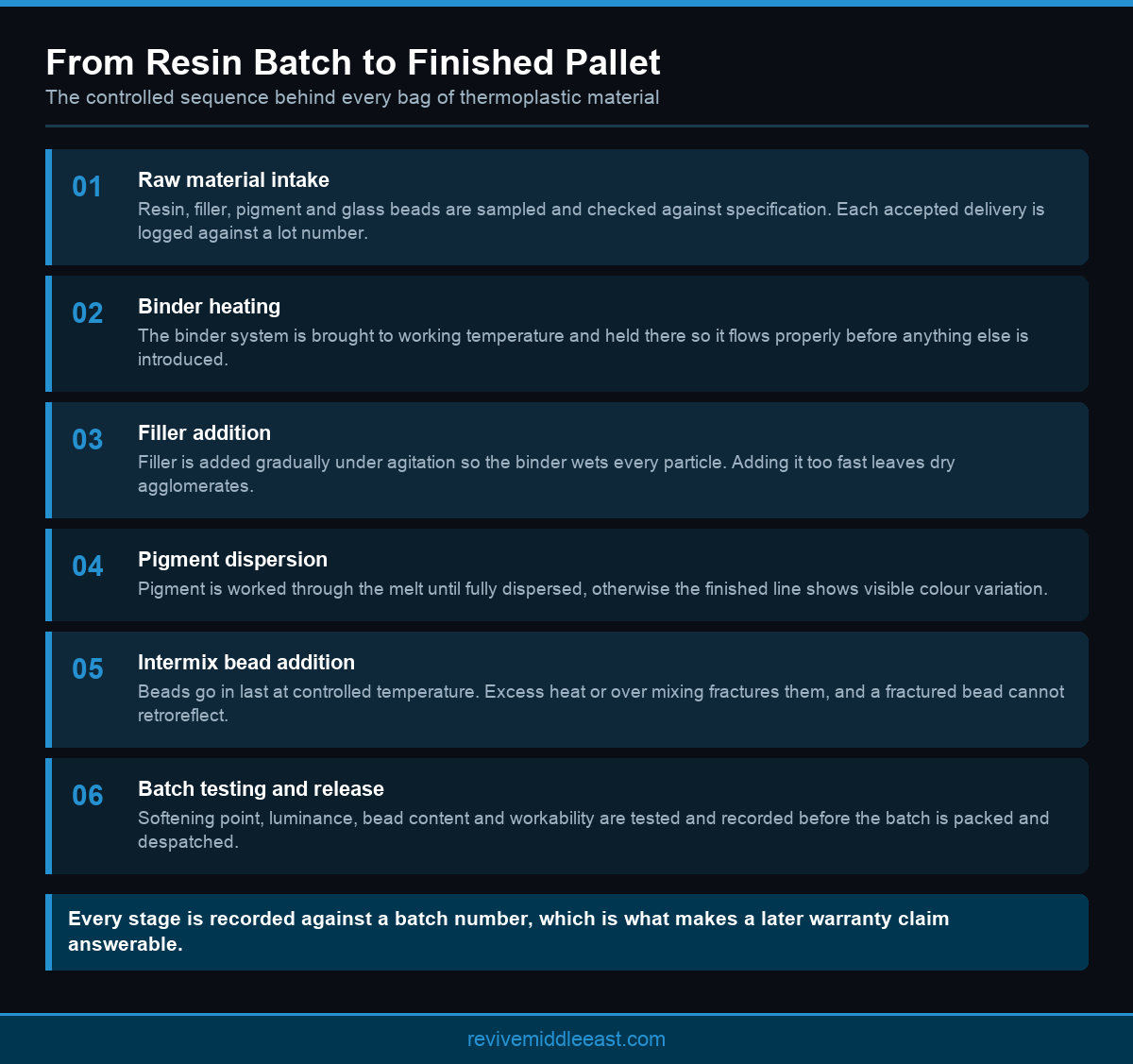
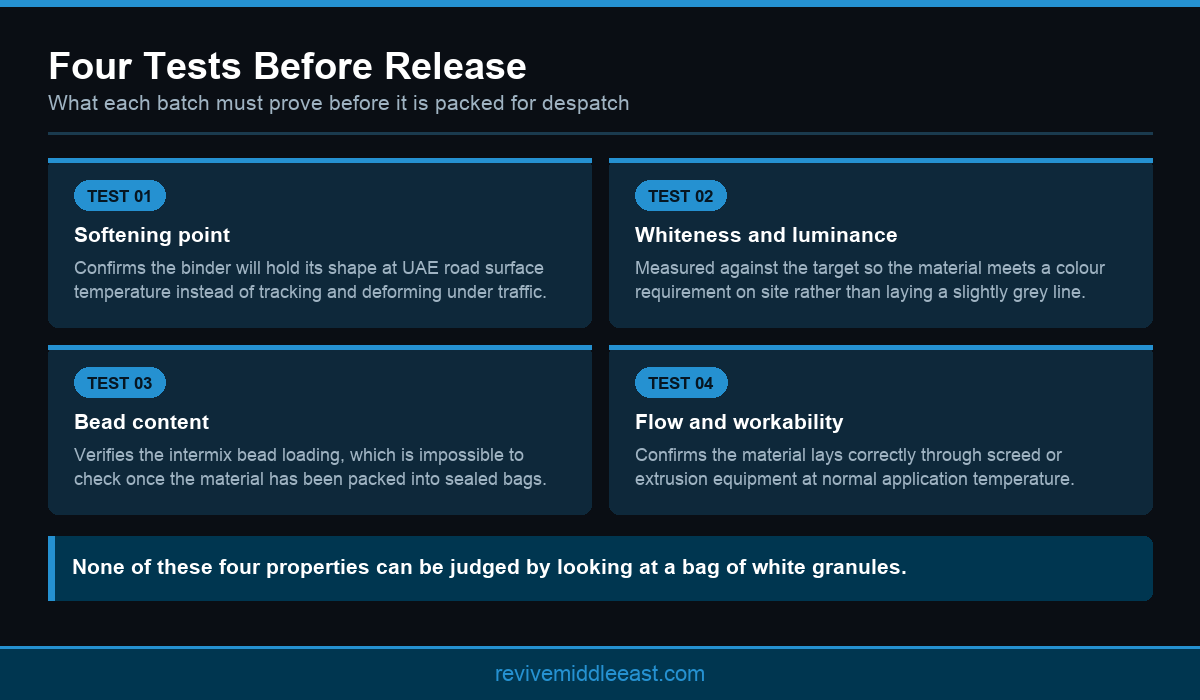
The performance of any thermoplastic road marking product begins with its raw material composition. Top manufacturers of thermoplastic paints use high-grade hydrocarbon resins, precisely calibrated glass bead concentrations, and UV-stable pigments that conform to standards such as EN 1871 or AASHTO M249. These materials directly determine adhesion strength, color retention, and long-term retroreflectivity.

Manufacturers who cut costs by using lower-grade fillers or substandard binders produce markings that deteriorate quickly, losing contrast, brightness, and adhesion well before the expected service life. When evaluating any thermoplastic road marking paint manufacturer, always request material data sheets, composition certificates, and third-party test reports. The difference in raw material quality is the single largest driver of performance variation between competitors. Explore the thermoplastic paints and road markings range of products built to quality material standards.

2. Retroreflectivity and Night-Time Visibility Performance

Retroreflectivity – the ability of a road marking to reflect vehicle headlights back toward the driver—is one of the most critical performance metrics for any road marking material. The best thermoplastic road marking paint manufacturers engineer their products to sustain retroreflectivity consistently over a three-to-five year lifespan under normal traffic exposure.

Competitors who do not invest in proper glass bead size grading or bead embedment technology produce markings that appear vivid immediately after installation but lose nighttime effectiveness within the first year. This is a significant safety shortfall on roads where drivers depend on clear lane guidance after dark. When comparing manufacturers, ask for retroreflectivity performance data measured at 12 months and 24 months post-application, not just at the point of installation. Reviewing completed road marking projects in the region can help verify real-world performance claims from any manufacturer.

3. Application Consistency and Technical Support

Even the highest-quality thermoplastic material will underperform if it is applied incorrectly. Application temperature, material thickness, ambient conditions, and surface preparation all directly affect adhesion quality and durability. The best manufacturers either deploy trained application teams or provide rigorous technical guidance and on-site supervision for certified applicators.

Competitors who treat supply and applications as entirely separate functions often leave significant performance gaps. Uneven thickness, poor surface priming, or incorrect preheating leads to premature peeling, edge chipping, and inconsistent marking widths. When assessing a thermoplastic road marking paint manufacturer, confirm their technical support model—specifically, whether they provide application supervision on large-scale or high-visibility projects. At Revive Middle East, our services include both material supply and professional installation support, ensuring consistent results from project start to completion.

4. UAE Climate Compatibility and Local Testing

The UAE’s climate presents road marking materials with conditions that differ significantly from European or North American test environments. Road surface temperatures regularly exceed 70 degrees Celsius in peak summer, UV radiation is intense year-round, and occasional heavy rainfall creates rapid wet-dry cycles that stress road marking adhesion.

Leading manufacturers of thermoplastic paints validate their products under local or simulated UAE climate conditions, rather than relying solely on data generated in cooler, less UV-intense environments. Manufacturers who do not account for regional climate variability may supply technically compliant products that still fail prematurely in UAE field conditions. Requesting UAE-specific performance data or reviewing case studies from comparable GCC markets is a sound due-diligence step before committing to any supplier.

5. Regulatory Compliance and Documentation Standards

Road markings in the UAE must meet specifications set by authorities, including the Roads and Transport Authority (RTA) in Dubai and the Abu Dhabi Department of Municipalities and Transport. These specifications cover retroreflectivity values, skid resistance coefficients, colour accuracy, and application thickness tolerances.

A dependable thermoplastic road marking paint manufacturer maintains up-to-date compliance documentation and can present test certificates, approval letters, and product specifications on request. Competitors who cannot supply this documentation, or who operate with outdated approvals, expose project owners to compliance risks and rework costs. Before selecting a supplier, verify that their products carry current approvals aligned with the relevant UAE authority’s standards for your project type. Reviewing what we do at Revive Middle East gives a clear picture of the compliance-first approach we bring to every road marking project.

How to Evaluate a Thermoplastic Road Marking Paint Manufacturer Before You Commit

Choosing a manufacturer is a decision that affects road safety and project budgets over several years. Use this checklist when comparing suppliers:

  • Request product data sheets and third-party test certificates confirming composition and performance.
  • Ask for retroreflectivity data at 12-month and 24-month intervals post-application.
  • Review past project references in the UAE or comparable GCC climate regions.
  • Confirm the technical support model, including on-site supervision availability.
  • Verify regulatory compliance with UAE road marking authority specifications.
  • Compare total lifecycle cost, not just unit price per kilogram of material.

Selecting on price alone consistently leads to higher long-term costs through more frequent re-marking cycles, increased maintenance, and potential compliance penalties on regulated projects.

Conclusion

Choosing the right thermoplastic road marking paint manufacturer goes well beyond comparing price lists. The best manufacturers combine high-grade raw materials, climate-validated performance, consistent application support, and verified regulatory compliance – factors that directly determine how long road markings last and how effectively they protect road users. In the UAE, where infrastructure quality standards are high and environmental demands exceptional, these differentiators have a measurable impact on both safety outcomes and total project value.

Whether you are delivering a municipal road marking program, a highway infrastructure upgrade, or a commercial development with regulated traffic management requirements, working with a qualified supplier is essential. Contact Revive Middle East to discuss your road marking requirements and find out how our thermoplastic solutions are built for UAE conditions.

FAQ

Q1. What is thermoplastic road marking paint?

Thermoplastic road marking paint is a heat-applied material used to create durable lane lines, symbols, and road markings. It is melted and bonded directly to the road surface, offering significantly better durability, retroreflectivity, and weather resistance than standard liquid paints.

Q2. How long does thermoplastic road marking last?

High-quality thermoplastic road markings typically last three to five years under normal traffic conditions. Lifespan depends on raw material quality, application thickness, traffic volume, and climate conditions. In the UAE’s high-heat environment, products tested for local conditions tend to perform closer to the upper range.

Q3. What makes a thermoplastic road marking paint manufacturer reliable?

A reliable manufacturer provides certified raw material data, third-party test results, retroreflectivity performance history, and regulatory compliance documentation. They also offer technical application support and have verifiable project references in comparable climate regions such as the UAE or GCC market.

Q4. How does thermoplastic paint perform in UAE summer heat?

Thermoplastic road markings engineered for UAE conditions are designed to withstand road surface temperatures exceeding 70 degrees Celsius. Manufacturers who validate products under local climate conditions provide markings with significantly better adhesion and colour retention compared to products tested only in cooler environments.

Q5. What standards govern road markings in the UAE?

Road markings in the UAE are regulated by authorities including Dubai’s Roads and Transport Authority and Abu Dhabi’s Department of Municipalities and Transport. These bodies specify retroreflectivity levels, skid resistance values, colour accuracy, and material composition requirements for all road marking products used on public roads.

Q6. What is retroreflectivity and why does it matter?

Retroreflectivity is a road marking’s ability to reflect vehicle headlights back toward drivers at night. High retroreflectivity keeps lane markings clearly visible in low-light and wet conditions. It is a critical safety metric and a key differentiator between high-quality and average manufacturers of thermoplastic paints operating in road safety infrastructure.

Q7. How do manufacturers of thermoplastic paints differ in quality?

Key quality differences include raw material grade, glass bead specification, UV-stable pigment quality, and climate-specific testing. Top manufacturers provide documented performance data over time, while lower-quality competitors often rely on initial installation appearance without long-term performance validation or compliance certification.

Q8. Can thermoplastic road marking be applied to all road surfaces?

Thermoplastic road marking is compatible with asphalt and concrete surfaces, which are the most common road types in the UAE. Proper surface preparation, including cleaning and priming where required, is essential for adhesion. Your manufacturer or installation team should assess surface conditions before application begins.

Q9. Is thermoplastic road marking more cost-effective than standard paint?

Over a full lifecycle, thermoplastic road markings are more cost-effective than standard liquid paint. Although the initial material cost is higher, thermoplastic markings last three to five times longer, reducing re-marking frequency and total maintenance expenditure on roads, car parks, and infrastructure projects.

Q10. How do I choose a thermoplastic road marking supplier in the UAE?

Evaluate suppliers based on material quality documentation, UAE-specific project references, retroreflectivity performance data, and compliance with local road authority specifications. Prioritise suppliers who offer technical application support and after-service follow-up, rather than selecting on unit price alone. The contact page has details on how to reach the Revive Middle East team directly.

Hello world!

Welcome to WordPress. This is your first post. Edit or delete it, then start writing!