Best Safety Barrier Solutions for UAE Construction Sites

Safety barriers are one of the most critical components of any active construction site in the UAE. With rapid infrastructure development across cities like Dubai, Abu Dhabi, and Sharjah, the demand for robust road safety systems has never been higher. Construction zones present serious risks to workers, pedestrians, and drivers. The right safety barrier solutions not only protect lives but also ensure compliance with local traffic management regulations. In this blog, we explore the most effective barrier solutions available for UAE construction sites today.

Key Takeaways

  • Safety barriers are essential for protecting workers and road users on UAE construction sites, reducing the risk of accidents in active work zones.
  • Effective road safety planning requires a combination of guard rails, traffic signs, road markings, and road furniture deployed strategically across the site perimeter.
  • Choosing a reliable UAE-based manufacturer ensures high-quality, regulation-compliant barrier products backed by professional installation and after-service support.

Why Safety Barriers Are Critical on UAE Construction Sites

Construction zones in the UAE operate alongside busy highways and urban roads, creating high-risk environments for all parties involved. Without properly installed safety barriers, drivers may inadvertently enter restricted zones, and workers face exposure to live traffic. According to the Roads and Transport Authority of Dubai, maintaining clear physical separation between traffic and active work zones is a fundamental requirement for all road construction and maintenance projects on public roads.

Barriers also serve a dual purpose: they protect the public while guiding traffic flow around the construction area. A well-planned barrier system reduces confusion, minimizes delays, and keeps emergency access routes clear at all times. For infrastructure contractors and project managers, deploying the correct barrier type from day one is not optional. It is a professional and legal obligation.

Types of Safety Barriers Commonly Used in Construction Zones

Understanding the available barrier types helps project managers make informed decisions based on site conditions, traffic volume, and project duration. Each barrier type serves a specific function in a comprehensive road safety plan.

Guard Rails for Perimeter and Highway Protection

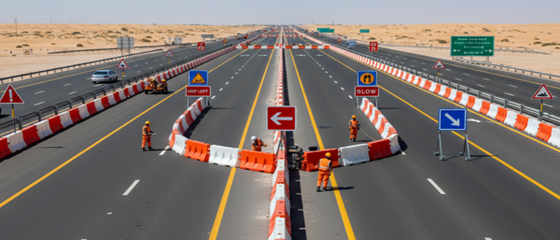
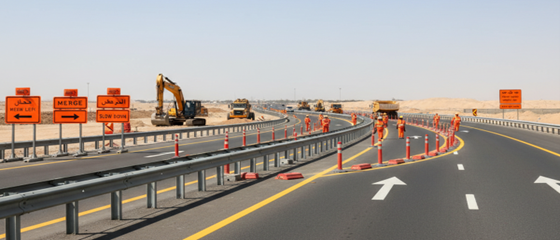
Guard rails are among the most widely used safety barriers for construction sites adjacent to highways and major roads in the UAE. They are engineered to absorb and redirect vehicle impact, preventing vehicles from crossing into restricted work areas. Revive Middle East manufactures guard rails to meet structural performance standards suited for high-speed road environments. These barriers are particularly effective on expressways and arterial roads where vehicle speeds are elevated. Their steel construction offers durability in the UAE’s extreme heat and sandy conditions, making them a preferred long-term solution for extended construction projects.

Traffic Signs for Clear Zone Communication

No safety barrier system is complete without proper traffic signage. Traffic signs communicate warnings, speed reductions, lane closures, and directional changes to approaching drivers well before they reach the construction zone. In the UAE, standardized signage helps ensure that drivers across different nationalities can quickly understand road conditions. Reflective materials and weather-resistant coatings ensure signs remain visible during the night and in sandstorm conditions, which are common across the UAE. Proper placement of these signs, at the correct distances and heights, is equally as important as the signs themselves.

Road Markings to Direct Traffic Flow

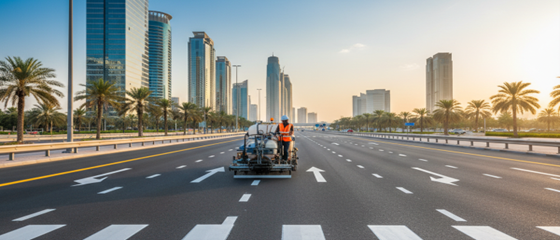
Road markings play a vital supporting role alongside physical safety barriers. Temporary road markings help redirect traffic lanes, indicate merge points, and highlight pedestrian crossings near construction sites. These markings must be highly visible, durable, and compliant with UAE road authority standards. Professional road marking services using quality materials withstand heavy traffic loads and intense UV exposure common in the Gulf region. When combined with guard rails and signage, road markings create a complete, layered safety system that significantly reduces the chance of accidents within and around active construction zones.

Road Furniture and Supplementary Safety Equipment

Beyond barriers and signs, road furniture such as delineators, cones, bollards, and streetlamp poles plays an important role in construction site safety. These elements help define safe travel paths, improve nighttime visibility, and create visual cues for drivers navigating through altered road layouts. Streetlamp poles installed along temporary access roads ensure that construction areas remain well-lit after dark, reducing the risk of after-hours incidents. Selecting the right combination of road furniture alongside primary barriers maximizes the overall effectiveness of the safety setup.

How to Plan a Safety Barrier Layout for a Construction Site

A structured approach to planning your safety barriers reduces risks and ensures regulatory compliance from project start to finish. Below is a practical framework for UAE construction site managers.

  • Conduct a site risk assessment: Identify vehicle speeds, traffic volumes, pedestrian zones, and entry and exit points before selecting any barrier type.
  • Define the protection perimeter: Establish a clear buffer zone between all live work areas and active traffic lanes using physical barriers.
  • Select appropriate barrier types: Match barrier selection to site-specific risks. Use guard rails for high-speed adjacent roads and delineators for slower internal zones.
  • Position traffic signs at safe distances: Place advance warning signs at a minimum of 100 meters before the construction zone on urban roads and further on highways.
  • Install road markings for lane guidance: Apply temporary markings to guide drivers safely through altered traffic patterns around the site.
  • Ensure regular inspection and maintenance: Barriers, signs, and markings must be inspected frequently and repaired or replaced when damaged.
  • Plan for emergency vehicle access: Keep designated access lanes clear at all times to allow emergency responders to reach the site without obstruction.

Choosing the Right Safety Barrier Supplier in the UAE

The quality of your safety barriers depends significantly on the supplier you choose. Not all products are built to withstand the unique environmental conditions of the UAE, including extreme temperatures, sandstorms, and high-intensity UV radiation. Working with a UAE-based manufacturer gives you the advantage of locally tested products, faster supply chains, and expert installation teams familiar with local road authority requirements.

Construction site managers benefit most from partnering with a single supplier who can handle production, supply, installation, and ongoing maintenance. This integrated approach eliminates coordination gaps, reduces project delays, and ensures that every component of your road safety setup meets the same quality and compliance standards. Whether you require guard rails for a highway project or a full package of signs, markings, and road furniture for a large-scale urban development, working with an experienced local manufacturer delivers the expertise needed to keep your site compliant and your people safe.

Conclusion

Investing in the right safety barriers for UAE construction sites is not just a regulatory requirement. It is a responsibility to every worker, driver, and pedestrian who interacts with your project. From guard rails and traffic signs to road markings and road furniture, a layered approach to construction zone safety produces the best outcomes. By partnering with an experienced local manufacturer like Revive Middle East, construction companies and infrastructure managers gain access to high-quality products, professional installation, and reliable after-service support. Contact Revive Middle East today to discuss the right road safety barrier solution for your next UAE project.

FAQ

Q1: What are the most common types of safety barriers used on UAE construction sites?

The most common types include guard rails, concrete barriers, delineators, and water-filled barriers. Each serves a specific purpose based on traffic speed, site duration, and the level of protection required for workers and road users.

Q2: Why are safety barriers mandatory on UAE road construction projects?

UAE road authorities require safety barriers to physically separate live traffic from active work zones. This protects workers from vehicle intrusion and helps drivers navigate altered road layouts safely, reducing accidents and liability for contractors.

Q3: How do guard rails improve road safety on construction sites?

Guard rails absorb and redirect vehicle impact, preventing vehicles from entering restricted work zones. They are especially effective along highways where high vehicle speeds make accidental lane departures particularly dangerous for construction crews.

Q4: What role do traffic signs play in construction zone safety?

Traffic signs warn approaching drivers of lane closures, speed reductions, and work zone boundaries well in advance. Properly placed, reflective construction signs significantly reduce the risk of collisions and improve driver response times near active sites.

Q5: How long do temporary road markings last on UAE construction sites?

Temporary road markings typically last several months depending on traffic volume and weather conditions. In the UAE’s extreme heat and UV exposure, high-quality thermoplastic markings provide better durability and visibility compared to standard paint alternatives.

Q6: What is road furniture and how does it support construction site safety?

Road furniture includes items like delineators, bollards, cones, and streetlamp poles that define safe travel paths and improve site visibility. These elements complement physical barriers to create a complete, layered safety system for construction zones.

Q7: Can Revive Middle East supply and install safety barriers for large construction projects?

Revive Middle East manufactures, supplies, and installs a full range of traffic management products across the UAE. The company supports large-scale construction and infrastructure projects with end-to-end services including production, installation, and maintenance.

Q8: How should safety barriers be inspected and maintained on an active construction site?

Barriers should be visually inspected daily for damage, displacement, or missing components. Damaged sections must be repaired or replaced immediately to maintain continuous protection. Regular maintenance schedules reduce risk and ensure ongoing compliance with site safety standards.

Q9: What factors determine which safety barrier type is right for a construction site?

Key factors include adjacent traffic speed, project duration, site perimeter size, and proximity to pedestrian zones. A site risk assessment conducted before project start helps determine the most appropriate barrier combination for effective protection.

Q10: Where can I get professional safety barrier solutions for construction sites in the UAE?

Revive Middle East provides professional safety barrier products and road safety solutions tailored for UAE construction sites. Their team offers expert guidance on product selection, compliant installation, and long-term maintenance support for all project types.
Top Qualities of a Professional Road Marking Company in UAE

When it comes to road safety infrastructure, few elements are as foundational as clearly visible and durable road markings. Whether on highways, urban roads, or private facilities, well-executed markings guide drivers, protect pedestrians, and reduce traffic incidents. Selecting a reliable road marking company in UAE is not a decision to take lightly. With a growing number of infrastructure projects across the country, understanding what separates a professional provider from an ordinary one is essential for municipalities, contractors, and project developers alike.

Key Takeaways

  • A professional road marking company in UAE combines technical expertise, quality materials, and regulatory compliance to deliver lasting results.
  • Evaluating road markings providers based on their equipment, experience, and service capabilities helps ensure project success.
  • Reliable after-service support and adherence to local standards are non-negotiable qualities in any road safety partner.

Why Choosing the Right Road Marking Company Matters

Road markings serve as a primary communication tool between road infrastructure and drivers. Poor quality markings fade quickly, losing their effectiveness within months of application. In the UAE, where road networks support high traffic volumes and extreme weather conditions, the stakes are even higher. A substandard job can compromise driver safety and lead to costly rework. Partnering with a professional road marking company in UAE ensures that every line, symbol, and arrow meets both performance expectations and local regulatory requirements.

According to the Federal Highway Administration, properly maintained road markings significantly improve driver behavior and reduce lane departure incidents. This global insight applies directly to UAE roads, where consistent marking standards are enforced by road authorities.

Technical Expertise and Industry Experience

Experience and technical knowledge form the backbone of any professional road markings service. A company with deep industry experience understands the nuances of different surface types, traffic volumes, and climate challenges.

A professional provider should employ certified technicians who understand thermoplastic, epoxy, and water-based paint applications. Each material has specific use cases depending on traffic density, road surface type, and exposure to UV light. In the UAE, where summer temperatures can exceed 45 degrees Celsius, choosing the correct material is critical for durability. Companies with years of hands-on experience bring the practical knowledge needed to recommend and apply the right solution for each project. Their technicians should also be familiar with the road marking standards set by UAE road and transport authorities.

Beyond material knowledge, experienced road marking firms bring project management skills that reduce delays, minimize traffic disruptions, and ensure timely delivery. This is particularly important for large-scale infrastructure projects where coordination with multiple contractors is required. To understand the breadth of road safety solutions available, exploring the traffic management product range offered by Revive Middle East provides useful insight into what quality-driven service looks like in practice.

Use of High-Quality Materials and Advanced Equipment

The quality of materials used in road markings directly determines how long they last and how well they perform under real-world conditions.

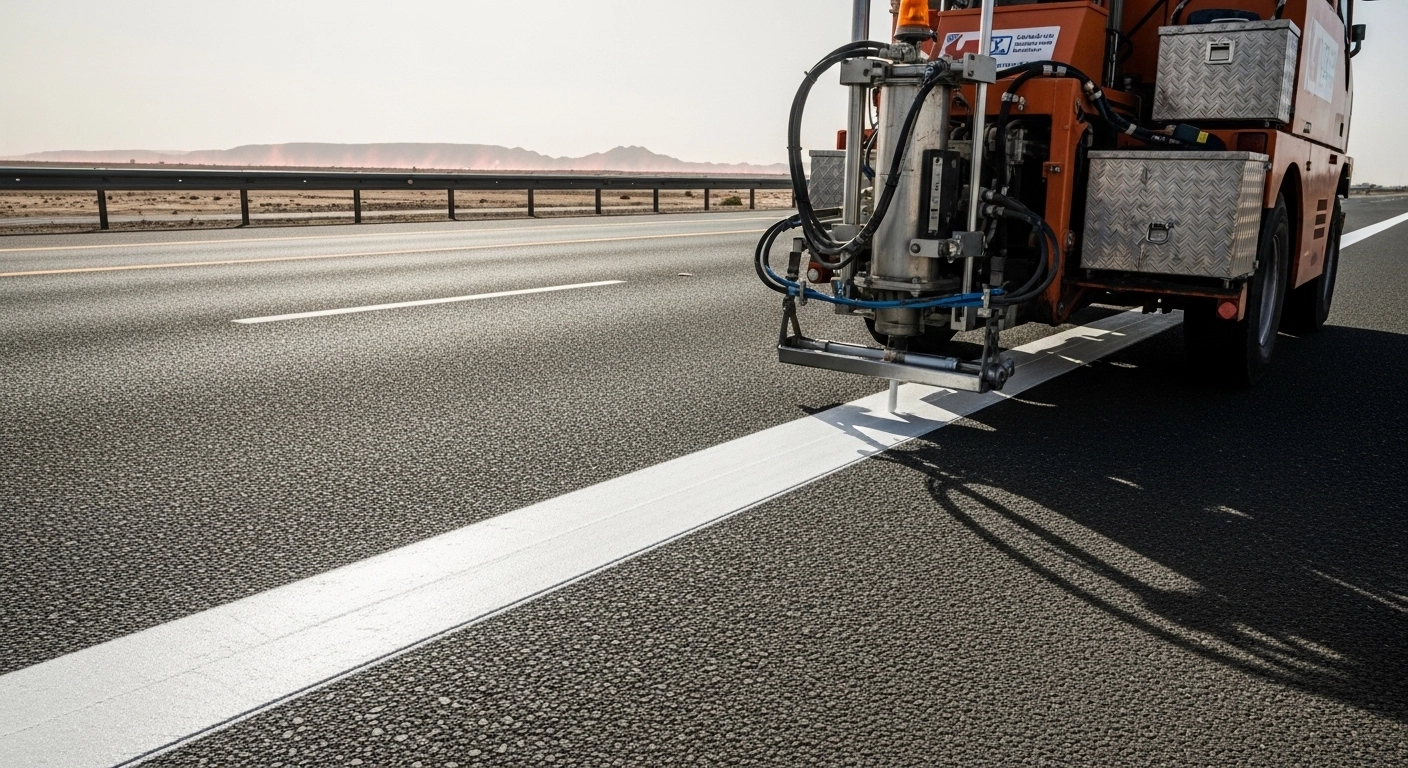
Professional road marking companies invest in high-grade thermoplastic compounds, reflective glass beads, and durable cold-plastic solutions. These materials are designed to withstand heavy traffic, weather extremes, and abrasion. Alongside quality materials, advanced machinery plays a critical role. Modern road marking machines ensure precise line widths, consistent paint thickness, and even distribution of retro-reflective beads. Companies that rely on outdated equipment often produce uneven markings that deteriorate faster. For project managers evaluating suppliers, asking for details about the materials and machines used is a smart first step in assessing quality.

Revive Middle East, as a manufacturer and supplier of traffic management products in the UAE, supports projects that require durable and professionally applied road markings. Their capabilities reflect the kind of quality-driven approach that infrastructure projects demand.

Compliance with UAE Road Safety Standards

Every professional road marking company in UAE must demonstrate a thorough understanding of local regulations and road safety standards.

The UAE has specific guidelines governing the colors, dimensions, and placement of road markings. These guidelines align with standards set by the Roads and Transport Authority and other relevant bodies. A compliant provider ensures that every marking adheres to these requirements, reducing the risk of non-compliance penalties or mandatory rework. Compliance is not just a legal necessity. It is a mark of professionalism that reflects a company’s commitment to safety and accountability. When evaluating potential partners, request documentation of their familiarity with relevant UAE road safety codes and whether their past projects have passed official inspections.

Revive Middle East operates within the UAE traffic management landscape and understands the importance of delivering products and services that meet local standards. Their focus on regulatory-compliant solutions positions them as a dependable infrastructure partner.

Comprehensive Service Offering Including After-Support

A truly professional road marking provider does not stop at application. They offer end-to-end services that include planning, installation, and ongoing maintenance.

After-service support is one of the most overlooked yet critical qualities of a reputable road marking company in UAE. Over time, markings fade due to traffic wear, weather exposure, and UV degradation. A company that offers scheduled inspections, repainting, and maintenance services adds significant value to any long-term infrastructure investment. This is especially relevant for municipalities and facility managers responsible for maintaining safe road conditions year-round. A provider that treats each project as a long-term relationship rather than a one-time transaction demonstrates professional integrity and genuine commitment to road safety outcomes.

Look for companies that bundle installation services with maintenance agreements. This approach ensures continuity of quality and reduces the administrative burden of managing multiple vendors for each phase of a road safety project.

Strong Project Track Record and Client References

Past performance is one of the most reliable indicators of future results in the road markings industry.

When evaluating a road marking company in UAE, review their portfolio of completed projects. Have they worked on highways, parking facilities, airports, or industrial zones? Do they have references from government bodies, municipalities, or major contractors? A strong track record demonstrates the ability to deliver across diverse environments and scales. It also shows that the company has built trust with demanding clients over time. Companies that are transparent about their project history and willing to provide references are far more likely to deliver consistent, professional results on your project.

Clear Communication and Project Transparency

Good communication is a hallmark of professionalism in any service-based industry, and road marking is no exception.

A reliable provider should offer clear project timelines, transparent cost breakdowns, and regular progress updates. Clients should never be left guessing about project status, material choices, or scheduling conflicts. Companies that invest in clear communication frameworks minimize misunderstandings and reduce costly errors. For large government or municipal projects where multiple stakeholders are involved, structured communication becomes even more vital. Choosing a provider that values transparency and professionalism in all interactions signals that they respect both the project and the client relationship.

Conclusion

Selecting the right road marking company in UAE requires a thorough evaluation of technical expertise, material quality, regulatory compliance, service depth, and communication standards. Each of these qualities contributes to markings that are not only visually effective but also durable and safe. In a country where infrastructure development continues at a rapid pace, partnering with a professional provider makes a measurable difference in road safety outcomes. Revive Middle East combines manufacturing capability with professional service support, making it a trusted name for road safety solutions across the UAE. To explore how Revive Middle East can support your next road markings project, visit their contact page and connect with their team today.

FAQ

Q1: What does a road marking company in UAE typically offer?

A professional road marking company in UAE typically offers planning, material supply, application, and maintenance of road markings for highways, parking zones, industrial facilities, and public roads across various project scales.

Q2: What materials are commonly used for road markings in the UAE?

Common materials include thermoplastic compounds, cold-plastic solutions, and water-based paints. Thermoplastic is widely preferred in the UAE due to its durability under high temperatures and heavy traffic conditions on major roads.

Q3: How long do professional road markings last in the UAE climate?

High-quality road markings applied with the correct materials can last between two to five years depending on traffic volume, surface type, and UV exposure. Regular maintenance significantly extends their effective lifespan and visibility.

Q4: Why is regulatory compliance important for road marking companies?

Compliance ensures that markings meet UAE road safety standards set by authorities like the Roads and Transport Authority. Non-compliant markings may fail inspections and require costly rework, creating delays and potential safety hazards on public roads.

Q5: How do I evaluate a road marking company before hiring?

Review their project portfolio, ask for client references, confirm their knowledge of UAE road standards, and inquire about the materials and equipment they use. Transparent communication and after-service support are also strong indicators of professionalism.

Q6: What role do reflective beads play in road markings?

Reflective glass beads are embedded in road markings to improve retro-reflectivity at night or in low-light conditions. They bounce vehicle headlight beams back toward drivers, significantly improving lane visibility and reducing nighttime road incidents.

Q7: Do road marking companies in UAE handle large government projects?

Yes, established providers work with government authorities, municipalities, and major contractors. You can explore the full range of traffic management products available at Revive Middle East road marking solutions to see the scope of their capabilities.

Q8: What is thermoplastic road marking and why is it popular?

Thermoplastic road marking is a heat-applied material that bonds strongly to road surfaces. It is highly durable, fast-drying, and retro-reflective when combined with glass beads, making it ideal for high-traffic roads in the UAE climate.

Q9: How often should road markings be inspected and maintained?

Road markings should be inspected at least once a year. High-traffic areas may require more frequent checks. Professional maintenance schedules ensure that faded or damaged markings are repainted before they compromise driver safety or fail regulatory inspections.

Q10: Can road marking companies handle both small and large scale projects?

Yes, professional providers typically have the equipment and team capacity to manage projects of varying sizes, from small parking facilities to major highway networks, delivering consistent quality and compliance regardless of the project scope or complexity.

Best Temporary Road Safety Solutions for Construction Zones

Construction zones are among the most hazardous environments on any road network. Without proper temporary road safety solutions, both workers and passing motorists face serious risks. In the UAE, where infrastructure development moves at a rapid pace, having a reliable safety setup is not optional. It is a professional and regulatory requirement. This blog walks you through the most effective temporary safety measures used in active construction zones, helping project managers and contractors make informed decisions.

Key Takeaways

  • Temporary road safety solutions such as traffic signs, guard rails, road markings, and road furniture work together to protect workers and road users in active UAE construction zones.
  • Working with a qualified road safety contractor UAE ensures all installations meet local regulatory standards, from initial planning through ongoing maintenance.
  • Proper planning, phased installation, and regular equipment maintenance are the three pillars of effective construction zone traffic management.

Why Temporary Road Safety Solutions Matter in Construction Zones

Construction zones introduce unpredictable traffic patterns, reduced lane widths, and sudden changes in road layout. These conditions increase the likelihood of accidents if safety measures are not in place. Temporary road safety solutions serve as the frontline defense for workers on site and drivers navigating through the zone. According to road safety research published by the World Health Organization, road traffic injuries are a leading cause of death globally, making structured safety setups critical in high-activity zones like construction sites.

In the UAE, municipalities and road authorities enforce strict guidelines on traffic management during construction. Compliance with these standards is not just about avoiding penalties. It reflects a genuine commitment to public safety and professional project delivery. A well-designed temporary safety layout reduces confusion for drivers, keeps workers protected behind physical barriers, and ensures the project moves forward without disruption.

Essential Products Used in Temporary Traffic Management

A well-structured construction zone relies on a combination of products that each serve a distinct safety function. The right mix of equipment ensures clear communication, physical protection, and efficient traffic flow throughout the project duration.

Traffic Signs for Construction Zones

Clear and visible traffic signs are the first line of communication between the construction site and road users. Warning signs alert drivers of upcoming hazards, speed limit changes, and lane diversions well in advance. In a construction zone, signs must be mounted at appropriate heights, face the direction of oncoming traffic, and use reflective materials for visibility at night. Custom signage can also be produced to address specific site conditions, such as oversized vehicle routes or temporary access points. Working with a manufacturer that understands UAE road standards ensures that every sign meets regulatory specifications.

Guard Rails and Physical Barriers

Guard rails are among the most critical components of any temporary safety setup. They physically separate live traffic from active work areas, preventing vehicle intrusions that could endanger workers or heavy equipment operators. In construction zones along highways or busy urban roads, guard rails absorb impact energy and redirect errant vehicles away from the work zone. The design, material, and placement of guard rails must align with the speed limits and traffic volume of the road. Properly installed guard rails also signal to drivers that the road geometry has changed, prompting reduced speeds and increased caution.

Road Markings for Temporary Lane Guidance

Temporary road markings play a vital role in guiding traffic through altered road layouts during construction. These include lane dividers, directional arrows, stop lines, and crosswalk markings that are applied using materials suitable for short-term use. Unlike permanent road markings, temporary versions must balance durability with removability. They should remain visible under heavy traffic and adverse weather conditions but also be removable once the construction phase is complete. A professional road safety contractor UAE will assess the surface condition and traffic load before recommending the appropriate marking system for each project phase.

Road Furniture for Site Organization

Road furniture encompasses a wide range of items including delineators, channelizing devices, safety cones, and portable bollards. These elements structure the flow of traffic within and around the construction zone. They guide drivers along approved paths, mark restricted areas, and visually communicate the boundaries of the work site. Road furniture is especially useful during phased construction projects where the active work area shifts over time. Using consistent, high-visibility road furniture throughout the project helps establish a predictable and organized traffic pattern that reduces driver confusion and the risk of incidents.

Planning a Temporary Safety Layout for Construction Projects

Effective temporary road safety does not happen by chance. It requires detailed planning that accounts for road type, traffic volume, project duration, and the nature of the construction activity. A well-prepared traffic management plan outlines the placement of every sign, barrier, and marking before work begins on site.

The planning phase should involve collaboration between the project manager, the construction team, and a qualified road safety contractor UAE. This collaboration ensures that the safety layout is practical, compliant, and adapted to the real conditions of the site. Phased plans are recommended for long-duration projects, as they allow the safety setup to evolve as the construction footprint changes. Regular site reviews should be scheduled to inspect equipment condition and adjust placements as needed.

In the UAE, road and transport authorities may require formal approval of traffic management plans before construction begins on public roads. Ensuring that all documentation is prepared and all products meet the required standards is essential for obtaining the necessary permits and avoiding project delays.

Maintenance and Monitoring of Temporary Safety Equipment

Installing safety equipment is only the first step. Ongoing maintenance is equally important to ensure that all products remain effective throughout the construction period. Signs can become obscured by dust, a common challenge in UAE environments. Guard rails can sustain impact damage from vehicles. Road markings can fade under heavy traffic. Each of these issues, if left unaddressed, reduces the overall safety of the construction zone.

A proactive maintenance schedule should include daily visual inspections, cleaning of reflective sign surfaces, replacement of damaged or missing components, and re-application of worn road markings. Partnering with a supplier that also offers after-service support means that replacements and repairs can be handled quickly without disrupting the project timeline. Consistent monitoring also provides documentation that can be valuable in the event of an incident investigation.

Choosing the Right Road Safety Partner in the UAE

Selecting the right supplier and installer for temporary safety products can make a significant difference in both the quality and compliance of your construction zone setup. A reputable road safety contractor UAE will bring deep knowledge of local regulations, access to a full range of certified products, and the technical capability to execute large-scale installations efficiently.

Look for a partner that offers end-to-end support, from initial planning and product supply through to installation, inspection, and maintenance. Revive Middle East provides manufacturing, supply, and installation of traffic management products across the UAE, supporting both public infrastructure projects and private construction developments. Their product range covers traffic signs, guard rails, road markings, road furniture, streetlamp poles, road gantries, and aluminum railings, addressing every element needed for a comprehensive temporary safety setup. To discuss your specific project requirements and request a consultation, visit the Revive Middle East contact page.

Conclusion

Temporary road safety solutions are a non-negotiable part of responsible construction project management in the UAE. From traffic signs and guard rails to road markings and road furniture, every element contributes to a safer environment for workers and road users alike. Proper planning, quality products, and consistent maintenance are the pillars of an effective construction zone safety setup. By partnering with a trusted road safety contractor UAE, construction teams can ensure that their sites meet the highest safety and compliance standards.

FAQ

Q1: What are temporary road safety solutions used for in construction zones?

Temporary road safety solutions protect workers and drivers in active construction zones. They include traffic signs, guard rails, road markings, and road furniture that guide traffic, mark boundaries, and physically separate live traffic from work areas.

Q2: Why is a traffic management plan important before construction begins?

A traffic management plan outlines the placement of all safety equipment before work starts. In the UAE, road authorities may require formal approval of such plans. Proper planning prevents project delays, ensures compliance, and reduces accident risk on active construction roads.

Q3: What types of traffic signs are used in construction zones?

Construction zones use warning signs, speed limit signs, lane diversion signs, and custom directional signs. These signs must use reflective materials for night visibility and be mounted correctly to meet UAE road safety regulations and effectively communicate hazards to approaching drivers.

Q4: How do guard rails improve safety in construction zones?

Guard rails physically separate moving traffic from active work areas. They absorb vehicle impact energy and redirect errant vehicles away from workers and equipment. Proper placement based on road speed limits and traffic volume is essential for effective construction zone protection.

Q5: What is the difference between temporary and permanent road markings?

Temporary road markings are designed to guide traffic during construction and are removable once work is complete. Permanent markings are applied for long-term use. Temporary versions must remain durable under traffic and weather conditions while still being removable without damaging the road surface.

Q6: How often should temporary safety equipment be inspected on a construction site?

Daily visual inspections are recommended for all temporary safety equipment. Checks should include cleaning reflective sign surfaces, inspecting guard rails for impact damage, and reviewing road marking visibility. Regular maintenance ensures all safety elements remain effective throughout the project duration.

Q7: What road furniture is typically used in UAE construction zones?

Common road furniture includes delineators, channelizing devices, portable bollards, and safety cones. These items structure traffic flow, mark restricted areas, and define work zone boundaries. Consistent, high-visibility road furniture reduces driver confusion and supports a safe and organized construction zone environment.

Q8: What should I look for when choosing a road safety contractor in the UAE?

Choose a road safety contractor that offers end-to-end support including planning, product supply, installation, and maintenance. Knowledge of UAE regulations, access to certified products, and experience with large-scale infrastructure projects are key qualities to prioritize. Explore the full range of solutions at the Revive Middle East website.

Q9: Can temporary road safety products be customized for specific project needs?

Yes, many temporary road safety products can be customized. Traffic signs can be produced with project-specific messaging, and road markings can be designed for unique site layouts. To discuss custom requirements, reach out via the Revive Middle East contact page for tailored solutions.

Q10: How does the UAE climate affect temporary road safety equipment?

The UAE’s heat, dust, and occasional rain can affect equipment performance. Dust can obscure reflective sign surfaces, and heat can accelerate wear on road markings. Regular maintenance and using climate-appropriate materials are essential to keep all temporary safety solutions functioning effectively throughout the project.

How Safety Signage Prevents Accidents on Construction Sites

Construction site safety signage is one of the most critical tools for preventing accidents on active job sites. In the UAE, where large-scale infrastructure and building projects are constant, clear and compliant signage directly supports worker safety, public protection, and operational efficiency. This blog explores how the right safety signs reduce risk, what types of signage matter most, and how partnering with a trusted road safety company UAE can help project teams maintain safe, well-marked construction environments from start to finish.

Key Takeaways

  • Construction site safety signage reduces accident risk by communicating hazards, restrictions, and safe routes clearly to workers and the public.
  • A qualified road safety company UAE can supply and install compliant, durable signage suited to the demands of local construction environments.
  • Proper signage categories include warning signs, mandatory instruction signs, prohibition signs, and traffic management signs that together form a complete site safety system.
  • Regular maintenance and correct placement of safety signs are as important as the signs themselves in preventing incidents on construction sites.

Why Construction Site Safety Signage Matters

Construction sites are among the most hazardous work environments in any industry. Workers face risks from heavy machinery, falling objects, excavation zones, electrical hazards, and vehicle movement. Without clear visual communication, even experienced workers can miss critical warnings. Construction site safety signage acts as a constant, passive communication system that remains in place 24 hours a day, seven days a week, regardless of supervision levels or shift changes.

According to research from the International Labour Organization, construction accounts for a disproportionately high number of workplace fatalities globally. In the UAE, where construction activity is extensive and workforce diversity is high, multilingual and symbol-based signage becomes especially important. Signs that rely on universally recognized symbols help bridge language barriers and ensure every worker understands the hazards they face.

Beyond worker safety, construction signage protects the general public. Roads adjacent to active construction zones require clear direction to prevent pedestrian and driver confusion. This is where a professional road safety company UAE provides essential support, supplying traffic signs and road safety products designed for demanding construction environments.

Types of Safety Signs Used on Construction Sites

Not all construction signs serve the same purpose. A well-organized site uses several distinct categories of signage, each designed to communicate a specific type of message. Using the correct sign in the correct location is fundamental to an effective site safety plan.

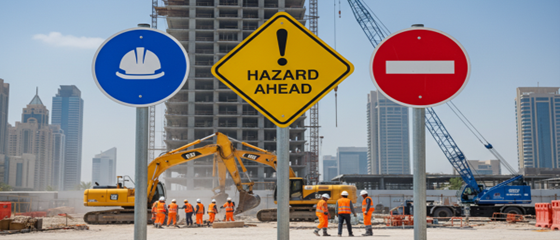
  • Warning Signs: Alert workers and visitors to potential hazards such as overhead work, deep excavations, or moving plant equipment. These are typically yellow or amber with black symbols.
  • Prohibition Signs: Indicate actions that are not permitted in a specific area, such as no unauthorized entry or no smoking near fuel storage zones. These use red circular borders on a white background.
  • Mandatory Signs: Communicate required actions, such as wearing hard hats, high-visibility vests, or safety boots. These typically appear as white symbols on a blue circular background.
  • Safe Condition Signs: Direct workers toward emergency exits, first aid stations, and assembly points. These use white symbols on a green background for quick recognition.
  • Traffic Management Signs: Control the movement of vehicles and plant machinery around the site perimeter and internal access roads. These include speed limit signs, directional markers, and road closure notices.

Each of these sign types plays a specific role. When deployed together as a coordinated system, they create a communication network that actively guides behavior and reduces the likelihood of incidents. A reliable road safety company UAE understands how to specify the right combination of signs for each project phase and site layout.

How Proper Sign Placement Reduces Accident Risk

Even the most well-designed sign fails if it is placed incorrectly. Placement strategy is a core component of construction site safety signage effectiveness. Signs must be positioned at the point of decision, meaning where a worker or driver needs the information to make a safe choice, not after the hazard has already been passed.

Key placement principles include:

  • Position warning signs well in advance of the hazard they describe, giving workers time to react appropriately.
  • Place mandatory PPE signs at every entry point to the site so no worker can enter without seeing the requirement.
  • Install traffic management signs at consistent heights and angles to maximize visibility for both pedestrians and vehicle operators.
  • Ensure signs are not obscured by equipment, temporary structures, or accumulated debris during active construction phases.
  • Use reflective materials or illuminated signs in areas with low-light conditions, such as tunnel work zones or nighttime construction.

Incorrect placement is one of the most common reasons safety signage fails to prevent accidents. Regular site audits should include a review of sign positioning to confirm that all messages remain visible, legible, and relevant to current site conditions. As construction progresses and site layouts change, signage must be updated and repositioned accordingly.

The Role of Traffic Management Signage Around Construction Zones

Construction projects in the UAE frequently involve road closures, lane diversions, and temporary traffic arrangements that affect public roads. Managing vehicle and pedestrian flow around these zones requires professional-grade traffic management infrastructure, not just temporary cones and tape.

Effective traffic management signage around construction zones includes advance warning signs that alert drivers to upcoming disruptions, lane closure indicators, speed reduction signs, pedestrian crossing guidance, and clear end-of-works markers. These signs must comply with UAE road authority standards to ensure legal operation and genuine safety outcomes.

Revive Middle East manufactures and supplies a comprehensive range of traffic signs and road safety products suited to exactly these requirements. From standard regulatory signs to custom fabricated solutions for complex project environments, the company supports infrastructure contractors and construction teams with products built for durability in UAE conditions including intense heat, dust, and high-traffic exposure.

Road gantries and guard rails also play a supporting role in traffic management around construction zones. Guard rails provide physical barriers that complement signage by actively preventing unauthorized access or vehicle encroachment into hazardous areas. When combined with clear signage, these physical barriers form a multi-layered safety system that reduces accident risk more effectively than signage alone.

Maintenance and Compliance of Construction Site Signs

Installing safety signage is not a one-time action. Signs must be maintained throughout the life of a construction project to remain effective. Faded text, damaged panels, missing symbols, or obscured messages reduce the functional value of any sign, regardless of how well it was originally specified and positioned.

Routine sign maintenance on construction sites should include:

  • Weekly visual inspections to identify damaged, faded, or missing signs.
  • Immediate replacement of any sign that has been damaged by machinery, weather, or vandalism.
  • Cleaning of sign faces to remove dust, mud, or paint overspray that reduces visibility.
  • Review of sign content relevance as the project progresses and site conditions change.
  • Documentation of signage audits as part of the site safety management record.

Compliance is an equally important dimension. In the UAE, road and construction authorities set standards for sign design, materials, and placement. Using non-compliant signage can expose project managers and contractors to regulatory penalties and, more critically, can undermine the safety outcomes that good signage is meant to achieve. Working with an established road safety company UAE helps ensure that all products meet current local standards and specifications.

Conclusion

Construction site safety signage is not a regulatory formality. It is a practical, life-saving investment that reduces accident risk, protects workers and the public, and supports smooth project operations across every phase of construction. From warning signs and mandatory PPE notices to full traffic management systems around active road works, the right signage communicates clearly where supervision cannot be constant. Revive Middle East supports construction teams and infrastructure contractors across the UAE with durable, compliant traffic management and road safety products designed for real-world project demands. Explore our full range of solutions at Revive Middle East road safety products and discover how our signage expertise can help protect your next construction project.

FAQ

Q1: What is construction site safety signage?

Construction site safety signage refers to visual signs placed on active job sites to communicate hazards, mandatory requirements, prohibited actions, and safe routes to workers, contractors, and the public to reduce accident risk.

Q2: Why is safety signage important on construction sites in the UAE?

The UAE has extensive construction activity and a highly diverse workforce. Clear, symbol-based construction site safety signage bridges language barriers and ensures all workers understand site hazards, making it essential for safe operations.

Q3: What types of signs are required on a construction site?

Construction sites typically require warning signs, prohibition signs, mandatory instruction signs, safe condition signs, and traffic management signs. Each type communicates a distinct safety message to workers and visitors on site.

Q4: How does a road safety company UAE help with construction signage?

A qualified road safety company UAE like Revive Middle East manufactures and supplies compliant, durable traffic and safety signs suited to construction environments, helping project teams meet local regulatory standards efficiently.

Q5: Where should warning signs be placed on a construction site?

Warning signs should be positioned well in advance of the hazard they describe, at every site entry point, and at any location where workers or drivers need information to make a safe decision before encountering a dangerous area.

Q6: How often should construction site signs be inspected?

Safety signs on construction sites should be visually inspected at least once per week. Any damaged, faded, or obscured signs should be replaced immediately to maintain clear communication and ensure continuous site safety compliance.

Q7: What materials are used for durable construction safety signs in the UAE?

Durable construction safety signs in the UAE are typically made from aluminum or high-grade plastics with reflective sheeting. These materials withstand intense heat, UV exposure, dust, and the physical demands of active construction environments.

Q8: Do construction traffic management signs need to comply with UAE regulations?

Yes. Traffic management signs around UAE construction zones must comply with standards set by local road and transport authorities. Non-compliant signage can result in regulatory penalties and may compromise the safety outcomes the signs are intended to achieve.

Q9: What is the difference between warning signs and prohibition signs on a site?

Warning signs alert workers to potential hazards nearby, while prohibition signs indicate actions that are not permitted in a specific area. Both are essential components of a complete construction site safety signage system.

Q10: Can construction site signage help protect the general public near job sites?

Absolutely. Traffic management signs, pedestrian guidance markers, and advance warning signs placed on public roads near construction zones protect drivers and pedestrians by clearly communicating site boundaries, speed restrictions, and safe passage routes.

Thermoplastic Road Marking Paint Manufacturer vs Competitors: What Sets the Best Apart

Introduction

When selecting a thermoplastic road marking paint manufacturer, quality is not a matter of preference; it is a matter of road safety. Road markings guide drivers, regulate traffic flow, and reduce the risk of collisions on busy highways and urban streets. Not all manufacturers deliver the same level of durability, regulatory compliance, or real-world performance. In a market like the UAE, where road standards are strictly enforced and climate conditions are extreme, the gap between a reliable manufacturer and an average one becomes evident very quickly. This blog explores what separates the best from the rest.

Key Takeaways

The best thermoplastic road-marking paint manufacturer prioritizes raw material quality, retroreflectivity, and full regulatory compliance.

Manufacturers of thermoplastic paints who conduct UAE climate-specific testing deliver markings that last significantly longer in local conditions.

End-to-end support from supply to installation is a defining quality of leading manufacturers over competitors.

What Is Thermoplastic Road Marking Paint and Why Does It Matter?

Thermoplastic paint is a heat-applied road marking material that offers far superior durability compared to standard solvent-based or water-based liquid paints. When applied, the material is heated to a molten state and bonded directly to the road surface, forming a thick, hard-wearing layer that resists fading, cracking, and surface wear.

In the UAE, where asphalt temperatures regularly exceed 60 degrees Celsius in summer, and road networks carry some of the highest traffic volumes in the region, thermoplastic road markings are the standard choice for municipalities and road authorities. A poorly chosen manufacturer can deliver markings that fade within months, creating safety hazards and significantly increasing maintenance costs. Choosing the right supplier begins with understanding what distinguishes top-tier manufacturers from those simply competing on price. According to the Federal Highway Administration, high-quality road markings are among the most cost-effective safety countermeasures available on any road network.

Key Differentiators: What Separates Top Manufacturers from the Rest

1. Raw Material Quality and Composition

The performance of any thermoplastic road marking product begins with its raw material composition. Top manufacturers of thermoplastic paints use high-grade hydrocarbon resins, precisely calibrated glass bead concentrations, and UV-stable pigments that conform to standards such as EN 1871 or AASHTO M249. These materials directly determine adhesion strength, color retention, and long-term retroreflectivity.

Manufacturers who cut costs by using lower-grade fillers or substandard binders produce markings that deteriorate quickly, losing contrast, brightness, and adhesion well before the expected service life. When evaluating any thermoplastic road marking paint manufacturer, always request material data sheets, composition certificates, and third-party test reports. The difference in raw material quality is the single largest driver of performance variation between competitors. Explore the thermoplastic paints and road markings range of products built to quality material standards.

2. Retroreflectivity and Night-Time Visibility Performance

Retroreflectivity – the ability of a road marking to reflect vehicle headlights back toward the driver—is one of the most critical performance metrics for any road marking material. The best thermoplastic road marking paint manufacturers engineer their products to sustain retroreflectivity consistently over a three-to-five year lifespan under normal traffic exposure.

Competitors who do not invest in proper glass bead size grading or bead embedment technology produce markings that appear vivid immediately after installation but lose nighttime effectiveness within the first year. This is a significant safety shortfall on roads where drivers depend on clear lane guidance after dark. When comparing manufacturers, ask for retroreflectivity performance data measured at 12 months and 24 months post-application, not just at the point of installation. Reviewing completed road marking projects in the region can help verify real-world performance claims from any manufacturer.

3. Application Consistency and Technical Support

Even the highest-quality thermoplastic material will underperform if it is applied incorrectly. Application temperature, material thickness, ambient conditions, and surface preparation all directly affect adhesion quality and durability. The best manufacturers either deploy trained application teams or provide rigorous technical guidance and on-site supervision for certified applicators.

Competitors who treat supply and applications as entirely separate functions often leave significant performance gaps. Uneven thickness, poor surface priming, or incorrect preheating leads to premature peeling, edge chipping, and inconsistent marking widths. When assessing a thermoplastic road marking paint manufacturer, confirm their technical support model—specifically, whether they provide application supervision on large-scale or high-visibility projects. At Revive Middle East, our services include both material supply and professional installation support, ensuring consistent results from project start to completion.

4. UAE Climate Compatibility and Local Testing

The UAE’s climate presents road marking materials with conditions that differ significantly from European or North American test environments. Road surface temperatures regularly exceed 70 degrees Celsius in peak summer, UV radiation is intense year-round, and occasional heavy rainfall creates rapid wet-dry cycles that stress road marking adhesion.

Leading manufacturers of thermoplastic paints validate their products under local or simulated UAE climate conditions, rather than relying solely on data generated in cooler, less UV-intense environments. Manufacturers who do not account for regional climate variability may supply technically compliant products that still fail prematurely in UAE field conditions. Requesting UAE-specific performance data or reviewing case studies from comparable GCC markets is a sound due-diligence step before committing to any supplier.

5. Regulatory Compliance and Documentation Standards

Road markings in the UAE must meet specifications set by authorities, including the Roads and Transport Authority (RTA) in Dubai and the Abu Dhabi Department of Municipalities and Transport. These specifications cover retroreflectivity values, skid resistance coefficients, colour accuracy, and application thickness tolerances.

A dependable thermoplastic road marking paint manufacturer maintains up-to-date compliance documentation and can present test certificates, approval letters, and product specifications on request. Competitors who cannot supply this documentation, or who operate with outdated approvals, expose project owners to compliance risks and rework costs. Before selecting a supplier, verify that their products carry current approvals aligned with the relevant UAE authority’s standards for your project type. Reviewing what we do at Revive Middle East gives a clear picture of the compliance-first approach we bring to every road marking project.

How to Evaluate a Thermoplastic Road Marking Paint Manufacturer Before You Commit

Choosing a manufacturer is a decision that affects road safety and project budgets over several years. Use this checklist when comparing suppliers:

  • Request product data sheets and third-party test certificates confirming composition and performance.
  • Ask for retroreflectivity data at 12-month and 24-month intervals post-application.
  • Review past project references in the UAE or comparable GCC climate regions.
  • Confirm the technical support model, including on-site supervision availability.
  • Verify regulatory compliance with UAE road marking authority specifications.
  • Compare total lifecycle cost, not just unit price per kilogram of material.

Selecting on price alone consistently leads to higher long-term costs through more frequent re-marking cycles, increased maintenance, and potential compliance penalties on regulated projects.

Conclusion

Choosing the right thermoplastic road marking paint manufacturer goes well beyond comparing price lists. The best manufacturers combine high-grade raw materials, climate-validated performance, consistent application support, and verified regulatory compliance – factors that directly determine how long road markings last and how effectively they protect road users. In the UAE, where infrastructure quality standards are high and environmental demands exceptional, these differentiators have a measurable impact on both safety outcomes and total project value.

Whether you are delivering a municipal road marking program, a highway infrastructure upgrade, or a commercial development with regulated traffic management requirements, working with a qualified supplier is essential. Contact Revive Middle East to discuss your road marking requirements and find out how our thermoplastic solutions are built for UAE conditions.

FAQ

Q1. What is thermoplastic road marking paint?

Thermoplastic road marking paint is a heat-applied material used to create durable lane lines, symbols, and road markings. It is melted and bonded directly to the road surface, offering significantly better durability, retroreflectivity, and weather resistance than standard liquid paints.

Q2. How long does thermoplastic road marking last?

High-quality thermoplastic road markings typically last three to five years under normal traffic conditions. Lifespan depends on raw material quality, application thickness, traffic volume, and climate conditions. In the UAE’s high-heat environment, products tested for local conditions tend to perform closer to the upper range.

Q3. What makes a thermoplastic road marking paint manufacturer reliable?

A reliable manufacturer provides certified raw material data, third-party test results, retroreflectivity performance history, and regulatory compliance documentation. They also offer technical application support and have verifiable project references in comparable climate regions such as the UAE or GCC market.

Q4. How does thermoplastic paint perform in UAE summer heat?

Thermoplastic road markings engineered for UAE conditions are designed to withstand road surface temperatures exceeding 70 degrees Celsius. Manufacturers who validate products under local climate conditions provide markings with significantly better adhesion and colour retention compared to products tested only in cooler environments.

Q5. What standards govern road markings in the UAE?

Road markings in the UAE are regulated by authorities including Dubai’s Roads and Transport Authority and Abu Dhabi’s Department of Municipalities and Transport. These bodies specify retroreflectivity levels, skid resistance values, colour accuracy, and material composition requirements for all road marking products used on public roads.

Q6. What is retroreflectivity and why does it matter?

Retroreflectivity is a road marking’s ability to reflect vehicle headlights back toward drivers at night. High retroreflectivity keeps lane markings clearly visible in low-light and wet conditions. It is a critical safety metric and a key differentiator between high-quality and average manufacturers of thermoplastic paints operating in road safety infrastructure.

Q7. How do manufacturers of thermoplastic paints differ in quality?

Key quality differences include raw material grade, glass bead specification, UV-stable pigment quality, and climate-specific testing. Top manufacturers provide documented performance data over time, while lower-quality competitors often rely on initial installation appearance without long-term performance validation or compliance certification.

Q8. Can thermoplastic road marking be applied to all road surfaces?

Thermoplastic road marking is compatible with asphalt and concrete surfaces, which are the most common road types in the UAE. Proper surface preparation, including cleaning and priming where required, is essential for adhesion. Your manufacturer or installation team should assess surface conditions before application begins.

Q9. Is thermoplastic road marking more cost-effective than standard paint?

Over a full lifecycle, thermoplastic road markings are more cost-effective than standard liquid paint. Although the initial material cost is higher, thermoplastic markings last three to five times longer, reducing re-marking frequency and total maintenance expenditure on roads, car parks, and infrastructure projects.

Q10. How do I choose a thermoplastic road marking supplier in the UAE?

Evaluate suppliers based on material quality documentation, UAE-specific project references, retroreflectivity performance data, and compliance with local road authority specifications. Prioritise suppliers who offer technical application support and after-service follow-up, rather than selecting on unit price alone. The contact page has details on how to reach the Revive Middle East team directly.

Empire State Building

Contemporary Vilas

Empire State Building

Contemporary Vilas

Empire State Building