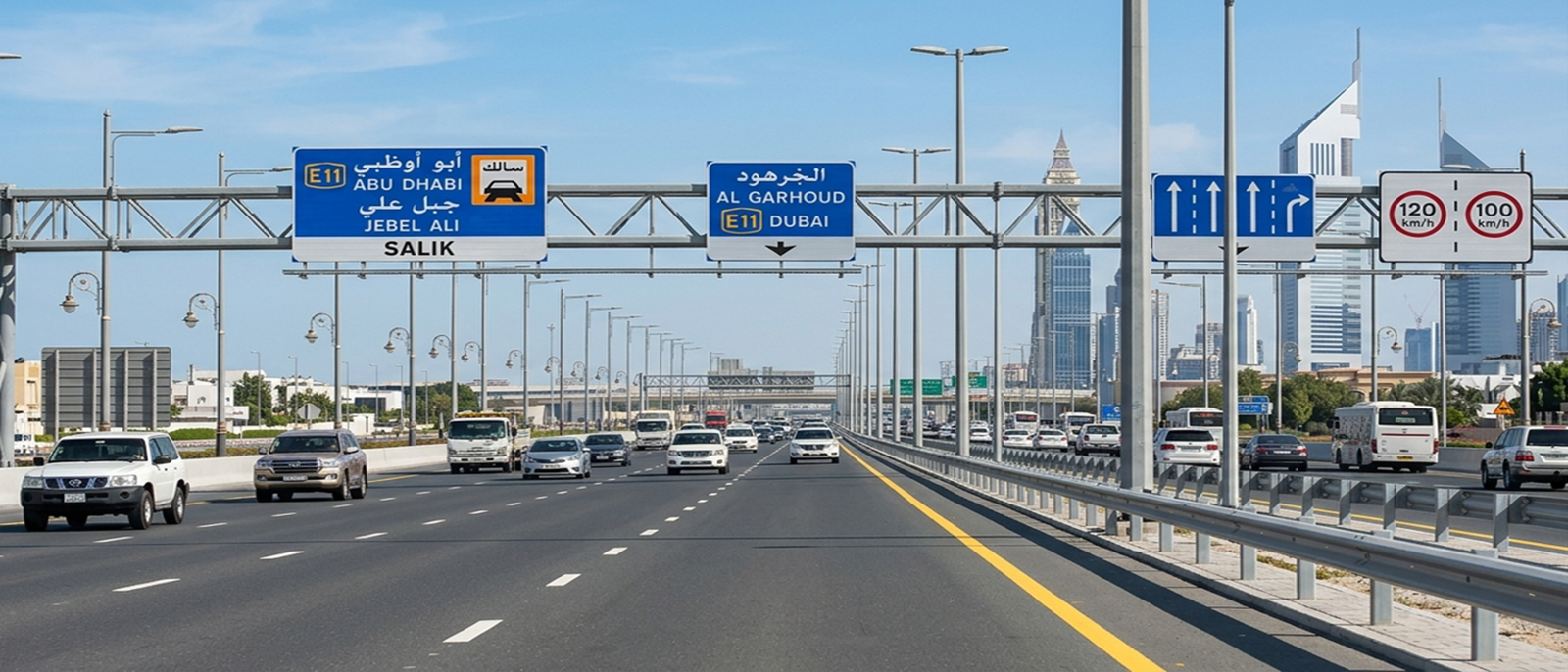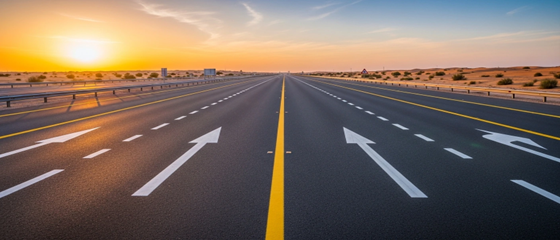
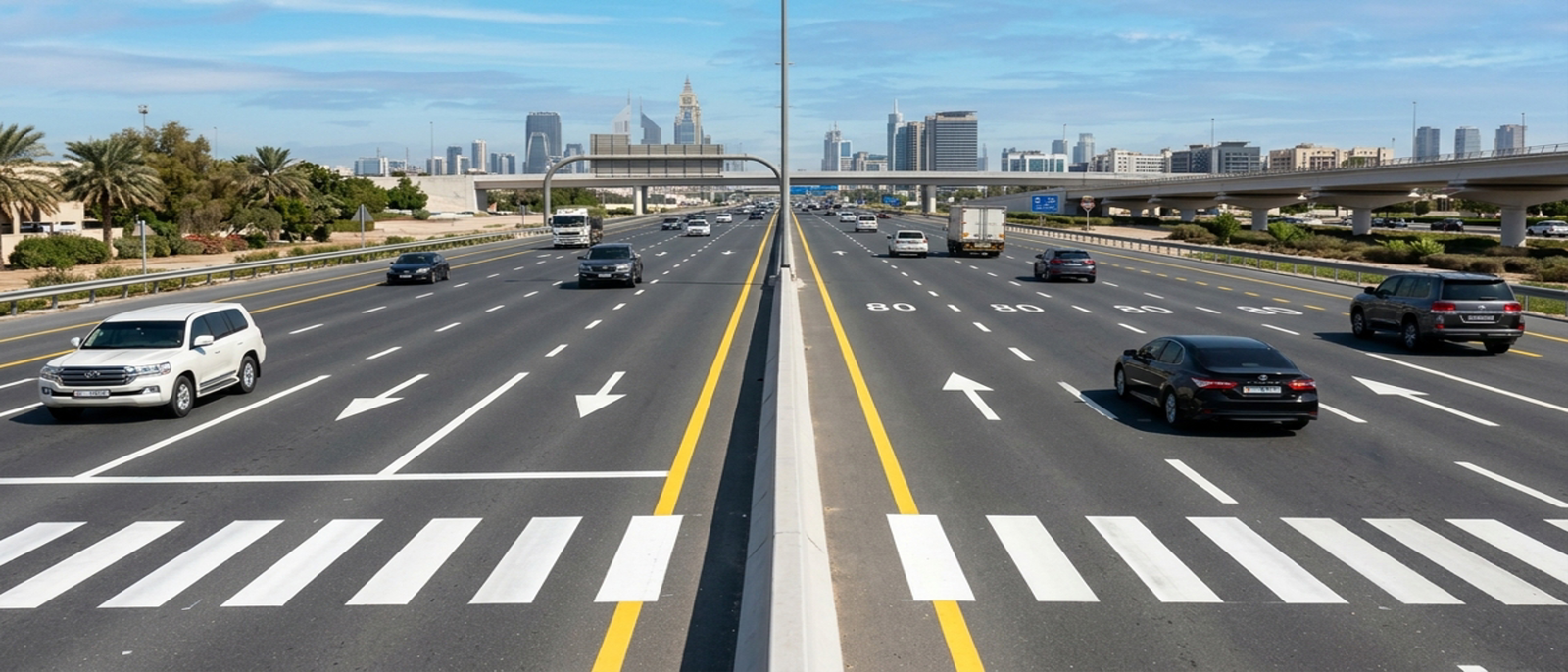
Thermoplastic road markings are transforming how road safety is managed in high-traffic environments. In busy urban zones, highways, and intersections, standard paint simply cannot keep up with the demands of heavy vehicle loads, extreme heat, and constant wear. Thermoplastic markings offer a proven, long-lasting alternative that improves visibility, reduces maintenance costs, and supports safer driving conditions. This blog explores the top five benefits of thermoplastic road markings and why infrastructure professionals across the UAE are choosing them over conventional options.
Key Takeaways
- Thermoplastic road markings last significantly longer than standard road marking paint, making them ideal for high-traffic roads and highways.
- Their retroreflective properties and bright pigmentation ensure markings remain highly visible in both day and night conditions.
- Choosing a reliable thermoplastic road marking paint manufacturer ensures consistent quality, compliance, and performance across large-scale infrastructure projects.
What Are Thermoplastic Road Markings?
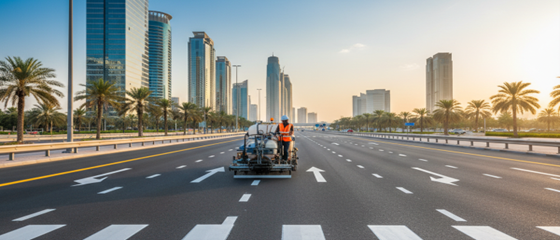
Thermoplastic road markings are applied using a hot-melt process. The material is heated to a specific temperature and then applied directly onto the road surface, where it bonds firmly as it cools. Unlike conventional road marking paint, thermoplastic material contains resins, glass beads, pigments, and fillers that give it superior durability and retroreflective performance.
These markings are widely used on highways, arterial roads, pedestrian crossings, parking zones, and airport runways. Their adaptability makes them suitable for a wide range of infrastructure projects in the UAE and across the wider region. For a deeper understanding of available thermoplastic materials, explore the thermoplastic road marking paint manufacturer category covering product types and regional applications.
Benefit 1: Superior Durability in High-Traffic Conditions
One of the most significant advantages of thermoplastic road markings is their exceptional durability. In areas with high vehicle volume, road markings face constant abrasion from tyres, heavy trucks, and weather exposure. Thermoplastic material bonds deeply with the road surface, creating a marking that can withstand this ongoing mechanical stress far better than liquid paint.
Standard paint markings may need reapplication every six to twelve months in busy areas. In contrast, thermoplastic markings can last three to seven years under similar conditions, depending on traffic volume and maintenance practices. This longevity is a major advantage for municipalities and road authorities managing large infrastructure budgets. According to research on road marking performance published by the World Health Organization, effective road markings contribute directly to reduced road fatalities and improved traffic flow management. You can also read about why quality road markings are critical for traffic safety on UAE roads.
Benefit 2: High Retroreflectivity for Night and Wet Weather Visibility
Visibility is a critical factor in road safety, particularly at night and during rain. Thermoplastic road markings contain embedded glass beads that reflect vehicle headlight beams back toward the driver. This retroreflective property makes the markings clearly visible even in low-light or wet conditions, which is when most road accidents occur.
Standard paint becomes dull over time and loses its reflective properties quickly. Thermoplastic markings maintain brightness and retroreflectivity throughout their service life, especially when high-quality glass bead concentrations are used. For road authorities and contractors working on high-speed corridors or night-use roads, this benefit alone justifies the investment. Partnering with a trusted thermoplastic road marking paint manufacturer ensures that glass bead specifications meet the required visibility standards for each project type. Comprehensive guidance on road marking materials and performance is also available through our road marking blog resources.
Benefit 3: Fast Application and Reduced Lane Closure Time
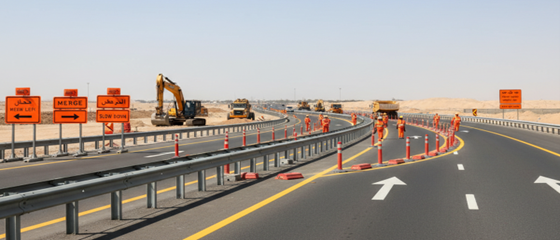
Time is a critical resource in road construction and maintenance. Every hour a lane is closed for marking work represents a disruption to traffic flow and a potential safety hazard for road workers. Thermoplastic road markings set rapidly after application, often becoming trafficable within minutes of cooling. This rapid curing time significantly reduces lane closure periods compared to solvent-based or water-based paints, which can take much longer to dry fully.
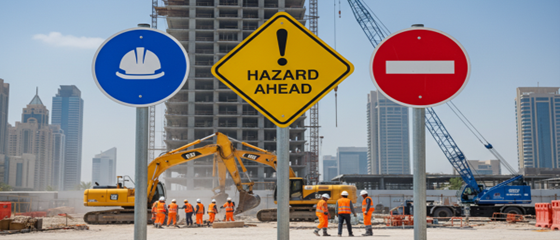
This speed advantage is especially valuable on motorways, ring roads, and busy intersections where prolonged lane closures can cause significant congestion. Infrastructure contractors managing tight project schedules benefit greatly from the quick turnaround that thermoplastic application provides. It also reduces the risk of wet marking damage from vehicles entering the work zone too early. Proper site safety measures, including appropriate safety signage during road works, are equally important to protect both workers and road users during the application process.
Benefit 4: Cost-Effectiveness Over the Long Term
While the upfront cost of thermoplastic road markings is higher than standard paint, the long-term economics strongly favor thermoplastic. Because these markings last significantly longer, the frequency and cost of reapplication are reduced considerably. Road authorities and municipalities save on labor, materials, traffic management for repeat maintenance, and disruption costs over a multi-year period.
A lifecycle cost analysis consistently shows that thermoplastic markings deliver better value per year of service compared to paint. For large-scale projects such as highway networks, industrial zones, or new residential developments across the UAE, these savings can be substantial. Working with a reputable thermoplastic road marking paint manufacturer also helps ensure that material quality is consistent, reducing the risk of premature failure that could drive up maintenance costs unexpectedly. Exploring the full range of road marking and traffic management services available in the UAE can help project managers plan more effectively for long-term infrastructure investment.
Benefit 5: Enhanced Road Safety and Regulatory Compliance
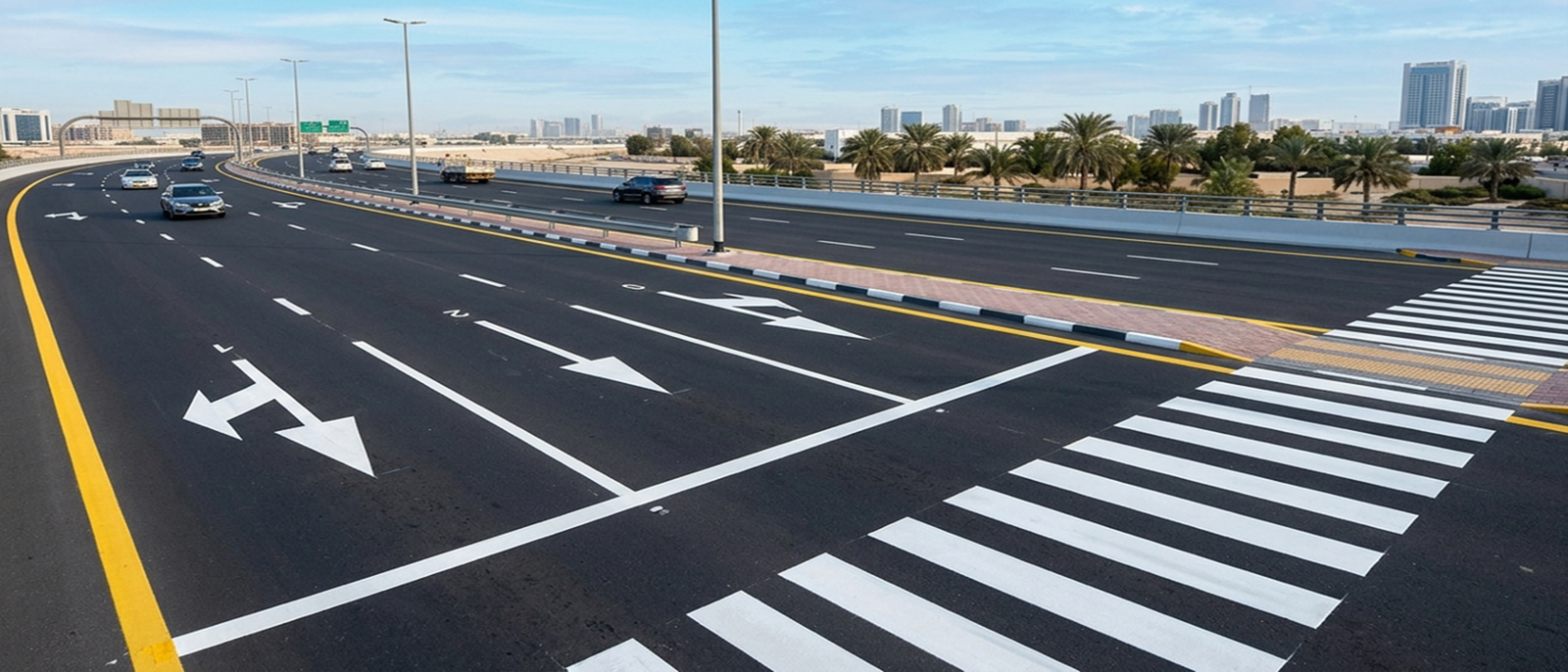
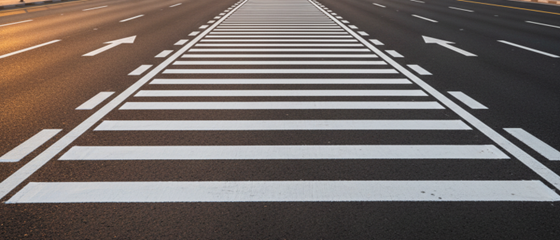
Thermoplastic road markings play a direct role in improving road safety. Clear, durable, and highly visible markings help drivers navigate road layouts correctly, reducing the likelihood of wrong-lane driving, missed pedestrian crossings, and intersection errors. In high-traffic areas, the clarity of lane markings, arrows, stop lines, and zebra crossings can make a measurable difference to accident rates.
Road marking standards in the UAE are governed by transport and municipal authorities that specify material performance, colour, dimensions, and retroreflectivity levels. Thermoplastic materials are widely accepted under these standards because of their performance consistency. Choosing a qualified manufacturer and installer ensures that all markings meet local compliance requirements. Understanding how a traffic management company in the UAE approaches standards, safety, and compliance can help project managers select the right partners for road marking projects.
The Transportation Research Board has consistently highlighted that high-performance pavement markings are among the most cost-effective traffic safety measures available to road authorities worldwide.
Why Choosing the Right Thermoplastic Road Marking Paint Manufacturer Matters
The quality of thermoplastic road markings depends heavily on the material itself. Not all thermoplastic compounds are manufactured to the same standard. A reliable thermoplastic road marking paint manufacturer will use precise resin formulations, correct pigment concentrations, and verified glass bead specifications to produce materials that perform consistently across different road surfaces and climate conditions.
In the UAE, where road surfaces can reach extremely high temperatures and UV exposure is intense, the quality of the thermoplastic compound is particularly important. Poor-quality materials may soften, discolour, or delaminate prematurely, creating safety risks and requiring early replacement. Engaging a manufacturer with documented quality processes and UAE infrastructure experience provides confidence that the final marking will perform as required throughout its intended service life.
Applications of Thermoplastic Road Markings Across the UAE
Thermoplastic road markings are used across a wide variety of infrastructure settings in the UAE. Common applications include lane dividers and edge lines on highways, stop lines and directional arrows at signalized intersections, pedestrian crossings in urban areas, parking bay markings in commercial and residential developments, and speed limit reminders on school zones and residential streets. Detailed information on completed road marking projects and infrastructure work can be found in our projects section, which covers a range of project types across the region.
Each application has specific requirements for marking width, colour, and retroreflectivity. A professional installation team with experience in thermoplastic application ensures that all markings are applied accurately and in compliance with relevant UAE standards.
Conclusion
Thermoplastic road markings offer a compelling combination of durability, visibility, speed of application, long-term cost savings, and regulatory compliance. For high-traffic roads, urban intersections, highways, and pedestrian zones, they represent the most practical and effective road marking solution available. Their performance advantages over standard paint are well-documented, and their role in improving road safety is clear. Whether you are managing a government infrastructure project, a large-scale construction development, or a municipal road maintenance programme in the UAE, investing in thermoplastic markings is a sound decision that delivers measurable returns over the long term. To discuss your specific project requirements and receive expert guidance, contact our team today and find out how we can support your road marking needs across the UAE.
FAQ
Q1: What makes thermoplastic road markings better than standard paint?
Thermoplastic road markings bond more deeply with road surfaces, last three to seven years in high-traffic conditions, and maintain retroreflectivity far longer than standard paint. Their heat-applied composition also resists abrasion from heavy vehicles better, making them a cost-effective long-term road safety solution.
Q2: How long do thermoplastic road markings last in high-traffic areas?
In high-traffic areas, thermoplastic road markings typically last between three and seven years, depending on traffic volume, vehicle weight, road surface condition, and climate. Regular inspection and timely maintenance help extend service life and keep markings compliant with visibility requirements.
Q3: Are thermoplastic road markings suitable for UAE road conditions?
Yes, thermoplastic road markings are well-suited to UAE conditions. High-quality thermoplastic compounds are formulated to resist UV exposure, high surface temperatures, and heavy vehicle loads, all of which are common challenges on UAE roads. Choosing a reliable local manufacturer and installer is essential for consistent performance.
Q4: What is the application process for thermoplastic road markings?
Thermoplastic road markings are applied using a hot-melt process. The material is heated, then sprayed or screeded onto the prepared road surface. Glass beads are sometimes added after application for retroreflectivity. The marking bonds as it cools and becomes trafficable within a few minutes, minimizing lane closure time.
Q5: How do thermoplastic road markings improve night visibility?
Thermoplastic road markings contain glass beads that reflect vehicle headlights back toward drivers, improving retroreflectivity at night and in wet weather. This reflective quality is maintained throughout the marking’s service life, making thermoplastic the preferred choice for high-speed roads where quality road markings are critical for traffic safety.
Q6: What are the most common uses of thermoplastic road markings?
Common applications include highway lane lines, pedestrian crossings, stop lines, directional arrows, parking bay markings, and school zone indicators. Each application requires specific colours, widths, and performance standards. A qualified thermoplastic road marking paint manufacturer ensures materials meet the exact specifications for each road type.
Q7: Can thermoplastic road markings be used on all road surface types?
Thermoplastic road markings can be applied to asphalt, concrete, and other sealed road surfaces. Proper surface preparation, including cleaning and priming where necessary, is essential for strong adhesion. A professional installation team will assess the road surface condition before application to ensure long-term bonding and performance.
Q8: How do thermoplastic road markings contribute to regulatory compliance in the UAE?
UAE transport and municipal authorities specify marking dimensions, colours, and retroreflectivity levels for all road projects. Thermoplastic materials are widely accepted under these standards because of their consistent performance, as detailed in guidance from a traffic management company covering UAE standards, safety, and compliance.
Q9: What factors affect the durability of thermoplastic road markings?
Key factors include traffic volume and vehicle weight, road surface quality, application temperature, material formulation quality, and UV and heat exposure. In the UAE, UV intensity and road surface heat are particularly significant. Selecting a reputable thermoplastic road marking paint manufacturer with regional experience helps maximize durability.
Q10: How do I choose the right thermoplastic road marking paint manufacturer for a UAE project?
Look for a manufacturer with documented quality processes, regional infrastructure experience, and materials tested for UAE climate conditions. Verify that their thermoplastic compounds meet relevant performance and retroreflectivity standards. Requesting third-party test data and project references is a practical way to assess a manufacturer’s capability before committing to a contract.