The Importance of Clear Road Line Marking in High-Traffic Areas

Road line marking is one of the most fundamental elements of traffic safety infrastructure. In high-traffic areas such as urban intersections, highways, construction zones, and industrial roads, the clarity and durability of road markings can directly influence driver behavior, pedestrian safety, and traffic flow. Without well-maintained and clearly visible markings, even the most well-designed roads become hazardous. This blog explores why road line marking matters in high-traffic environments and what makes a marking system truly effective.

Key Takeaways

  • Road line marking is essential for guiding vehicles and pedestrians safely through high-traffic areas.
  • Durable, compliant road markings reduce confusion, improve traffic flow, and lower the risk of accidents at busy intersections and construction zones.
  • Professional road marking contractors ensure that markings meet UAE regulatory standards and deliver long-term visibility under harsh conditions.

Why Road Line Marking Is Critical in High-Traffic Zones

High-traffic areas demand clear visual guidance at all times. Road line marking serves as a silent traffic controller, guiding drivers, cyclists, and pedestrians without requiring active intervention. Lane dividers, pedestrian crossings, stop lines, and directional arrows all rely on precise, visible markings to function correctly.

In the UAE, where roads experience extreme heat, heavy vehicle loads, and rapid urban development, the performance of road markings is constantly tested. Faded or unclear lines in busy areas can lead to dangerous lane changes, missed pedestrian crossings, and poorly managed intersections. According to the Roads and Transport Authority (RTA) of Dubai, road safety standards require all road markings to maintain high retroreflectivity and visibility, especially in high-density traffic corridors.

Reliable road line marking also supports emergency response teams. When lanes are clearly marked, ambulances and fire trucks can navigate congested roads more efficiently. This makes the role of road markings far broader than simple lane guidance.

Types of Road Markings Used in High-Traffic Areas

Different traffic environments require different types of road line marking. Understanding the correct marking type for each scenario is key to building a safe and functional road network.

  • Longitudinal markings: These include lane dividers, edge lines, and center lines. They guide vehicles along the correct path on multi-lane roads.
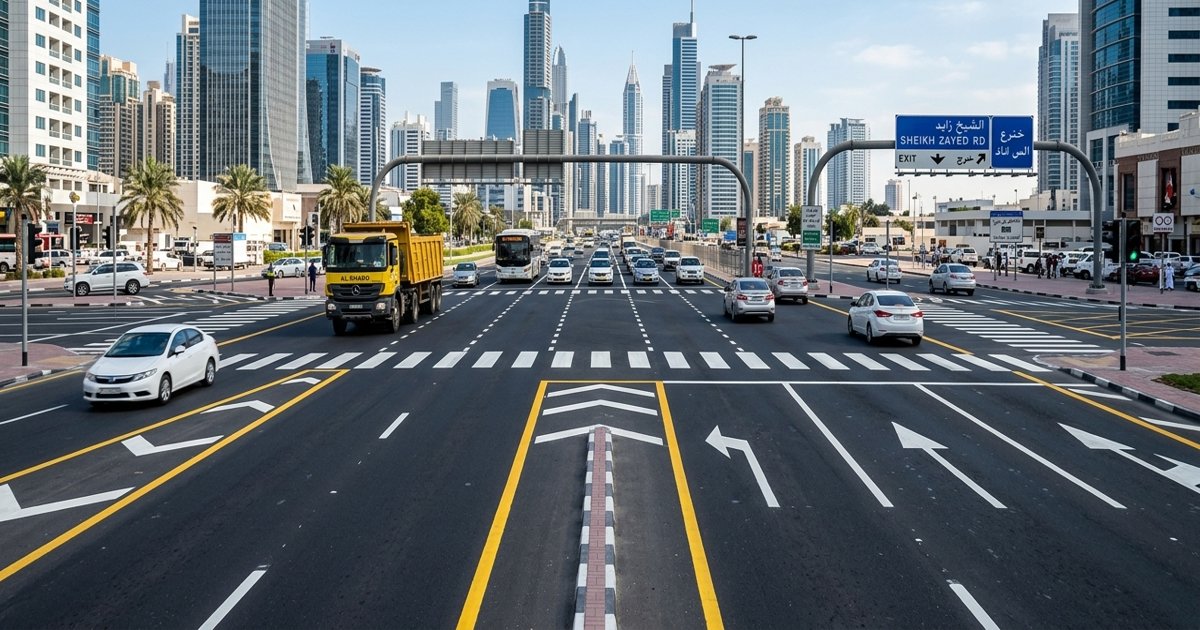
  • Transverse markings: Stop lines, give-way lines, and pedestrian crossings fall into this category. They control vehicle and pedestrian movement at intersections.
  • Symbol and text markings: Arrows, speed limits, and lane designation markers provide additional instruction directly on the road surface.
  • Hazard and warning markings: Chevrons, diagonal patterns, and yellow hash markings are used near construction zones and lane merges to alert drivers of upcoming changes.

Choosing the correct marking type depends on the road classification, traffic volume, and speed limits. In the UAE, these decisions are guided by local transport authorities and must be executed by qualified road marking contractors who understand the applicable standards. You can learn more about how traffic infrastructure is managed by visiting our page on traffic management company UAE standards, safety and compliance.

Materials That Determine Road Marking Durability

The longevity of road line marking in high-traffic areas depends significantly on the materials used. Poor-quality materials fade faster, require more frequent reapplication, and increase long-term costs.

Common road marking materials include thermoplastic, epoxy-based paint, and cold plastic compounds. Thermoplastic markings are among the most widely used in the UAE due to their durability, fast application time, and strong retroreflective properties. They resist wear from heavy vehicle traffic and maintain visibility in both daytime and nighttime conditions.

Glass beads are often embedded into thermoplastic markings to enhance reflectivity at night. This is especially important on highways and high-speed corridors where driver reaction time is shorter. High-quality materials combined with professional installation by experienced road marking contractors ensure that markings last through high-traffic demands without compromising road safety.

For a detailed look at the products available for road safety infrastructure, explore our road safety products range.

The Role of Road Marking Contractors in Ensuring Compliance

Professional road marking contractors play a vital role beyond simply applying paint to a road surface. They are responsible for accurate layout planning, surface preparation, material selection, and compliance with UAE road safety standards. A poorly executed marking project can be as dangerous as having no markings at all.

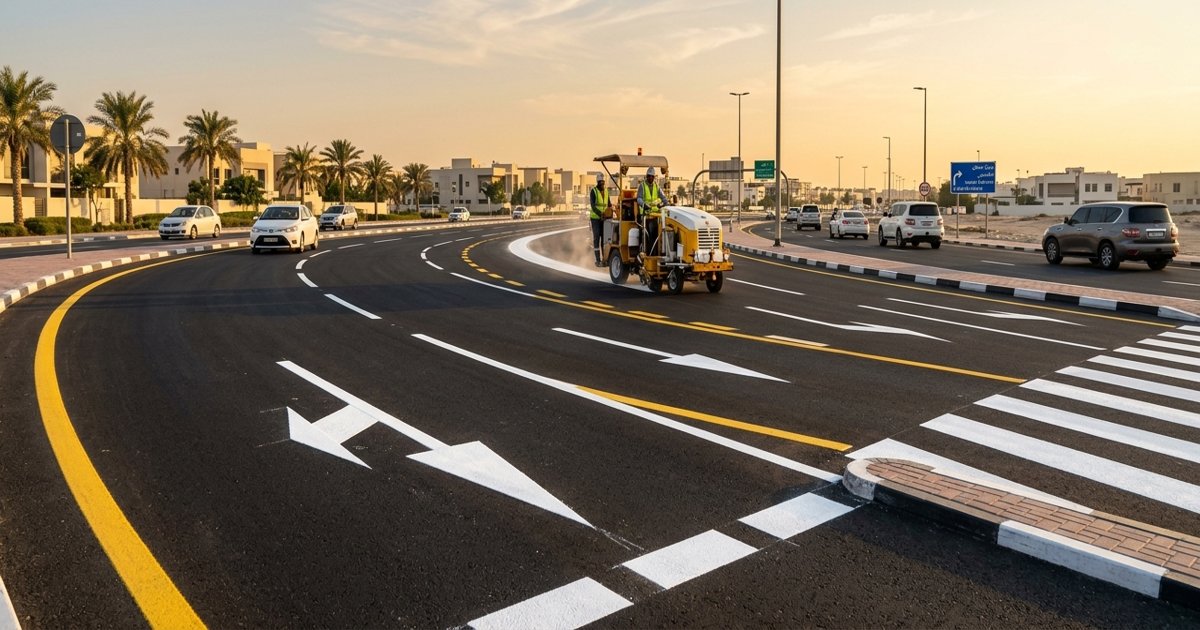
Qualified contractors use precision equipment to ensure consistent line widths, correct spacing, and accurate positioning of symbols and text. They also assess road surface conditions before application to prevent premature peeling or fading. In high-traffic areas, contractors must often work during off-peak hours or at night to minimize disruption.

At Revive Middle East, we provide professional road marking services across the UAE, from major highways to urban intersections, construction zones, and private developments. Our team understands the demands of high-traffic environments and delivers solutions built for durability and compliance.

How Road Line Marking Supports Overall Traffic Safety

Clear road line marking works as part of a broader traffic safety system. When combined with proper signage, guard rails, and road furniture, well-executed markings create a comprehensive safety environment that guides all road users effectively.

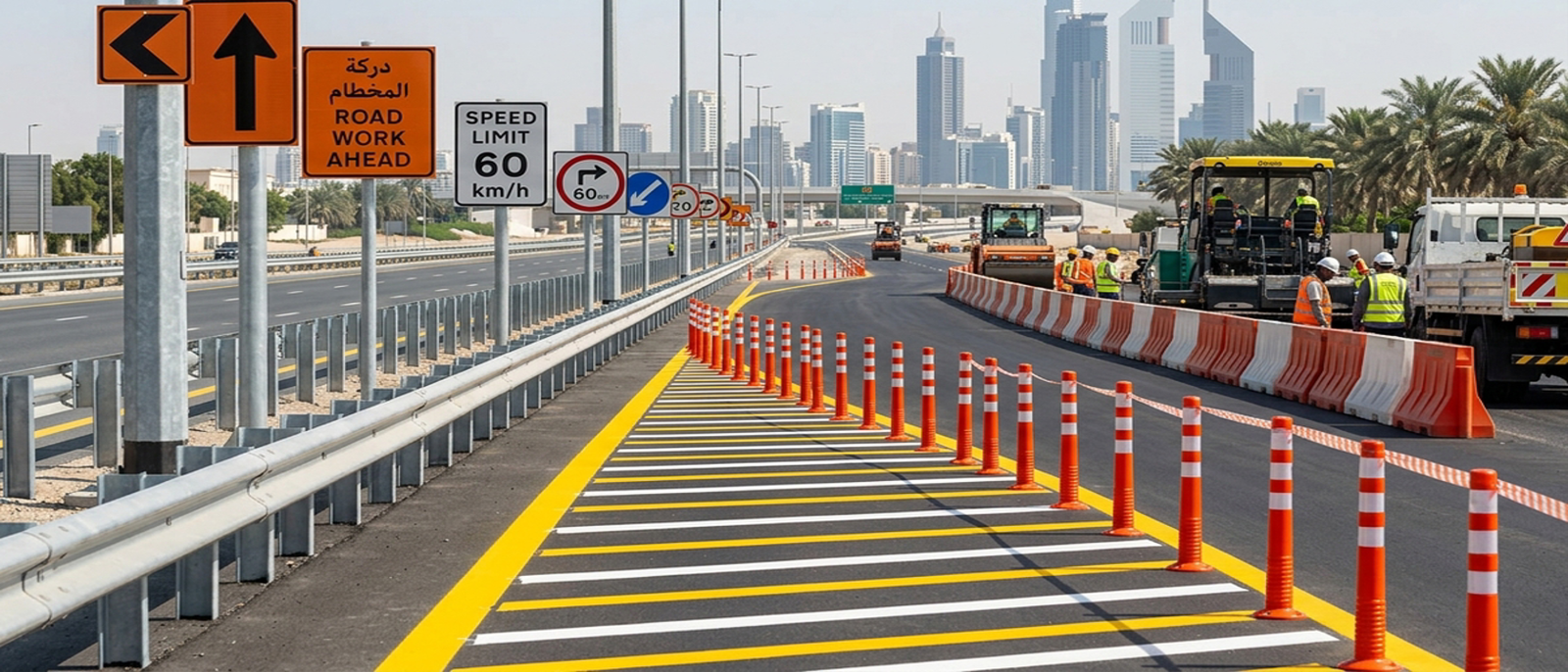
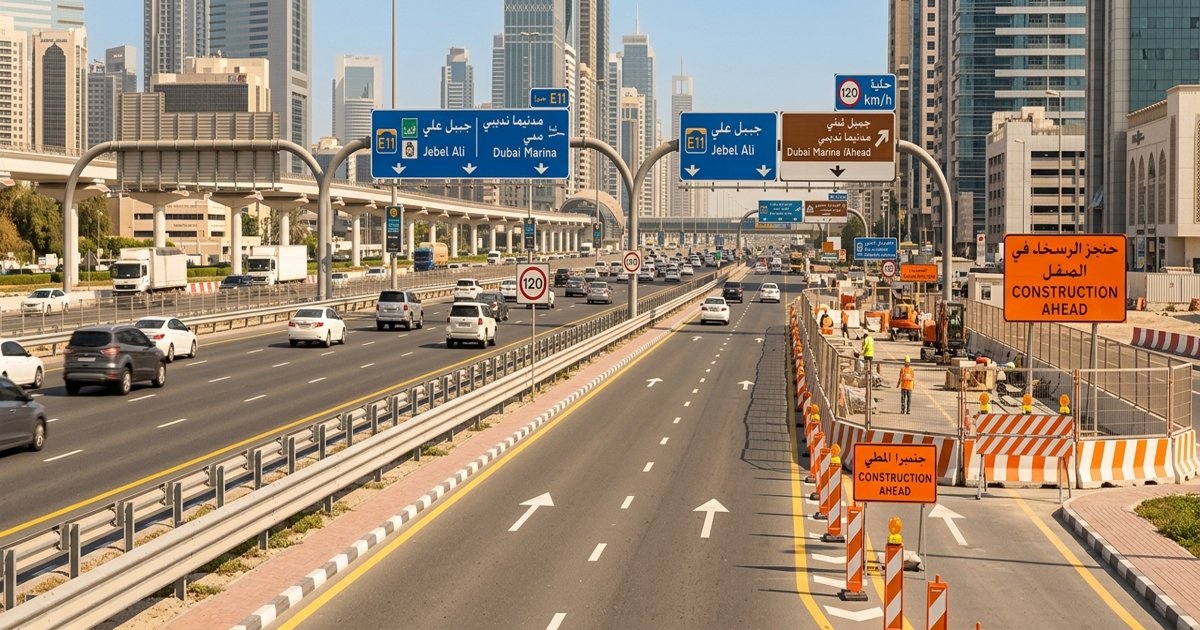
For instance, road markings near construction zones communicate temporary lane changes, detours, and hazard zones. In industrial areas, markings define truck routes, pedestrian walkways, and loading zones to prevent accidents between heavy vehicles and workers on foot.

Studies from transportation safety bodies consistently show that improving road marking visibility reduces the incidence of lane-departure crashes and intersection collisions. Understanding the full picture of road safety is important, which is why we recommend reading about why quality road markings are critical for traffic safety to appreciate the broader impact of proper marking systems.

Effective road markings also reduce driver stress in high-traffic areas by providing clear visual cues. When road users are confident about lane positions and right-of-way, traffic flows more smoothly and the likelihood of erratic driving decreases significantly.

Maintenance and Repainting: Keeping Road Markings Effective

Even the highest-quality road line marking requires regular maintenance to remain effective. In the UAE, intense sunlight, sandstorms, and heavy vehicle traffic accelerate the degradation of road markings over time.

A proactive maintenance schedule allows authorities and facility managers to identify faded or damaged markings before they become safety hazards. Regular inspections, combined with timely repainting by professional road marking contractors, keep roads safe and compliant with local standards.

Revive Middle East supports clients with maintenance and after-service solutions, ensuring that road markings remain visible and effective throughout their service life. Our team uses high-performance materials and proven methods to restore and enhance road markings across all types of road environments in the UAE. To explore how our services are structured, visit our professional road marking services page for full details.

Conclusion

Road line marking is far more than a painted line on asphalt. In high-traffic areas, it is a critical component of road safety infrastructure that guides, warns, and organizes the movement of thousands of vehicles every day. The quality of materials, the precision of installation, and the regularity of maintenance all contribute to how well a marking system performs. For government authorities, municipalities, and infrastructure contractors in the UAE, investing in professional-grade road markings delivered by qualified road marking contractors is an investment in public safety and long-term road performance. To learn more about our full range of traffic management and road safety solutions, contact us today.

Frequently Asked Questions

What is road line marking and why is it important?

Road line marking refers to painted lines, symbols, and patterns applied to road surfaces to guide traffic. It is important because it organizes vehicle movement, defines lanes, and improves safety in high-traffic areas by providing clear visual instructions to all road users.

What materials are commonly used for road markings in the UAE?

The most common materials for road markings in the UAE include thermoplastic compounds, cold plastic, and epoxy-based paint. Thermoplastic is preferred for high-traffic roads due to its durability, fast-drying properties, and excellent retroreflectivity that keeps lines visible at night.

How long do thermoplastic road markings last in high-traffic conditions?

Thermoplastic road line marking typically lasts between three to five years in high-traffic conditions, depending on surface preparation, traffic volume, and exposure to heat and abrasion. Regular inspections and timely repainting by qualified contractors help maintain effectiveness and ensure compliance with local standards.

What qualifications should road marking contractors have?

Professional road marking contractors should have experience in UAE road safety standards, access to precision marking equipment, and knowledge of material selection for different environments. Contractors who understand local regulations and traffic management requirements deliver the most compliant and durable marking installations.

How do road markings improve pedestrian safety in urban areas?

Clearly marked pedestrian crossings, stop lines, and refuge islands guide foot traffic safely across busy roads. Visible road markings ensure drivers are warned of pedestrian zones in advance, reducing conflict points between vehicles and pedestrians in urban and commercial high-traffic environments.

How often should road markings be inspected and repainted?

In high-traffic areas, road line marking should be inspected at least once a year, with repainting scheduled based on visible wear. Roads near construction zones or industrial areas may require more frequent maintenance. Revive Middle East provides after-service support to help manage road infrastructure maintenance programs effectively.

What is retroreflectivity and why does it matter for road markings?

Retroreflectivity is the ability of road markings to reflect light back toward a vehicle’s headlights at night. High retroreflectivity ensures drivers can clearly see lane markings in low-light conditions, reducing nighttime lane-departure incidents on highways and urban roads in the UAE.

Can road line marking be applied during construction projects?

Yes, temporary road line marking is essential during construction projects to define active lanes, redirect traffic, and warn drivers of hazards. These markings are typically applied in different colors or patterns to distinguish them from permanent markings and are removed or replaced once the project is complete.

What role does road line marking play in reducing traffic congestion?

Clear road line marking reduces confusion at intersections, lane merges, and busy roundabouts, which helps traffic move more smoothly. When drivers have unambiguous visual guidance, they make faster and safer decisions, which minimizes bottlenecks. Businesses in the UAE can explore traffic management solutions for complex environments to address congestion comprehensively.

How does Revive Middle East support road marking projects in the UAE?

Revive Middle East manufactures and supplies traffic management products including high-quality road markings for UAE infrastructure projects. The company supports government authorities, municipalities, and contractors with professional installation, compliant materials, and ongoing maintenance to ensure safe and durable road line marking outcomes across all project types.
How Thermoplastic Road Markings Improve Visibility and Traffic Safety

How Thermoplastic Road Markings Improve Visibility and Traffic Safety

Thermoplastic road markings are one of the most effective tools for improving road visibility and reducing traffic hazards. In high-traffic environments like the UAE, where roads carry significant daily load, the quality of road markings directly affects driver behavior and public safety. This blog explores how thermoplastic road markings work, why they outperform conventional paint, and how they contribute to safer roads for everyone.

Key Takeaways

  • Thermoplastic road markings offer superior durability, visibility, and reflectivity compared to standard road paint, making them the preferred choice for high-traffic roads.
  • The use of thermoplastic paint road marking materials ensures longer service life, reduced maintenance costs, and better performance in extreme weather conditions.
  • Choosing a reliable thermoplastic paint manufacturer ensures compliance with road safety standards and consistent quality across large infrastructure projects.

What Are Thermoplastic Road Markings?

Thermoplastic road markings are applied using a heat-activated material that bonds directly to road surfaces. Unlike regular paint, thermoplastic is a solid compound that melts at high temperatures and hardens upon cooling. This creates a thick, durable layer that adheres firmly to asphalt or concrete.

The material typically contains resins, glass beads, pigments, and fillers. The glass beads are especially important because they reflect headlights at night, dramatically improving visibility for drivers in low-light conditions. This retroreflective property is one of the key reasons road authorities prefer thermoplastic road markings over traditional alternatives.

According to the World Health Organization, road traffic injuries are a leading cause of death globally, with poor road infrastructure being a contributing factor. Clear, durable road markings are a cost-effective intervention that can significantly reduce accident risks.

Why Thermoplastic Paint Road Marking Outperforms Standard Paint

Standard road paint degrades quickly under heavy traffic, UV exposure, and temperature fluctuations. In contrast, thermoplastic paint road marking materials are engineered to withstand these challenges for years without significant fading or wear.

Here are the primary advantages of thermoplastic over conventional paint:

  • Durability: Thermoplastic markings can last 5 to 7 years under normal traffic conditions, compared to 1 to 2 years for standard paint.
  • Retroreflectivity: Embedded glass beads improve night visibility, which is critical for reducing nighttime accidents.
  • Fast application and curing: Thermoplastic hardens within minutes, minimizing road closure time during application.
  • Weather resistance: The material performs well in both extreme heat and cold, making it suitable for the harsh UAE climate.
  • Thickness and tactile feedback: The raised surface provides tactile warning for drivers and enhanced grip for vehicles.

For infrastructure teams managing large road networks, these properties translate directly into lower long-term maintenance costs and improved safety outcomes. You can explore more about the role of thermoplastic paint solutions offered by Revive Middle East for UAE road projects.

The Role of Thermoplastic Road Markings in Traffic Safety

Clear road markings are essential for guiding drivers, pedestrians, and cyclists. They define lanes, indicate stopping zones, mark pedestrian crossings, and communicate traffic rules without relying on additional signage. When markings are faded or unclear, driver confusion increases, and so does the likelihood of accidents.

Thermoplastic road markings address this directly. Their high visibility during both day and night, combined with consistent performance across different weather conditions, ensures that traffic guidance remains reliable. This is especially important at intersections, school zones, and pedestrian-heavy areas.

Road authorities across the Middle East have increasingly adopted thermoplastic materials as a standard for new road projects and resurfacing contracts. Their compliance with international marking standards makes them a trusted solution for municipalities and transport departments. For a deeper understanding of road safety practices, the road safety blog by Revive Middle East provides detailed insights for infrastructure professionals.

Choosing the Right Thermoplastic Paint Manufacturer

The quality of thermoplastic road markings depends heavily on the materials used and the manufacturer behind them. A reliable thermoplastic paint manufacturer will produce materials that meet local and international road marking standards, ensuring consistency in performance and longevity.

When selecting a manufacturer or supplier for your road project, consider the following criteria:

  • Material quality and composition: High-quality resins and properly sized glass beads determine retroreflectivity and lifespan.
  • Compliance with standards: Look for products tested against relevant road safety specifications for the region.
  • Project experience: A manufacturer with a strong track record in large-scale road projects offers greater reliability.
  • Technical support and installation: End-to-end service from supply to professional installation ensures the markings are applied correctly and last longer.
  • After-service support: Maintenance and inspection services are key for long-term road safety performance.

Revive Middle East serves as both a manufacturer and supplier of road marking solutions in the UAE. The company supports government authorities, municipalities, and infrastructure contractors with quality products and professional installation services. You can review our full range of road infrastructure services to understand the scope of support available.

Applications of Thermoplastic Road Markings in the UAE

The UAE has a rapidly expanding road network that demands high-performance marking solutions. Thermoplastic road markings are used extensively across motorways, urban roads, parking areas, airports, and industrial zones. Each application comes with specific performance requirements.

On highways, thermoplastic is used for lane delineation, chevron markings, and rumble strips. In urban settings, it marks pedestrian crossings, stop lines, and directional arrows. In parking facilities, it creates bay lines and navigational guides. Each use case benefits from the material’s durability and high visibility.

The growing focus on smart city development in the UAE has also increased demand for precise and long-lasting road markings. As infrastructure investment continues, the need for reliable thermoplastic paint road marking suppliers with local expertise becomes more critical. To explore how quality road markings directly support traffic safety, visit this detailed resource on why quality road markings are critical for traffic safety.

Conclusion

Thermoplastic road markings are not just a cosmetic feature of road infrastructure. They are a functional safety component that guides drivers, reduces accident risks, and supports smooth traffic flow. With their durability, retroreflectivity, and resistance to harsh conditions, they represent a sound investment for any road authority or infrastructure contractor operating in the UAE. Selecting the right thermoplastic paint manufacturer and ensuring professional installation are essential steps toward achieving long-term road safety outcomes. Revive Middle East is positioned to support these needs with quality products and end-to-end service. To learn more about our road safety solutions or to discuss your next project, visit the Revive Middle East website or contact our team directly.

Frequently Asked Questions

What are thermoplastic road markings made of?

Thermoplastic road markings are made from a blend of resins, glass beads, pigments, and fillers. The glass beads provide retroreflectivity, improving nighttime visibility. This composition makes them far more durable than standard road paint, especially for construction and infrastructure projects in demanding environments.

How long do thermoplastic road markings last?

Under normal traffic conditions, thermoplastic road markings typically last between 5 and 7 years. Their lifespan depends on traffic volume, climate, and surface preparation quality. Proper installation by experienced professionals significantly extends the durability of thermoplastic paint road marking applications.

Why are glass beads used in thermoplastic paint road marking?

Glass beads are embedded in thermoplastic paint road marking materials to create retroreflectivity. When vehicle headlights hit the surface at night, the beads reflect light back toward the driver, greatly improving lane visibility and reducing the risk of nighttime accidents on roads.

Is thermoplastic road marking suitable for UAE weather conditions?

Yes, thermoplastic road marking materials are well-suited for the UAE climate. They resist extreme heat, UV radiation, and temperature fluctuations. This makes them a preferred choice for municipalities and road authorities managing large-scale road networks across the Emirates year-round.

What is the difference between thermoplastic and standard road paint?

Standard road paint fades quickly under traffic and UV exposure, typically lasting 1 to 2 years. Thermoplastic road markings last significantly longer, offer better retroreflectivity, and provide tactile surface texture. They also cure faster, reducing road closure time during application on busy road networks.

How is thermoplastic road marking applied?

Thermoplastic road marking is applied by heating the solid material until it melts, then spraying or screeding it onto the road surface. It bonds firmly upon cooling within minutes. Professional equipment and trained crews are essential for consistent thickness and proper adhesion on asphalt or concrete surfaces.

Who uses thermoplastic road markings in the UAE?

Thermoplastic road markings are used by government road authorities, municipalities, airport operators, industrial facility managers, and construction contractors across the UAE. Suppliers like Revive Middle East support these clients by exploring the industries and clients served through their road safety product range.

What long-tail benefits do thermoplastic markings offer for pedestrian safety?

Thermoplastic markings at pedestrian crossings remain highly visible even after years of heavy foot and vehicle traffic. Their durability and bright color retention make them critical for school zones, residential areas, and commercial districts where pedestrian safety is a primary concern for road planners.

How do I choose a reliable thermoplastic paint manufacturer?

When choosing a thermoplastic paint manufacturer, look for compliance with regional road safety standards, verified project experience, quality raw materials, and full installation support. Reviewing their page can also help clarify product specifications, service scope, and project suitability before committing.

Can thermoplastic road markings be used in parking areas and private roads?

Yes, thermoplastic road markings are widely used in parking facilities, private roads, industrial zones, and airport aprons. They define bay lines, directional arrows, and safety zones clearly. Their long lifespan and fast curing time make them a practical and cost-effective choice for both public and private infrastructure.

Common Traffic Management Challenges and How to Overcome Them

Traffic management in the UAE is a complex, high-stakes responsibility. From rapid urban expansion to heavy construction activity and extreme weather conditions, road authorities and infrastructure teams face a growing list of daily challenges. Getting traffic management right is not just about efficiency. It directly impacts lives. This blog explores the most common obstacles faced in the field and offers practical, proven approaches to overcome them. Whether you manage municipal roads or large-scale infrastructure projects, the insights here are built for you.

Key Takeaways

  • Traffic management challenges in the UAE range from poor road marking visibility to inadequate signage and unsafe construction zones.
  • Implementing durable materials, standardized systems, and structured maintenance programs are the foundation of effective traffic safety solutions.
  • Proactive planning and the right infrastructure products reduce risk, minimize delays, and protect both workers and road users.

Why Traffic Management Remains a Persistent Challenge

The UAE’s infrastructure is growing at a remarkable pace. New highways, residential developments, industrial zones, and commercial corridors are constantly being built. This rapid development creates pressure on existing road networks and introduces new points of risk for drivers, pedestrians, and workers alike.

According to the World Health Organization’s Global Status Report on Road Safety, road traffic injuries remain among the leading causes of death globally, with inadequate infrastructure being a key contributing factor. In high-growth regions like the UAE, maintaining road safety standards is both a regulatory priority and a public safety imperative.

Poor traffic management does not happen overnight. It builds up through a combination of outdated signage, faded road markings, inadequate barriers, and uncoordinated construction zone setups. Understanding these challenges individually allows teams to address them with targeted solutions.

Challenge 1: Faded and Non-Compliant Road Markings

One of the most visible signs of failing traffic management infrastructure is faded or unclear road markings. In the UAE, intense heat and UV exposure accelerate the degradation of standard paint materials. When lane dividers, pedestrian crossings, and directional arrows become invisible, confusion and accidents follow.

The solution lies in using high-performance thermoplastic road marking materials that are specifically formulated for hot climates. These materials offer superior durability, reflectivity, and skid resistance compared to conventional paint. Regular inspection schedules and planned maintenance cycles ensure markings remain compliant with UAE road authority standards year-round. You can explore how professional road marking practices contribute to safer road environments across the region.

Investing in quality road markings from the start reduces the frequency of re-application, lowers long-term costs, and keeps roads safer for all users.

Challenge 2: Inadequate or Missing Traffic Signage

Traffic signs are the primary communication tool between road designers and drivers. When signs are missing, obscured by vegetation, poorly positioned, or non-reflective, they fail at their core purpose. This is especially critical at intersections, roundabouts, construction zones, and highway entry and exit points.

A professional traffic management company UAE can conduct full signage audits to identify gaps, replace outdated signs, and ensure all installations meet local regulatory standards. Custom signage solutions, including variable message signs and high-intensity reflective panels, improve visibility in low-light and nighttime conditions.

For large-scale projects, standardized signage systems that follow the UAE Ministry of Infrastructure Development specifications reduce confusion and improve driver compliance. Learn more about how structured road safety standards shape effective signage deployment across UAE infrastructure projects.

Challenge 3: Unsafe Construction Zone Management

Construction zones are among the highest-risk environments in any road network. Temporary traffic diversions, reduced lane widths, sudden speed changes, and the presence of workers near live traffic create conditions where accidents can happen quickly. Poor planning or inadequate equipment in these zones puts both workers and drivers at serious risk.

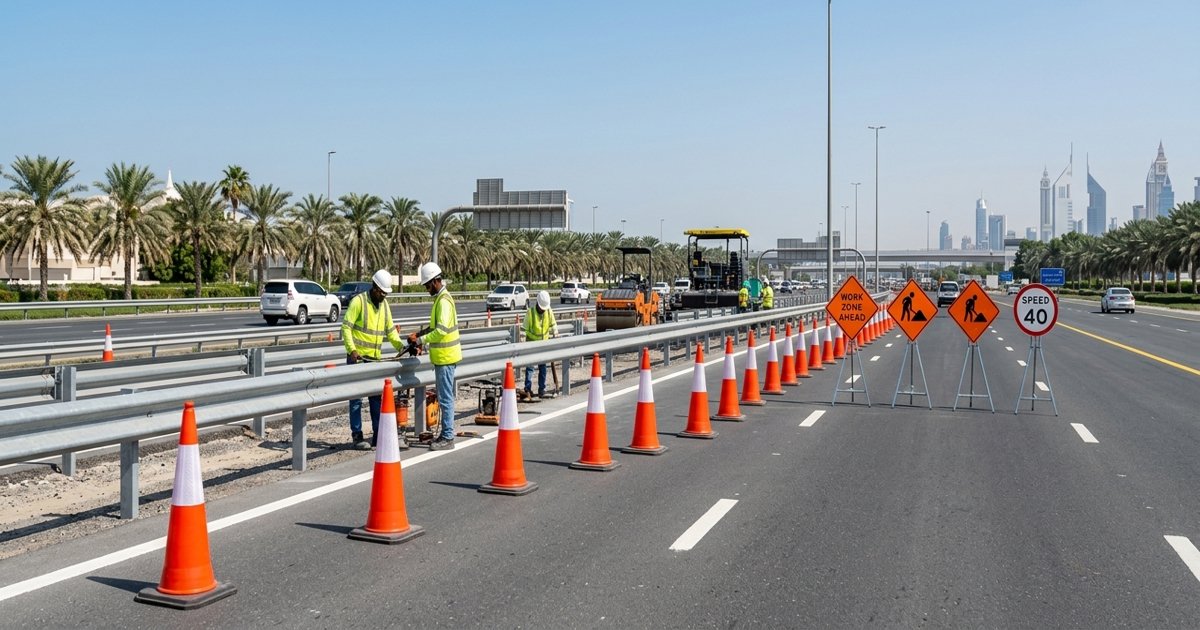
Effective construction zone traffic management requires a combination of advance warning signs, delineators, water-filled barriers, guard rails, and clearly marked temporary lanes. Each element must be positioned according to approved traffic control plans that account for traffic volume, road type, and project duration.

Companies that specialize in traffic safety solutions understand these requirements at a practical level. They bring both the materials and the expertise needed to set up compliant, functional construction zone management systems. Explore the full range of traffic management services designed to support safe and compliant project execution.

Challenge 4: Lack of Coordinated Traffic Flow Planning

Urban road networks require careful coordination between multiple authorities, contractors, and service providers. When this coordination breaks down, the result is overlapping roadworks, bottlenecks, and dangerous merging patterns. This is a common challenge in rapidly developing areas where multiple projects run simultaneously.

Addressing this requires integrated planning from the design phase. Traffic impact assessments, simulation modeling, and coordination with municipalities during the project approval process all help reduce conflicts. A reliable traffic management company UAE will work alongside planning teams to design traffic flow solutions that minimize disruption and maintain safety throughout the project lifecycle.

Durable road furniture, including properly installed guard rails and directional gantries, plays a major role in channeling traffic efficiently through complex zones. These physical systems work in tandem with digital tools and signage to guide drivers safely and clearly.

Challenge 5: Maintenance Gaps and Reactive Rather Than Proactive Servicing

One of the most underestimated challenges in traffic management is the tendency to respond to failures rather than prevent them. Waiting for a road sign to fall, a barrier to corrode, or a road marking to disappear before taking action is a reactive strategy that increases safety risk and raises long-term costs.

Proactive maintenance programs involve scheduled inspections, condition assessments, and timely replacement of degraded components. This approach extends the lifespan of infrastructure, keeps roads compliant with regulatory requirements, and significantly reduces the likelihood of accidents caused by equipment failure.

Revive Middle East provides ongoing support and servicing for traffic management products to ensure that installations remain in peak condition throughout their operational life. Building a long-term relationship with a qualified supplier means having access to consistent quality, product knowledge, and rapid response when maintenance is needed. For a detailed overview of how these services are structured, visit the completed projects portfolio to see real-world applications of traffic infrastructure solutions across the UAE.

How the Right Partner Makes the Difference

Overcoming these challenges does not require reinventing the wheel. It requires the right combination of quality products, technical expertise, and a partner who understands the UAE regulatory environment. A qualified traffic management company UAE brings all three together in one place.

From thermoplastic road markings and aluminum signage to guard rails, gantries, and road furniture, having a single source for compliant, durable products simplifies procurement, ensures consistency, and reduces the risk of non-compliant installations. Traffic safety solutions work best when they are designed as a system rather than a collection of individual parts.

The relationship between quality road markings and traffic safety is well documented, and the same principle applies to every component in the traffic management ecosystem. Quality materials, professional installation, and proactive maintenance form the core of any effective road safety strategy.

Conclusion

Effective traffic management in the UAE demands more than basic compliance. It requires a forward-thinking approach that addresses faded road markings, inadequate signage, unsafe construction zones, poor flow planning, and reactive maintenance with structured, durable solutions. By identifying these common challenges and acting on them with the right expertise and materials, road authorities and project managers can build safer, more efficient road environments. Revive Middle East is ready to support your next infrastructure project with quality products and professional service. Contact our team to discuss your traffic safety solutions requirements today.

Frequently Asked Questions

What are the most common traffic management challenges in the UAE?

The most common challenges include faded road markings, missing or damaged traffic signs, unsafe construction zones, poor traffic flow coordination, and reactive maintenance. Each issue contributes to increased road risk. Addressing them with durable materials and structured processes improves safety and compliance significantly.

How does a traffic management company UAE help improve road safety?

A qualified traffic management company UAE provides compliant products, professional installation, and ongoing maintenance support. They understand local regulatory standards and help road authorities and contractors build safer, more efficient road environments. Their technical expertise reduces the risk of non-compliant or poorly installed traffic infrastructure.

What materials are best for road markings in hot climates like the UAE?

Thermoplastic road marking materials perform best in hot climates. They offer superior durability, UV resistance, and reflectivity compared to standard paint. These materials are designed to withstand the intense heat and sun exposure common in the UAE, extending the lifespan of road markings considerably.

Why do road markings fade so quickly in the UAE?

Road markings fade quickly due to high UV exposure, extreme heat, and heavy traffic volume. Standard paint degrades faster in these conditions. Using thermoplastic paint solutions specifically formulated for hot climates is the most effective way to extend marking lifespan and maintain road visibility.

What should be included in a construction zone traffic management plan?

A construction zone plan should include advance warning signs, delineators, water-filled barriers, guard rails, temporary lane markings, and speed regulation signage. Each element must follow approved traffic control specifications based on traffic volume, road type, and project duration to ensure worker and driver safety throughout the project.

How often should traffic signs be inspected and replaced?

Traffic signs should be inspected at least twice a year and after major weather events. Reflectivity, structural integrity, and positioning must all be assessed. Signs showing visible damage, fading, or non-compliance with current standards should be replaced promptly to ensure road users receive clear and accurate information.

What is the role of guard rails in traffic safety solutions?

Guard rails are a critical component of traffic safety solutions. They prevent vehicles from leaving the road, reduce the severity of collisions, and protect pedestrians and workers near live traffic. Properly installed guard rails along highways, bridges, and construction zones significantly reduce the risk of serious accidents.

How can traffic flow planning reduce congestion and accidents?

Effective traffic flow planning uses impact assessments and coordination between project teams and municipalities. This reduces overlapping roadworks and dangerous merging patterns. Structured planning combined with well-placed road gantries and directional signage helps guide drivers safely, as seen in many traffic management projects across the UAE.

How do delineators and water-filled barriers improve safety in active work zones?

Delineators and water-filled barriers create a clear physical separation between live traffic and active work zones. They absorb impact energy, redirect errant vehicles, and provide highly visible guidance for drivers. These products are essential for maintaining safe distances between workers and moving traffic during road construction or maintenance activities.

How does proactive maintenance differ from reactive maintenance in road infrastructure?

Proactive maintenance involves scheduled inspections and planned replacements before failures occur. Reactive maintenance waits for components to fail. Proactive programs reduce safety risks, extend infrastructure lifespan, and lower long-term costs. For context on how structured servicing works, Revive Middle East support services demonstrate ongoing maintenance best practices.

Top Safety Barriers Solutions for Commercial and Infrastructure Projects

Safety barriers are the backbone of any well-planned commercial or infrastructure project. Whether you are managing a highway expansion, a construction site, or an urban development zone, choosing the right barriers can be the difference between a compliant, safe environment and a hazardous one. In the UAE, where large-scale infrastructure projects are constantly underway, understanding your options is critical. This guide walks you through the top safety barrier solutions available today and how they serve different project needs.

Key Takeaways

  • Safety barriers are essential for protecting workers, pedestrians, and motorists on commercial and infrastructure projects, and selecting the right type depends on project duration, traffic volume, and regulatory standards.
  • Proper road safety planning with certified barriers reduces risk, supports UAE compliance requirements, and ensures long-term performance across all project phases.
  • Partnering with a reliable UAE manufacturer ensures product quality, timely supply, and professional installation support throughout the project lifecycle.

Why Safety Barriers Matter on Infrastructure Projects

Large-scale infrastructure projects create complex environments where vehicles, heavy equipment, and workers share the same space. Without proper safety barriers, the risk of accidents, property damage, and project delays increases significantly. Barriers serve as physical separators that define zones, redirect traffic, and protect vulnerable areas.

In the UAE, road and construction authorities enforce strict guidelines on site safety. Meeting those standards requires choosing barriers that are durable, visible, and load-bearing. The right solution also supports efficient project workflows by keeping personnel and equipment within designated zones.

According to the Transportation Research Board, properly installed roadside barriers reduce the severity of run-off-road incidents significantly. This underlines the engineering importance of selecting certified safety barrier products.

Types of Safety Barriers Used in Commercial Projects

Not every barrier serves the same purpose. Understanding the different types helps project managers select the most appropriate solution. Here is a breakdown of the most commonly used safety barriers in commercial and infrastructure settings across the UAE.

Concrete Safety Barriers

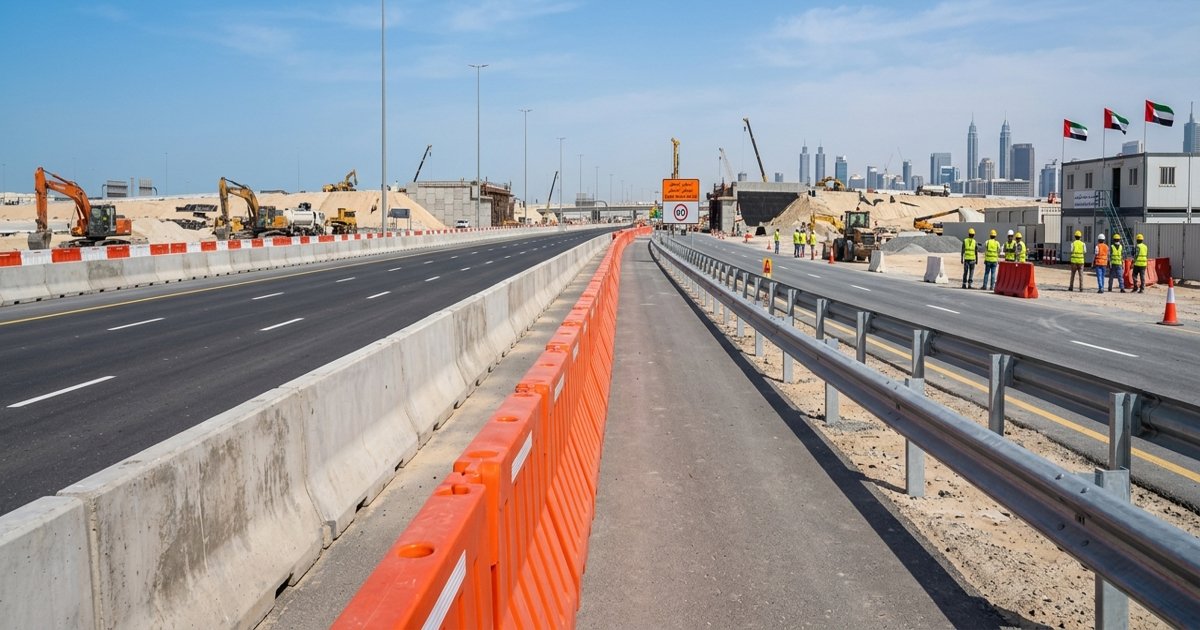
Concrete barriers, often referred to as Jersey barriers, are widely used in highway projects and long-term construction zones. These safety barriers offer maximum rigidity and resistance to vehicle impact. They are ideal for median separations, lane diversions, and perimeter protection on large infrastructure projects. Their heavy weight ensures they stay in position even under significant lateral force. Concrete barriers are a preferred choice for permanent or semi-permanent installations on major roads and bridges.

Water-Filled Plastic Barriers

Water-filled barriers are lightweight when empty and easy to transport, making them a practical solution for temporary traffic barriers on commercial sites. Once filled, they provide solid resistance and high visibility when fitted with reflective panels. They are commonly deployed in parking areas, event zones, and short-term construction setups. Their modular design allows quick reconfiguration as project phases change, offering flexibility that concrete alternatives cannot match.

Steel Guard Rails and Safety Barriers

Steel guard rails are a staple in UAE highway infrastructure. These safety barriers are engineered to absorb and redirect the energy of an impacting vehicle, reducing the chance of severe crashes. They are installed along roadsides, bridge edges, and mountain passes where fall risk is elevated. Revive Middle East manufactures and supplies guard rails and safety barrier solutions designed for high-traffic environments in the UAE, ensuring durability and compliance with local standards.

Rubber and Plastic Channeling Barriers

Rubber and plastic channeling devices are used to guide traffic flows in lower-risk environments such as car parks, warehouse entrances, and pedestrian walkways. These lightweight traffic barriers are easy to install and reposition. They are available in high-visibility yellow and orange finishes to alert drivers and pedestrians. While they are not designed for high-impact applications, they play a key role in internal traffic management for commercial properties.

Choosing the Right Safety Barrier for Your Project

Selecting the correct safety barrier requires evaluating multiple project-specific factors. A mismatch between barrier type and project need can compromise both safety and compliance.

  • Project duration: Temporary projects benefit from modular plastic or water-filled barriers, while permanent infrastructure requires concrete or steel solutions.
  • Traffic volume and speed: High-speed roads demand heavy-duty barriers with certified impact ratings.
  • Visibility requirements: Sites operating at night or in low-light conditions need barriers fitted with retroreflective elements.
  • Load and impact class: Barriers should match the containment level required by the road authority or project specification.
  • Ease of installation: Temporary commercial sites may prioritize quick-install systems to minimize downtime.

Consulting with a specialist supplier helps ensure the selected product meets UAE regulatory requirements. For a deeper look at traffic management standards and compliance in the UAE, it is worth reviewing local authority specifications before finalizing your selection.

Road Safety Standards and Compliance in the UAE

The UAE follows internationally recognized road safety standards adapted to its specific climate and infrastructure conditions. Authorities such as the Roads and Transport Authority (RTA) and Abu Dhabi Department of Municipalities and Transport set out specifications for barrier installation, maintenance, and performance ratings.

Compliance is not optional. Non-compliant barriers can lead to project delays, fines, or the need for costly reinstallation. Using products that meet local standards from the outset saves time and resources. A trusted manufacturer will provide documentation, product testing data, and installation guidance to help projects stay compliant.

For reference, the Federation Internationale de l’Automobile (FIA) supports global road safety initiatives and highlights the critical role of physical barriers in reducing fatalities on public roads. These international benchmarks often inform UAE local authority requirements.

How Safety Barriers Support Construction Site Management

Beyond highways, safety barriers are essential tools for managing construction sites. They serve three critical functions: separating work zones from public access, guiding construction vehicles along designated routes, and protecting workers from passing traffic.

In dense urban environments like Dubai and Abu Dhabi, construction projects often run alongside active roads. This makes road safety planning a top priority. Temporary barrier systems must be deployed quickly, adjusted as phases progress, and removed without damaging existing infrastructure.

Revive Middle East supports construction and infrastructure contractors by supplying barrier systems suited to complex urban environments. Explore the full range of road safety and traffic management services available to infrastructure projects across the UAE.

Maintenance and Long-Term Performance of Safety Barriers

Installing safety barriers is only part of the responsibility. Regular inspection and maintenance ensure barriers continue to perform as intended over time. Concrete barriers should be checked for cracks, displacement, or surface damage. Steel guard rails must be assessed for corrosion and deformation after any vehicle impact. Plastic and rubber barriers should be replaced when fading reduces their visibility.

A maintenance schedule aligned with project milestones helps prevent unexpected failures. For permanent road installations, periodic audits by the road authority may also be required. Working with a supplier that offers after-service support simplifies the process and keeps barriers in optimal condition throughout the project lifecycle.

To understand how road markings and other road safety elements complement barrier systems, visit the guide on why quality road markings are critical for traffic safety. Both elements work together to create a complete road safety environment.

Conclusion

Safety barriers are a fundamental part of any commercial or infrastructure project that involves traffic or public access. From concrete highway dividers to modular plastic systems for construction sites, the right barrier solution protects people, meets regulatory standards, and keeps projects on track. In the UAE, where infrastructure development is growing rapidly, choosing certified and durable barriers is a non-negotiable part of responsible project planning. Revive Middle East is committed to supplying and installing high-quality safety barrier products tailored to the needs of UAE commercial and infrastructure projects. Contact us today to discuss the right solution for your next project.

Frequently Asked Questions

What are safety barriers and why are they used on infrastructure projects?

Safety barriers are physical structures designed to separate, protect, and guide vehicles and pedestrians in hazardous zones. On infrastructure projects, they prevent unauthorized access, reduce collision impact, and help project teams comply with traffic management regulations set by UAE authorities.

What is the difference between temporary and permanent safety barriers?

Temporary barriers, such as water-filled plastic systems, are designed for short-term use and easy repositioning. Permanent barriers, like concrete or steel guard rails, are engineered for long-term installation on highways and bridges. Choosing between them depends on project duration, traffic volume, and required containment levels.

Which safety barriers are best suited for highway projects in the UAE?

Concrete Jersey barriers and steel guard rails are the most suitable options for UAE highway projects. They offer high containment levels, withstand extreme heat, and comply with Roads and Transport Authority specifications. These safety barriers are engineered to absorb and redirect vehicle impact energy effectively.

How do traffic barriers improve road safety on construction sites?

Traffic barriers define work zones, prevent unauthorized vehicle entry, and guide construction equipment along safe routes. When used alongside proper signage, they significantly reduce the risk of accidents at active construction sites in busy urban areas like Dubai and Abu Dhabi.

Are water-filled barriers effective for commercial project sites?

Yes, water-filled barriers are highly effective for commercial sites requiring flexible and temporary zone management. They are lightweight when empty, easy to transport, and provide strong resistance once filled. Their modular design allows quick reconfiguration as project phases evolve, making them a practical choice for site managers.

What standards govern safety barrier installation in the UAE?

The Roads and Transport Authority and Abu Dhabi Department of Municipalities and Transport set specifications for barrier performance, installation, and maintenance. Products should meet these local standards, which are often aligned with international benchmarks. Reviewing completed infrastructure projects can give insight into how compliant barrier systems are applied in practice.

How often should safety barriers be inspected and maintained?

Safety barriers should be inspected at regular project milestones and after any vehicle impact or severe weather event. Concrete barriers need checks for cracking, while steel guard rails require corrosion assessments. Consistent maintenance ensures barriers continue to perform at their rated containment levels throughout the project lifecycle.

Can safety barriers be customized for specific project requirements?

Yes, many manufacturers offer customizable safety barrier solutions to meet specific load ratings, dimensions, and visibility requirements. Revive Middle East supplies traffic management products tailored to UAE infrastructure conditions. Custom solutions are especially valuable for complex urban construction environments where standard barrier configurations may not suffice.

What role do road markings play alongside safety barriers?

Road markings complement safety barriers by providing visual guidance for drivers and pedestrians. Together, they create a comprehensive road safety system. Markings indicate lane boundaries and hazard zones, while barriers provide physical protection. Both elements are necessary components of any well-designed traffic management plan on infrastructure projects.

How do I choose a reliable safety barrier supplier in the UAE?

Look for a supplier with proven manufacturing capability, after-service support, and knowledge of UAE regulatory standards. Reviewing their client portfolio and product documentation helps assess reliability. A trusted partner will guide you through product selection, installation planning, and ongoing maintenance requirements for your specific project.

Safety Equipment Standards Every UAE Contractor Should Know

Safety equipment standards in the UAE are not optional. They are a legal and operational necessity for every contractor working on roads, construction zones, or public infrastructure. Whether you are managing a highway project or a temporary work zone, understanding the right safety equipment requirements can protect your workers, prevent accidents, and keep your project compliant with UAE regulations. This blog breaks down the essential standards, product categories, and best practices every UAE contractor must know before stepping on site.

Key Takeaways

  • Proper safety equipment is mandatory under UAE federal and emirate-level regulations for all contractors.
  • Road safety equipment and traffic safety equipment must meet approved standards for materials, visibility, and placement.
  • Partnering with a certified supplier ensures compliance, durability, and professional installation across all project types.

Why Safety Equipment Standards Matter for UAE Contractors

The UAE has seen rapid growth in infrastructure development over the past decade. With major road expansion projects, urban construction, and industrial zones expanding across emirates, the demand for compliant safety equipment has never been higher. Standards set by authorities such as the Ministry of Infrastructure Development and individual emirate road agencies define exactly what products are acceptable and how they must be deployed.

Non-compliance can result in project shutdowns, fines, or serious liability in the event of an accident. More importantly, the right safety equipment protects the lives of workers and road users alike. Contractors who understand these standards early avoid costly delays later in the project lifecycle.

For an overview of what compliance looks like in practice, review the UAE traffic management standards and compliance requirements that govern road and site safety across the country.

Core Categories of Road Safety Equipment Required on UAE Sites

Understanding which types of road safety equipment are required is the first step to achieving compliance. UAE sites typically require several distinct categories of equipment, each serving a specific function in protecting workers and managing traffic flow.

Traffic Signs and Signage Systems

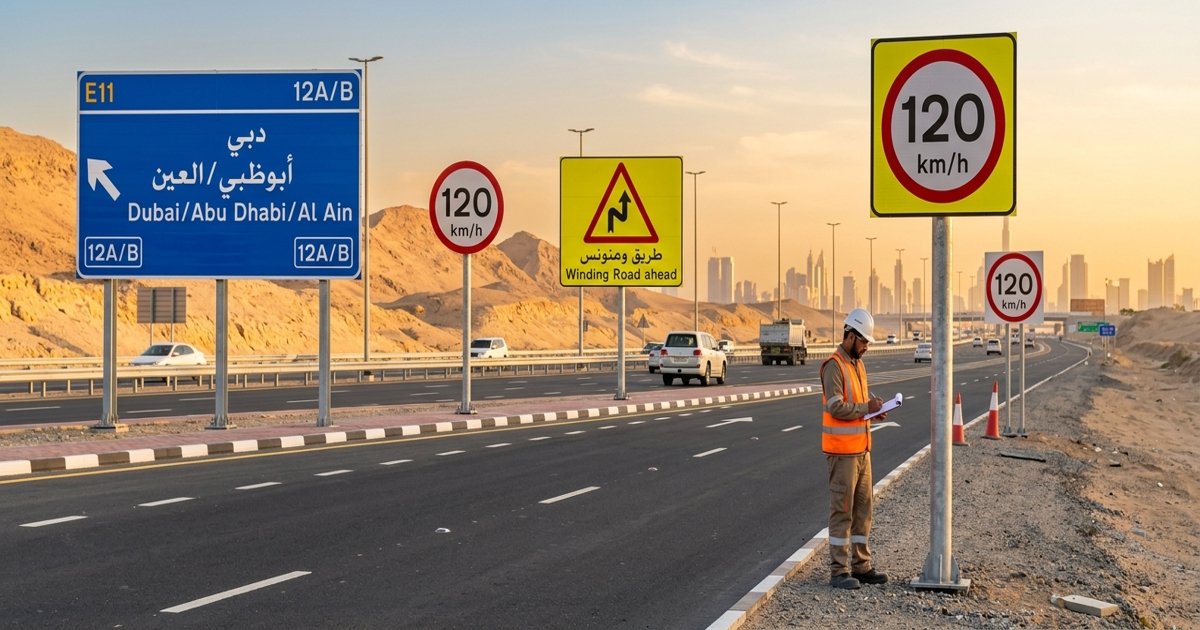
Traffic signs are among the most fundamental forms of road safety equipment. In the UAE, signs must comply with the Gulf Cooperation Council (GCC) unified traffic sign specifications and any additional emirate-level requirements. Signs must use retroreflective sheeting of the approved grade, be mounted at the correct height, and use standardized symbols and colors. For construction zones, temporary traffic signs must be clearly distinguishable from permanent infrastructure to avoid driver confusion.

Contractors must ensure their signs are manufactured to specification. Revive Middle East produces custom traffic management and road safety products designed to meet UAE regulatory requirements across both temporary and permanent applications.

Guard Rails and Physical Barrier Systems

Guard rails are a critical layer of physical protection on UAE roads and construction sites. These safety equipment systems are designed to prevent vehicles from veering into work zones, pedestrian areas, or off-road hazards. The UAE follows international standards for beam guard rail design, including specifications for post spacing, beam height, and end treatments. Highways, bridge approaches, and high-speed corridors require W-beam or thrie-beam systems depending on the impact severity rating required.

Contractors working on long-stretch road projects must factor in guard rail installation as a mandatory item in their safety plan. Improper or missing guard rails are among the most cited compliance failures during site inspections.

Road Markings and Pavement Delineation

Road markings are a form of passive road safety equipment that guides both drivers and pedestrians through work zones and altered traffic patterns. In the UAE, road marking materials must meet specific standards for retroreflectivity, durability, and skid resistance. Thermoplastic road markings are widely used due to their long service life and high visibility under both daylight and nighttime conditions.

Contractors must ensure that temporary road markings are removed cleanly after project completion and that permanent markings meet the required retroreflectivity values set by local road authorities. Revive Middle East offers professional road marking solutions that meet UAE standards for both construction and permanent infrastructure projects.

Traffic Safety Equipment for Work Zone Management

Work zone management is one of the most demanding areas of site safety. The goal is to create a clear and predictable environment for both workers and drivers. Traffic safety equipment used in work zones must follow a structured layout that guides traffic safely through or around the construction area.

Traffic Cones, Delineators, and Channelizing Devices

Traffic cones and delineators are the most commonly deployed traffic safety equipment on UAE construction sites. These devices define lane boundaries, guide vehicles around hazards, and create buffer zones between traffic and workers. UAE standards specify minimum cone height, retroreflective banding requirements, and acceptable ballast weight to ensure stability in the region’s wind conditions. Delineator posts must be flexible enough to absorb vehicle impact without causing secondary hazards.

Contractors should source cones and delineators from manufacturers who can certify product compliance. Cutting corners on these small items can lead to serious consequences during a site inspection or, worse, during an actual traffic incident.

Road Gantries and Overhead Control Systems

For large-scale road projects and highway corridors, road gantries are an essential part of the traffic safety equipment inventory. Gantries are overhead structures used to mount variable message signs, traffic signals, speed limit indicators, and warning systems. They must be engineered to withstand UAE wind load specifications and installed according to authority-approved drawings.

Revive Middle East manufactures and installs road gantries for infrastructure projects across the UAE. Their products are designed for both temporary project use and permanent highway integration. You can explore the full range of available infrastructure solutions on the Revive Middle East products page.

Personal Protective Equipment and Site-Level Safety Standards

Beyond road-facing equipment, safety equipment standards also govern what workers must wear and use on site. The UAE’s Occupational Health and Safety regulations require all workers in road construction zones to wear high-visibility vests, hard hats, safety footwear, and appropriate eye and hearing protection where needed.

Contractors must conduct regular safety briefings and maintain equipment inspection logs. All personal protective equipment (PPE) must meet approved international standards, such as EN ISO certifications, and must be replaced when worn or damaged. Sites with significant vehicle movement near workers require additional protective measures, including physical barriers between pedestrian paths and vehicle routes.

According to guidance published by the International Labour Organization, proper PPE combined with engineered control measures significantly reduces occupational injury rates in construction environments.

How to Choose the Right Safety Equipment Supplier in the UAE

Selecting a qualified supplier is as important as knowing the standards themselves. A reliable safety equipment supplier in the UAE should be able to provide product certification documentation, demonstrate knowledge of local regulatory requirements, and offer installation support where needed.

Look for suppliers with proven experience in UAE infrastructure projects, the ability to deliver custom solutions, and a clear after-service support structure. A supplier who understands both the product and the compliance landscape can save contractors significant time and risk over the course of a project.

Revive Middle East works with government authorities, municipalities, and private contractors across the UAE to supply compliant traffic management and road safety equipment. Their experience spans production, installation, and ongoing maintenance support. Visit the Revive Middle East projects page to see examples of completed infrastructure work.

Conclusion

Safety equipment standards in the UAE are comprehensive, and every contractor has a responsibility to understand and apply them correctly. From road safety equipment like guard rails and road markings to traffic safety equipment including cones, gantries, and signs, each product category plays a vital role in protecting people and ensuring smooth project execution. Staying informed, working with certified suppliers, and maintaining compliance documentation are the foundations of a well-managed UAE construction site. If you need expert guidance on compliant traffic management products for your next project, contact Revive Middle East today to discuss your requirements.

Frequently Asked Questions

What safety equipment is mandatory for road construction sites in the UAE?

Mandatory safety equipment on UAE road construction sites includes traffic signs, guard rails, road markings, traffic cones, delineators, and personal protective equipment. Workers must also wear high-visibility vests and hard hats at all times while on active construction zones near traffic.

What are the UAE standards for road safety equipment materials?

UAE standards for road safety equipment require retroreflective sheeting on traffic signs, thermoplastic or approved paint for road markings, and structural steel for guard rails. Products must comply with GCC unified specifications and any additional requirements issued by local emirate road authorities for the specific project type.

How often should traffic safety equipment be inspected on a UAE site?

Traffic safety equipment should be inspected at the start of every working shift. Damaged cones, missing delineators, faded road markings, or bent guard rails must be replaced immediately. Regular inspection logs should be maintained as documentation for authority site audits and compliance verification purposes throughout the project duration.

What is the role of road gantries in traffic management?

Road gantries are overhead structures used to mount variable message signs, traffic signals, and speed limit indicators above roadways. They are essential for managing high-volume traffic on UAE highways. Gantries must be engineered to meet local wind load specifications and installed according to authority-approved structural drawings for each site.

Are thermoplastic road markings required for all UAE construction projects?

Thermoplastic road markings are the preferred material for permanent UAE road markings due to their durability and retroreflectivity. Temporary markings during construction may use alternative materials, but they must still meet minimum retroreflectivity standards. Contractors working on road projects can learn more through resources on road marking standards and applications relevant to UAE infrastructure.

What personal protective equipment is required for workers near live traffic in the UAE?

Workers near live traffic in the UAE must wear high-visibility Class 2 or Class 3 vests, hard hats, safety footwear, and eye protection where applicable. The level of PPE required increases with traffic speed and proximity. Supervisors are responsible for ensuring all workers are correctly equipped before entering the work zone.

How does guard rail placement affect safety compliance in the UAE?

Guard rail placement must follow approved design drawings specifying post spacing, beam height, and end treatment types. Incorrect placement or missing sections can result in failed site inspections and project stoppages. Contractors managing highway or bridge projects should consult with qualified suppliers experienced in UAE infrastructure to ensure full structural and regulatory compliance.

What documents should a UAE contractor keep for safety equipment compliance?

UAE contractors should maintain product certification documents, installation records, daily inspection logs, supplier compliance certificates, and any authority approval letters for site-specific safety equipment. These records are essential during site audits and must be readily available. Contractors exploring compliant traffic management product categories can find structured guidance for documentation requirements in related resources.

Can a contractor use imported safety equipment on UAE road projects?

Imported safety equipment can be used on UAE road projects if it meets locally recognized standards, such as GCC specifications or approved international equivalents. Contractors must provide documentation proving product compliance. Local authorities may require additional testing or approvals for certain product categories before deployment on public road infrastructure projects.

What happens if a contractor fails to meet safety equipment standards in the UAE?

Failure to meet safety equipment standards in the UAE can result in project shutdowns, financial penalties, and increased liability in the event of an accident. Regulatory authorities conduct site inspections throughout project lifecycles. Contractors found non-compliant may face work suspension until corrective actions are completed and verified by the relevant authority.

Road Safety Barriers for Industrial and Commercial Facilities

Road safety is a critical concern for every industrial and commercial facility operating in the UAE. From busy warehouses and logistics hubs to construction sites and retail parks, the movement of vehicles and pedestrians creates real risks. Installing the right road safety barriers is one of the most effective ways to protect workers, visitors, assets, and infrastructure. This guide walks you through the types of barriers available, their applications, and what to consider when selecting a road safety solutions provider for your facility.

Key Takeaways

  • Road safety barriers are essential for protecting people and property at industrial and commercial facilities in the UAE.
  • Choosing the right barrier type depends on your site layout, vehicle types, and traffic safety solutions requirements.
  • Working with a professional manufacturer and installer ensures compliance, durability, and long-term performance.

Why Road Safety Barriers Matter for Industrial and Commercial Sites

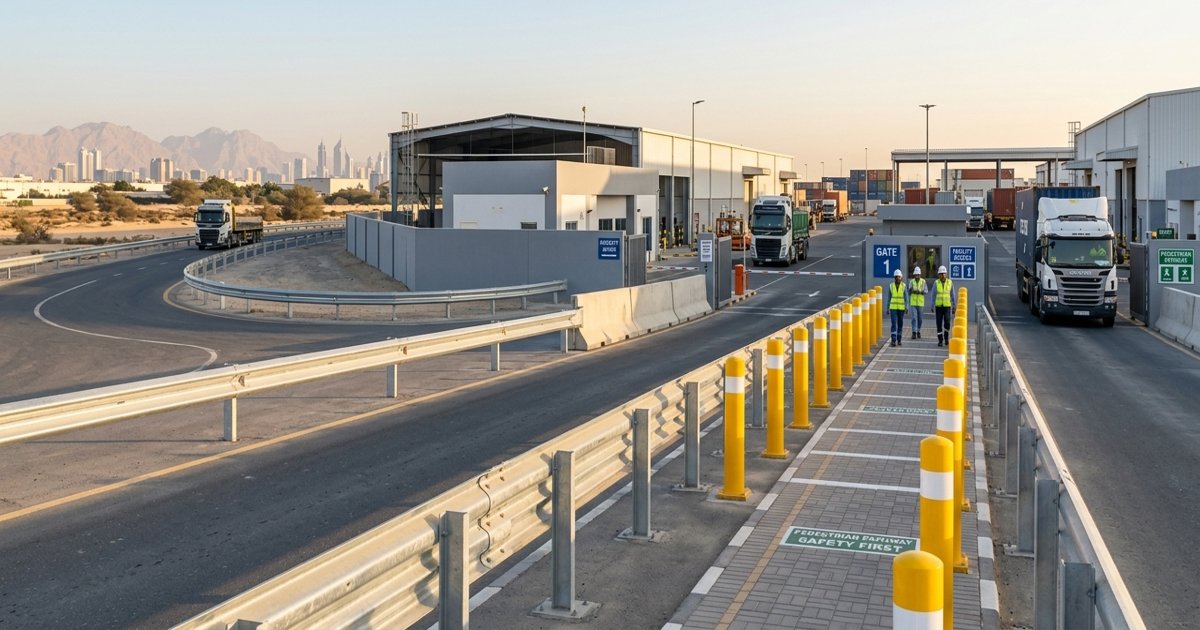
Industrial and commercial facilities handle heavy vehicles, forklifts, delivery trucks, and large volumes of pedestrian traffic every day. Without proper road safety infrastructure, these environments become accident-prone zones. Barriers define vehicle lanes, separate pedestrian walkways, and prevent unauthorized access to restricted areas.

According to the World Health Organization, road traffic injuries are a leading cause of death and injury globally, with workplace and industrial sites contributing significantly to those numbers. Proactive investment in road safety barriers reduces liability and demonstrates a commitment to safety culture.

For UAE-based facilities, aligning with local regulatory requirements from the Roads and Transport Authority is not optional. It is a mandatory element of responsible facility management. The right traffic safety solutions protect your business from legal exposure while creating a safer working environment for everyone on site.

Types of Road Safety Barriers Used in Industrial Facilities

Not every barrier serves the same purpose. The selection depends on the specific hazard, vehicle type, and the level of protection required. Here is an overview of the most commonly used barrier types in UAE industrial and commercial settings.

Guard Rails for Perimeter and Internal Protection

Guard rails are among the most widely used road safety products for industrial facilities. They are designed to absorb vehicle impact and prevent vehicles from crossing into restricted or dangerous zones. Typically manufactured from galvanized steel, guard rails are placed along the edges of roads, ramps, loading docks, and internal traffic lanes.

At Revive Middle East, our manufacturing services include the production of high-quality guard rails suited for both light and heavy vehicle environments. Proper installation ensures the barriers meet load-bearing specifications and perform reliably under real-world impact conditions.

Concrete and Jersey Barriers for High-Impact Zones

Concrete barriers, commonly referred to as Jersey barriers, are rigid and immovable. They are ideal for areas where vehicle speeds are higher or where the risk of a serious collision is elevated. In commercial and industrial contexts, they are used at entry and exit points, around fuel storage areas, and along perimeter fencing.

Concrete barriers provide a higher level of containment than flexible alternatives. They require no maintenance once installed and offer excellent longevity in the UAE’s harsh climate conditions. They are a preferred choice for facilities prioritizing maximum protection around critical infrastructure.

Plastic and Water-Filled Barriers for Flexible Deployment

Not all barriers need to be permanent. Plastic barriers, which can be filled with water or sand for ballast, offer a flexible and cost-effective solution for temporary setups. These are frequently used during construction phases, facility expansions, or for creating temporary traffic management zones during events or maintenance works.

Their lightweight design when empty makes them easy to transport and reposition. When filled, they provide substantial resistance to vehicle impact. Many facilities in the UAE use these alongside permanent road safety infrastructure to manage evolving site conditions. You can explore our range of traffic management products to find the right solution for your requirements.

Bollards for Pedestrian Zone Protection

Bollards are short, sturdy posts installed to control or prevent vehicle access to specific areas. In commercial facilities such as shopping centers, office parks, and retail outlets, bollards protect pedestrian zones, building facades, and emergency exits from vehicle intrusion. They also serve an aesthetic function in architectural settings.

Steel and concrete bollards are the most common choices for UAE commercial facilities. Fixed bollards provide permanent protection, while retractable and removable bollards allow for access flexibility when needed. Combining bollards with other traffic safety solutions creates a layered approach to site safety.

Key Considerations When Choosing Road Safety Barriers

Selecting the right road safety barriers for your facility requires more than simply picking a product from a catalog. Several factors must be evaluated to ensure the solution fits your operational environment and compliance obligations.

  • Vehicle type and speed: Heavier and faster vehicles require barriers with higher impact ratings and more robust anchoring systems.
  • Site layout: Curved roads, tight corners, ramps, and loading zones each demand specific barrier configurations to maintain effectiveness.
  • Regulatory compliance: UAE infrastructure projects must adhere to local road safety standards set by relevant transport authorities.
  • Durability in UAE climate: Barriers must withstand extreme heat, UV exposure, and occasional sandstorms without degrading.
  • Maintenance requirements: Choose products that are easy to inspect, repair, or replace to keep your facility compliant over time.
  • Visibility: Barriers in low-light areas should incorporate reflective elements or bright colors to maximize visibility for drivers.

Working with an experienced road safety solutions provider who understands UAE regulations and site-specific requirements is the most effective approach. A professional partner will conduct a site assessment, recommend appropriate products, and manage installation to the required standards. For an understanding of what effective road safety infrastructure looks like in practice, it helps to study real project applications across the region.

How Road Safety Barriers Integrate with Overall Traffic Management

Barriers do not work in isolation. A well-designed facility incorporates barriers as part of a comprehensive traffic management system that also includes road markings, traffic signs, speed control measures, and lighting. Each element supports the others to create a coherent and safe environment.

For example, guard rails along a loading bay road are most effective when paired with clear road markings that indicate vehicle lanes and pedestrian crossings. Traffic signs indicating speed limits and restricted zones further reinforce the safety system. This integrated approach reflects the operational model adopted by professional traffic safety solutions providers like Revive Middle East.

Our team supports clients across the UAE with complete traffic management setups, from initial planning and product manufacturing through to installation and after-service support. Explore our completed projects to see how integrated road safety systems have been deployed across commercial and industrial facilities in the UAE.

Compliance and Standards for Road Safety Barriers in the UAE

The UAE has clear regulatory frameworks governing road safety infrastructure. Facilities that operate within industrial zones or have significant vehicle movement are expected to align with standards set by authorities such as the Roads and Transport Authority and relevant emirate-level bodies. Non-compliance can result in operational penalties and increased liability in the event of an incident.

According to the Transportation Research Board, barrier performance standards are critical to ensuring that safety products deliver their intended protection under real-world conditions. Selecting products from a reputable manufacturer helps ensure compliance with both local and internationally recognized benchmarks.

At Revive Middle East, all products are manufactured with quality and compliance at the forefront. Our production processes are designed to meet the demands of UAE infrastructure projects, and our team provides guidance to ensure your facility meets the applicable road safety requirements. For more information on how we support facilities with compliant and durable products, visit our services overview.

Conclusion: Building Safer Facilities with the Right Road Safety Barriers

Road safety barriers are a foundational investment for any industrial or commercial facility in the UAE. Whether you need permanent guard rails, heavy-duty concrete barriers, flexible plastic barriers, or precision-placed bollards, the right solution depends on your specific site conditions and operational needs. Partnering with a qualified road safety solutions provider ensures you get products that are durable, compliant, and properly installed. Revive Middle East manufactures and supplies a comprehensive range of traffic safety solutions for facilities across the UAE. Contact our team today to discuss your facility requirements and find the right barrier system for your site.

Frequently Asked Questions

What types of road safety barriers are most suitable for warehouse facilities?

Guard rails and bollards are typically most suitable for warehouses. Guard rails protect internal vehicle lanes and loading docks, while bollards secure pedestrian zones. The best choice depends on vehicle types, traffic volume, and layout. A professional traffic management company in the UAE can assess your site and recommend the right combination.

How do I know if my facility is compliant with UAE road safety barrier standards?

Compliance depends on adherence to standards set by UAE transport and municipal authorities. Conducting a site audit with a qualified road safety solutions provider is the most reliable way to identify gaps. Revive Middle East supports clients with compliant product selection, installation, and documentation for regulatory purposes.

What is the difference between a guard rail and a Jersey barrier?

Guard rails are typically steel rails mounted on posts designed to deflect and absorb vehicle impact, keeping vehicles on the road. Jersey barriers are rigid concrete structures that completely stop or redirect vehicles. Jersey barriers suit high-impact zones, while guard rails are better for perimeter and lane delineation applications.

Can road safety barriers be customized for specific facility layouts?

Yes. Many road safety barriers, including guard rails, bollards, and plastic barriers, can be customized in length, height, color, and anchoring configuration to match specific site layouts. Working with a manufacturer like Revive Middle East allows facilities to get bespoke solutions that meet both operational and compliance requirements.

How long do road safety barriers typically last in UAE climate conditions?

Galvanized steel guard rails typically last 15 to 25 years with minimal maintenance. Concrete barriers have an even longer lifespan. Plastic barriers may degrade faster under UV exposure but can be replaced cost-effectively. Selecting materials rated for extreme heat and UV resistance is critical for UAE environments.

Are temporary barriers effective for construction sites?

Yes. Water-filled or sand-filled plastic barriers are highly effective for temporary traffic management on construction sites. They can be deployed and repositioned quickly as site conditions change. For broader guidance on managing traffic during construction, the construction traffic management resources from Revive Middle East offer practical insights.

What is the role of bollards in commercial facility road safety?

Bollards prevent unauthorized or accidental vehicle entry into pedestrian zones, building entrances, and restricted areas. They are commonly used in retail parks, office complexes, and commercial facilities across the UAE. Fixed bollards offer permanent protection, while retractable bollards allow controlled access for authorized vehicles when operational needs require it.

How does proper road safety barrier installation affect performance?

Even the best-quality barrier underperforms if installed incorrectly. Improper anchoring, incorrect spacing, and misaligned placement can significantly reduce effectiveness during a vehicle impact event. Professional installation by qualified technicians, following manufacturer specifications and UAE standards, ensures barriers perform as designed under real-world conditions.

Can road safety barriers improve traffic flow within a facility?

Absolutely. Well-placed barriers define clear vehicle lanes, separate opposing traffic, and direct drivers efficiently through complex facility layouts. This reduces congestion, minimizes conflict points between vehicles and pedestrians, and contributes to a more organized, productive operational environment. Integrated traffic management systems combine barriers with signage and markings for best results.

What should I look for in a road safety solutions provider in the UAE?

Look for a provider with manufacturing capability, installation expertise, and a track record of UAE-based projects. The provider should understand local compliance requirements and offer after-service support. Reviewing available road safety products from an established supplier gives a reliable indication of their range and quality standards.

Key Factors to Consider When Installing Traffic Signs

Traffic signs are the backbone of organized road infrastructure. Whether you are managing a highway project or an urban development, installing road traffic signs correctly is not optional. It is a critical safety requirement. Poor installation leads to driver confusion, non-compliance with regulations, and increased accident risk. In this blog, we cover the most important factors every project manager, contractor, and road authority must consider to ensure road signage serves its purpose effectively and meets UAE standards.

Key Takeaways

  • Traffic signs must be placed at correct heights, angles, and positions to ensure maximum visibility, and material quality directly affects how long road traffic signs remain effective in the field.
  • Compliance with UAE road authority regulations is mandatory for all road signage installation projects, and pre-installation site assessments reduce costly errors.

Why Correct Traffic Sign Installation Matters

Proper installation of traffic signs is not merely a construction formality. It is a direct contributor to public safety. A sign placed too low, at the wrong angle, or with poor reflective quality can fail to communicate the right information at the right moment. This creates dangerous situations for drivers, cyclists, and pedestrians alike.

According to the World Health Organization, road traffic injuries remain a leading global cause of death, with infrastructure quality playing a significant role. In the UAE, road authorities enforce strict standards to minimize these risks. Understanding those standards begins with the installation process itself.

At Revive Middle East, we manufacture and supply traffic management products that meet UAE compliance requirements. Getting installation right is part of the service we stand by.

Site Assessment Before Installing Road Traffic Signs

A thorough site assessment is the foundation of every successful road traffic sign installation project. Skipping this step leads to misplaced signs, inadequate visibility, and costly corrections after the fact.

During a site assessment, professionals evaluate the following:

  • Road geometry, including curves, slopes, and intersections
  • Existing vegetation or structures that may cause obstructions
  • Speed limits and sight distance requirements
  • Proximity to other signs to avoid information overload
  • Ground conditions for pole or mounting foundation work

Each of these factors determines where a sign should be placed, how high it should be mounted, and what type of mounting hardware is appropriate. For example, on high-speed roads, traffic signs must be positioned further in advance of a decision point to give drivers adequate reaction time. On urban roads with lower speeds, placement requirements differ significantly.

A well-documented site assessment also creates a record that helps maintenance teams inspect and replace signs efficiently over time. Learn more about how proper planning supports road infrastructure on our road safety blog.

Material Selection and Sign Durability Standards

Choosing Durable Materials for Traffic Signs

The materials used in road signage directly determine how long a sign remains functional and legible in the field. In the UAE, where temperatures regularly exceed 40 degrees Celsius and sandstorms are common, material quality is especially critical.

Key material considerations include:

  • Substrate material: Aluminum is the most widely used material for traffic signs due to its lightweight nature, corrosion resistance, and dimensional stability.
  • Retroreflective sheeting: This is the material applied to the sign face to reflect headlight beams back to drivers at night. Higher grades of retroreflective sheeting extend nighttime visibility significantly.
  • UV-resistant coatings: These protect sign colors and text from fading under intense solar radiation.
  • Anti-corrosion treatments: These are essential for posts and brackets exposed to humidity or coastal environments.

Retroreflectivity is particularly important. The Federal Highway Administration outlines minimum retroreflectivity standards that serve as a global reference point for sign visibility at night. UAE-compliant projects follow similarly rigorous standards to ensure drivers can read road traffic signs in all lighting conditions.

Using substandard materials may reduce upfront costs but results in premature sign failure, replacement expenses, and potential liability. Investing in quality materials from the start is always the smarter infrastructure decision. Explore the full range of compliant products available at Revive Middle East products.

Placement Height and Positioning Guidelines for Road Signage

Positioning Traffic Signs for Maximum Driver Visibility

Even the highest quality traffic sign will fail if it is not positioned correctly. Height, lateral placement, and orientation are all governed by road authority standards and must be followed precisely.

Standard placement guidelines cover the following key dimensions:

  • Mounting height: For most roadside installations, the bottom of the sign should be a minimum of 2.1 meters above the ground on urban roads. On rural or high-speed roads, this may increase to 2.4 meters or more.
  • Lateral clearance: Signs must be placed at a safe lateral distance from the travel lane edge to protect road workers during maintenance and to avoid vehicle strike damage.
  • Sign face angle: The sign face should be angled very slightly away from perpendicular to reduce glare caused by retroreflective materials under headlights.
  • Overhead sign clearance: Gantry-mounted or overhead road traffic signs require a minimum vertical clearance above the roadway to accommodate large vehicles safely.

These are not suggestions. They are engineering requirements that protect both drivers and infrastructure workers. Deviating from them, even slightly, can result in a sign that is either too difficult to read or creates a hazard of its own. Projects should always reference the current UAE road marking and signage standards applicable to the specific road classification.

Regulatory Compliance and Authority Approvals

In the UAE, all road traffic sign installations must comply with the relevant federal and emirate-level road authority standards. This includes obtaining proper approvals before installation begins, using approved sign designs, and following submission processes that document every aspect of the planned work.

The key compliance considerations include:

  • Conformance with UAE standard sign designs and colors as mandated by the relevant transport authority
  • Use of approved retroreflective materials that meet specified performance grades
  • Submission of traffic management plans for works on public roads
  • Post-installation inspections and sign-off from road authorities
  • Ongoing maintenance obligations to keep road signage legible and undamaged

Non-compliance exposes project owners and contractors to enforcement action, project delays, and potential legal liability if an incident occurs involving a non-compliant sign. Working with an experienced traffic management manufacturer and installer reduces this risk significantly.

For contractors and developers seeking professional guidance on compliance, our team at Revive Middle East provides end-to-end support from manufacturing to installation. You can reach our specialists through the contact us page for project consultations.

Maintenance Planning After Road Traffic Sign Installation

Keeping Traffic Signs Compliant Throughout Their Service Life

Installation is only the beginning. A traffic sign maintenance program is essential to ensure signs remain effective throughout their service life. In the UAE, environmental conditions accelerate wear and require more frequent inspection cycles than in milder climates.

A sound maintenance plan should include:

  • Regular visual inspections to identify physical damage, fading, or obstructions caused by vegetation growth
  • Retroreflectivity testing to confirm nighttime visibility still meets required performance thresholds
  • Cleaning schedules to remove dust, sand, and debris that reduce sign legibility
  • Prompt replacement of damaged or non-compliant signs without delay

Tracking sign condition through a structured reporting system allows road managers to prioritize replacements and budget appropriately. Proactive maintenance costs significantly less than reactive replacement following an incident or inspection failure.

Conclusion

Installing traffic signs involves far more than simply putting a post in the ground. From site assessment and material selection to height placement and regulatory compliance, every factor plays a direct role in how well road traffic signs protect drivers and support efficient traffic flow. In the UAE, where road infrastructure standards are high and environmental conditions are demanding, getting installation right requires expertise, quality materials, and a commitment to compliance. Revive Middle East supports infrastructure projects across the UAE with reliable manufacturing, supply, and installation services. For professional guidance on your next project, visit our traffic management standards and compliance guide or get in touch with our team today.

What is the correct mounting height for road traffic signs in urban areas?

In most urban road environments, the bottom of a traffic sign should be mounted at a minimum height of 2.1 meters above ground level. This ensures the sign is clearly visible to drivers without obstructing pedestrian movement or creating hazards along footpaths.

What materials are best suited for traffic signs in the UAE climate?

Aluminum substrates with UV-resistant retroreflective sheeting are the most suitable materials for road traffic signs in the UAE. These materials withstand extreme heat, sandstorms, and coastal humidity while maintaining legibility and reflective performance over a long service life.

Why is retroreflectivity important for road signage?

Retroreflectivity ensures that road signage reflects vehicle headlights back to drivers at night, making signs visible in low-light conditions. Without adequate retroreflectivity, drivers may fail to read critical signs in time to react safely, increasing accident risk significantly.

How does a site assessment improve traffic sign installation outcomes?

A site assessment identifies obstructions, road geometry, speed requirements, and ground conditions before work begins. This preparation ensures each traffic sign is placed at the correct position and height, reducing errors and avoiding costly post-installation corrections on live road environments.

What regulatory approvals are needed before installing road traffic signs in the UAE?

Projects must submit traffic management plans and use approved sign designs compliant with UAE transport authority standards. All materials must meet performance grades specified by the relevant emirate road authority before any road traffic sign installation work begins on public roads. Review the commonly asked infrastructure compliance questions for additional guidance.

How often should road signage be inspected after installation?

Regular visual inspections are recommended at least twice a year, with retroreflectivity testing conducted annually. In the UAE, dust and heat accelerate sign wear, making more frequent checks advisable. Consistent inspection schedules support the quality standards critical for traffic safety on all road types.

What is the difference between regulatory signs and warning signs?

Regulatory traffic signs communicate legal requirements such as speed limits or prohibited turns. Warning signs alert drivers to upcoming hazards like sharp curves or pedestrian crossings. Both categories follow specific shape, color, and size standards mandated by UAE road authorities for uniform national recognition.

Can road signage be customized for private developments and industrial sites?

Yes, road signage can be customized for private roads, industrial zones, and real estate developments. Custom signs must still follow recognized standards for visibility, materials, and legibility. Working with experienced manufacturers helps ensure that custom traffic management solutions meet both functional and safety requirements.

What causes traffic signs to deteriorate faster than expected?

Prolonged UV exposure, sandstorm abrasion, vehicle impact, and poor-quality retroreflective sheeting are the most common causes of premature sign deterioration. Using substandard materials at installation stage significantly shortens service life and increases long-term replacement costs for road authorities and infrastructure contractors.

How do I choose the right traffic sign supplier in the UAE?

Choose a supplier with proven experience in UAE compliance standards, quality manufacturing capabilities, and end-to-end installation support. Reviewing their product range, certifications, and project history helps confirm reliability. The Revive Middle East background and credentials provide a clear overview of their manufacturing and service capabilities.

Checklist for Hiring a Road Safety Contractor in UAE

Choosing the right road safety contractor UAE can make or break your infrastructure project. Whether you are a municipality, a construction company, or a transport authority, the contractor you hire directly impacts public safety, regulatory compliance, and project timelines. With so many vendors in the market, knowing what to look for is essential. This checklist walks you through every critical factor to evaluate before awarding a contract to any road safety contractor in UAE. For a broader overview of what professional road safety services involve, visit the Revive Middle East road safety services page to understand the full scope of compliant, end-to-end solutions available in the region.

Key Takeaways

  • Always verify a contractor’s licensing, experience, and product compliance before hiring any road safety contractor UAE.
  • A reliable road safety solutions provider should offer end-to-end services including manufacturing, installation, and after-service support.
  • Evaluating product quality, project track record, and technical capability will protect your investment and ensure public safety standards are met.

Why Hiring the Right Road Safety Contractor in UAE Matters

Road safety infrastructure is not a commodity purchase. Every guard rail, traffic sign, and road marking installed on a UAE road directly affects the lives of drivers, pedestrians, and workers. Selecting an underqualified road safety contractor UAE can lead to non-compliant installations, costly rework, and serious liability issues for the project owner.

The UAE has strict road safety and infrastructure standards enforced by authorities such as the Roads and Transport Authority (RTA) and various municipal bodies. A contractor who does not understand or follow these standards creates risk for everyone involved. This is why a structured evaluation checklist is not just helpful but necessary.

According to UAE Ministry of Health and Prevention, road traffic injuries remain a significant public health concern, making proper road safety infrastructure a national priority. Working with a qualified contractor is one of the most direct ways project managers can contribute to safer roads.

Checklist Item 1: Verify Licensing and Regulatory Compliance

The first step when evaluating any road safety contractor UAE is confirming they hold valid trade licenses and are registered with relevant UAE authorities. This includes checking their compliance with local municipality requirements and transport authority guidelines.

Ask for documentation proving the contractor is legally permitted to operate in your emirate. A licensed road safety solutions provider will have no hesitation in presenting these documents. Also confirm whether they follow UAE Federal Road and Transport Authority standards or the specific emirate-level regulations applicable to your project location.

  • Valid UAE trade license (current and relevant category)
  • Registration with local municipality or transport authority
  • Compliance with UAE road safety and infrastructure codes
  • Proof of relevant insurance coverage for on-site installation work

Checklist Item 2: Assess Product Range and Manufacturing Capability

A qualified road safety contractor UAE should offer a comprehensive range of traffic management products. This ensures that all components of your project can be sourced, manufactured, and installed by a single accountable partner. Fragmented supply chains create coordination gaps and accountability issues.

Look for contractors who manufacture or supply products such as traffic signs, road gantries, guard rails, streetlamp poles, aluminum railings, road furniture, and road markings. A company that handles both manufacturing and supply in the UAE ensures quality control from production through delivery. Verify that the products meet UAE and Gulf Cooperation Council (GCC) standards for durability, visibility, and performance. To explore one of the most critical product categories in detail, review the traffic signs solutions offered by Revive Middle East, which covers regulatory, warning, and informational sign categories used across UAE infrastructure projects.

  • Traffic signs (regulatory, warning, and informational categories)
  • Guard rails and highway safety barriers
  • Road gantries and overhead structures
  • Streetlamp poles and lighting infrastructure
  • Road markings and surface treatments
  • Road furniture including delineators and bollards

Checklist Item 3: Evaluate Installation Experience and Project Track Record

Product quality means little if the installation is poor. When assessing a road safety contractor in UAE, ask for a portfolio of completed projects. Request references from government bodies, municipalities, or construction companies they have worked with. A track record on comparable projects is the strongest indicator of a contractor’s real-world capability.

Pay close attention to whether the contractor has experience working on projects similar to yours in scale, environment, and complexity. Highway projects, urban road upgrades, and construction zone management each require different expertise. A proven road safety solutions provider will be able to demonstrate experience across diverse project types and conditions in the UAE.

Key questions to ask include:

  • How many road safety projects have you completed in the UAE in the last three years?
  • Can you provide references from government or municipal clients?
  • Have you worked on projects with similar scope, size, and timelines?
  • What is your average project delivery time for installations of this type?

Checklist Item 4: Confirm Technical Capability and Custom Solutions

Not all road safety projects follow a standard template. Many infrastructure projects in the UAE require custom traffic signage, non-standard gantry configurations, or site-specific road markings. A capable road safety contractor UAE should be able to produce and install customized solutions that meet your exact specifications.

Evaluate whether the contractor has in-house engineering support, design capability, and custom fabrication capacity. This is especially important for large-scale public infrastructure and real estate development projects where standard off-the-shelf products may not be sufficient. The ability to deliver tailored solutions is a strong differentiator among road safety vendors in the UAE market. Contractors who also specialize in road gantry design and installation demonstrate the kind of structural engineering depth that complex infrastructure projects require.

External guidance from bodies like the Transportation Research Board consistently highlights that contractor technical capability and adaptability are among the top factors in road safety project success. Prioritizing this criterion protects both safety outcomes and project budgets.

Checklist Item 5: Review After-Service Support and Maintenance Commitment

Road safety infrastructure requires ongoing maintenance to remain effective and compliant. When hiring a road safety contractor UAE, confirm what after-service support they provide once installation is complete. This includes periodic inspections, replacement of damaged components, and responsiveness to emergency repair needs.

A reliable road safety solutions provider will offer a clear maintenance and servicing plan as part of their contract. Ask specifically about response times for emergency repairs, the availability of spare parts, and the contractor’s capacity to service what they install over the long term. This commitment to after-sales support is often what separates professional contractors from lower-quality vendors.

  • Defined maintenance schedule post-installation
  • Emergency repair response time commitments
  • Availability of spare parts and replacement components
  • Dedicated service team or point of contact for ongoing support

Checklist Item 6: Assess Pricing Transparency and Contract Clarity

Cost is always a factor, but price should never be the only criterion when hiring a road safety contractor UAE. The lowest bid often signals compromises in product quality, installation standards, or after-service commitment. Look for transparent pricing that clearly breaks down material costs, labor, project management fees, and any post-installation service charges.

A professional contractor will provide a detailed proposal that aligns cost with scope. Review the contract carefully for clauses related to project timelines, liability, warranty coverage, and dispute resolution. Ambiguous contract terms are a red flag. Clarity in documentation reflects the contractor’s professionalism and their commitment to delivering what they promise.

Final Summary Checklist Before Hiring

Before you finalize your decision on a road safety contractor in UAE, run through this consolidated checklist one last time:

  • Valid trade license and regulatory compliance confirmed
  • Full product range covering all required traffic management components
  • Manufacturing or supply capability verified with quality documentation
  • Portfolio of completed projects and verifiable client references
  • Custom fabrication and technical design capability assessed
  • After-service and maintenance plan clearly defined in the contract
  • Transparent pricing with detailed cost breakdown provided
  • Contract terms reviewed for scope, timelines, warranty, and liability

Conclusion

Hiring a qualified road safety contractor UAE is one of the most important decisions a project manager, municipality, or infrastructure developer can make. The checklist above gives you a structured framework to evaluate every critical dimension, from licensing and product quality to installation experience and after-service support. By applying this checklist consistently, you protect your project, your budget, and most importantly, public safety on UAE roads. If you are looking for a professional and experienced partner for your next road safety project, reach out to Revive Middle East to discuss your requirements and get expert guidance tailored to your infrastructure needs.

FAQ

Q1: What qualifications should a road safety contractor in UAE have?

A qualified road safety contractor UAE should hold a valid UAE trade license, be registered with relevant transport or municipal authorities, carry proper insurance, and demonstrate experience with traffic management products that comply with UAE road safety standards and regulations.

Q2: How do I verify if a road safety contractor is licensed in the UAE?

You can verify contractor licensing by requesting their UAE trade license documents and checking registration with local municipalities or the Roads and Transport Authority. Reputable contractors will provide these credentials without hesitation as part of their standard project proposal documentation.

Q3: What products should a road safety solutions provider supply?

A full-service road safety solutions provider should supply traffic signs, guard rails, road gantries, streetlamp poles, road markings, road furniture, and aluminum railings. Having a single provider for all components improves quality control and reduces coordination risks across large infrastructure projects.

Q4: Why is after-service support important when hiring a road safety contractor?

Road safety infrastructure requires regular inspection and maintenance to remain effective. A contractor offering after-service support ensures that damaged components are replaced promptly and that installations continue to meet UAE safety standards throughout their operational lifespan, reducing long-term risk for project owners.

Q5: How do I evaluate the project track record of a road safety contractor in UAE?

Request a portfolio of completed projects and ask for references from government bodies or municipal clients. Look for experience in projects similar to yours in scope and scale, such as those involving guard rail installation and highway barrier systems, which are among the most technically demanding components in UAE road safety infrastructure.

Q6: What is the role of custom fabrication in road safety projects?

Custom fabrication is essential when standard products do not meet site-specific requirements. Large infrastructure and real estate development projects often need custom traffic signage and non-standard road safety components, making in-house engineering and fabrication capability a critical factor when selecting a qualified UAE road safety contractor.

Q7: Can a single road safety contractor manage both supply and installation in UAE?

Yes. Many experienced contractors in the UAE offer integrated services covering manufacturing, supply, and installation. Choosing a contractor with end-to-end capability simplifies project management, ensures product and installation accountability, and reduces the risks associated with using multiple vendors on the same road safety project.

Q8: What should a road safety contract include to protect the project owner?

A well-structured contract should clearly define project scope, timelines, material specifications, warranty terms, liability clauses, and dispute resolution procedures. Transparent documentation protects project owners from cost overruns, delays, and accountability gaps that commonly arise when working with lower-quality road safety vendors in competitive UAE markets.

Q9: How does hiring a qualified road safety contractor reduce project risk?

A qualified contractor ensures regulatory compliance, proper installation, and durable materials, all of which minimize the risk of rework, fines, and safety incidents. Contractors who also provide road marking services as part of their scope deliver more cohesive safety outcomes across the entire project site.

Q10: What road safety standards apply to contractors working on UAE infrastructure projects?

Contractors in the UAE must follow standards set by the Roads and Transport Authority, local municipal authorities, and applicable GCC infrastructure codes. These standards govern product specifications for traffic signs, guard rails, road markings, and other components to ensure consistency, visibility, and durability across all UAE road safety installations.

Choosing the Right Traffic Safety Equipment for Your Project

Traffic safety equipment is the foundation of every successful road infrastructure project. Whether you are managing a highway expansion, a municipal road upgrade, or a construction site near a busy corridor, choosing the right safety products can mean the difference between a well-protected environment and a hazardous one. This blog walks you through the key categories of traffic safety equipment, how to evaluate your project needs, and what factors matter most when sourcing solutions in the UAE.

Key Takeaways

  • Choosing the correct traffic safety equipment depends on project scale, location, and regulatory requirements.
  • The right traffic safety solutions combine durable materials, proper installation, and long-term serviceability.
  • Products like traffic signs, guard rails, road markings, and road furniture work together as a system, not in isolation.
  • Partnering with a qualified UAE manufacturer ensures compliance, faster delivery, and reliable after-service support.

Why Traffic Safety Equipment Selection Matters

Every road project carries risk. Heavy vehicles, pedestrian crossings, construction activity, and high-speed zones all create conditions where the wrong equipment choice can have serious consequences. Traffic safety equipment is not a one-size-fits-all purchase. A rural road project has different needs from an urban intersection upgrade or a highway toll zone.

According to the World Health Organization, road traffic injuries remain a leading global concern, reinforcing why proper safety infrastructure matters at every project stage. Selecting products that meet regional standards and site-specific demands is the first step toward a safer outcome.

For infrastructure teams across the UAE, sourcing from a local manufacturer with proven expertise, like Revive Middle East, means faster lead times, better product customization, and direct technical support throughout the project lifecycle.

Key Categories of Traffic Safety Equipment to Consider

Understanding what each product category does helps project managers build a complete safety plan. Here is a breakdown of the most essential types of traffic safety equipment used in UAE infrastructure projects.

Traffic Signs for Road Regulation and Guidance

Traffic signs are among the most visible and critical elements of any road safety system. They communicate speed limits, warnings, directions, and prohibitions to drivers and pedestrians. Poorly designed or incorrectly placed signs can create confusion and increase accident risk on high-speed corridors.

When selecting traffic signs, consider visibility requirements, retroreflectivity ratings, and weather resistance. Signs used on UAE highways must endure intense heat, sandstorms, and UV exposure. Custom signage options allow project teams to match regulatory dimensions and language requirements for both Arabic and English road users. Revive Middle East manufactures traffic signs built to regional standards and project specifications.

Guard Rails for Barrier Protection on Roads and Highways

Guard rails serve as a physical barrier between vehicles and hazardous zones, including embankments, median dividers, and pedestrian areas. They are a critical component of highway safety infrastructure, particularly on elevated roads or areas with sharp curves.

Selecting the right guard rail system means evaluating the vehicle impact class, installation environment, and corrosion resistance. Steel W-beam guard rails are common on major roads, while more complex barrier systems may be required near bridges or interchanges. Proper installation depth and post spacing are equally important. Guard rails supplied by Revive Middle East are designed for durability and compliance with UAE road safety standards.

Road Markings for Lane Guidance and Safety

Road markings are one of the most cost-effective forms of traffic safety solutions available. They guide drivers through lanes, indicate pedestrian crossings, define no-overtaking zones, and improve visibility during nighttime or low-visibility conditions.

The quality of road marking materials directly affects how long the markings last and how visible they remain under heavy traffic. Thermoplastic markings are widely used in the UAE because of their durability in high-temperature environments. Retroreflective glass beads embedded in the material ensure visibility after dark. Poor-quality markings fade quickly and can create confusion that increases accident risk on busy corridors.

Road Furniture and Streetlamp Poles for Functional Infrastructure

Road furniture includes a broad range of items such as bollards, delineators, kerb stones, and pedestrian barriers. These elements manage vehicle flow, define boundaries, and protect vulnerable road users. They are particularly important in urban environments and commercial zones where mixed traffic is common.

Streetlamp poles are another critical component, providing the lighting infrastructure that supports driver visibility during nighttime and poor weather conditions. Choosing the right pole height, material grade, and foundation design depends on road classification and wind load requirements. Streetlamp poles and road furniture supplied by Revive Middle East are engineered for both structural integrity and long-term performance in UAE conditions.

How to Evaluate Your Project Needs Before Purchasing

Before placing any order for traffic safety equipment, project teams should conduct a thorough site assessment. This process helps identify the specific hazards, traffic volumes, and environmental conditions that will influence product selection.

Key evaluation steps include the following:

  • Identifying the road classification: urban street, arterial road, highway, or construction corridor.
  • Reviewing local regulatory requirements from UAE road and transport authorities.
  • Assessing environmental conditions such as heat exposure, wind load, and sand accumulation.
  • Mapping pedestrian and vehicle conflict zones to prioritize high-risk areas.
  • Planning for future maintenance access and serviceability of installed equipment.

This structured approach prevents over-purchasing, ensures compliance, and supports more accurate project budgeting. It also reduces the risk of selecting equipment that is either underspecified for the hazard level or oversized for a low-risk zone.

Working with a UAE-Based Traffic Safety Solutions Provider

Sourcing traffic safety solutionsfrom a local UAE manufacturer offers several practical advantages over importing from international suppliers. Lead times are shorter, product specifications can be tailored to regional standards, and project teams have direct access to technical support.

Revive Middle East provides end-to-end services that cover manufacturing, supply, installation, and after-service maintenance. This integrated approach is especially valuable for large-scale government and infrastructure projects where coordination between multiple product categories is required. When your road gantries, guard rails, traffic signs, and road furniture all come from a single trusted supplier, project delivery becomes more streamlined and accountable.

According to the Transportation Research Board, consistent standards in traffic control device selection and installation are directly linked to improved road safety outcomes, underlining why supplier expertise matters beyond just product quality.

Common Mistakes to Avoid When Selecting Traffic Safety Equipment

Even experienced project managers can make avoidable errors during the equipment selection process. Understanding these common mistakes helps teams make better procurement decisions.

  • Choosing price over performance:Low-cost products that fail quickly create additional replacement costs and project delays.
  • Ignoring site-specific conditions: Equipment rated for mild climates may not perform in UAE heat and desert conditions.
  • Skipping proper installation: Even the best traffic safety equipment underperforms when incorrectly installed.
  • Overlooking maintenance planning: Products with no clear servicing plan deteriorate faster and require premature replacement.
  • Purchasing in isolation: Road safety systems work as a whole. Signs, markings, barriers, and lighting must be coordinated.

Conclusion

Choosing the right traffic safety equipmentfor your project requires more than browsing a product catalog. It demands a clear understanding of site conditions, regulatory compliance, product performance standards, and long-term serviceability. From traffic signs and guard rails to road markings and street lighting, every component contributes to a safer road environment for drivers, workers, and pedestrians. Revive Middle East offers the full range of traffic safety solutionsthat UAE infrastructure projects depend on, backed by local manufacturing expertise and professional installation support. Contact the Revive Middle East team to discuss your project requirements and receive tailored product guidance.

FAQ

Q1: What is the most important traffic safety equipment for highway projects?

For highway projects, guard rails, retroreflective traffic signs, and high-visibility road markings are among the most critical. These products work together to guide drivers, define boundaries, and reduce vehicle departure risks on high-speed corridors where accident consequences are most severe.

Q2: How do I choose the right road markings for a UAE road project?

Select thermoplastic road markings with embedded retroreflective glass beads for UAE conditions. These materials resist high temperatures and heavy traffic wear better than standard paint. Always verify that your marking material meets the specifications set by the relevant UAE roads authority before proceeding with installation.

Q3: What factors affect the selection of traffic signs for construction zones?

Key factors include retroreflectivity class, sign size based on road speed, mounting height, and material resistance to UV and heat. Construction zone signs also need to be easily repositioned as site conditions change, so lightweight aluminum substrates with portable mounting solutions are often recommended for active project corridors.

Q4: Are guard rails required for all road types in the UAE?

Guard rail requirements depend on road classification, adjacent hazard type, and design speed. Highways, elevated roads, and roads adjacent to water bodies or steep embankments typically mandate barrier systems. Urban local streets may require only kerb-level protection. Always consult applicable UAE road design standards when planning barrier placement.

Q5: What is road furniture and why does it matter for traffic safety?

Road furniture refers to physical infrastructure elements like bollards, delineators, and pedestrian barriers that manage vehicle and pedestrian movement. These elements define safe zones, prevent unauthorized vehicle access, and reduce conflict between road users, contributing directly to organized and safer traffic flow in urban and commercial areas.

Q6: How long does traffic safety equipment typically last in UAE conditions?

Lifespan varies by product type and material quality. Steel guard rails treated for corrosion resistance can last over 15 years. Thermoplastic road markings typically last three to five years under heavy traffic. Traffic signs with quality retroreflective sheeting generally remain effective for seven to ten years when properly maintained and cleaned regularly.

Q7: Can traffic safety solutions be customized for specific project requirements?

Yes. Many manufacturers offer custom dimensions, bilingual text for Arabic and English signage, specific RAL color codes for road furniture, and tailored post configurations for guard rails. Working with a UAE-based supplier makes customization more practical, as technical teams can review site drawings and advise on the most suitable product specifications.

Q8: What role do streetlamp poles play in traffic safety?

Streetlamp poles provide the lighting infrastructure that improves driver and pedestrian visibility during nighttime hours. Proper pole height, spacing, and luminaire selection directly affect how well road users can see lane markings, signs, and hazards ahead. Inadequate road lighting is a known contributing factor in nighttime accident statistics across many urban environments.

Q9: How should traffic safety equipment be maintained after installation?

Routine maintenance should include inspecting sign faces for damage and fading, checking guard rail post integrity and fastening, reapplying worn road markings, and cleaning reflective surfaces. Establishing a scheduled maintenance program with your supplier extends product lifespan and ensures safety standards remain consistently intact throughout the equipment service life.

Q10: Why is it better to source traffic safety solutions from a local UAE manufacturer?

Local manufacturers understand UAE climate conditions, regulatory standards, and logistical constraints. They offer faster lead times, easier project coordination, and direct technical support. Products are also more likely to be pre-tested for regional conditions like extreme heat and sandstorm exposure, reducing the risk of premature failure on active project sites.

Types of Road Signage and Their Importance in Traffic Control

Road signage is one of the most essential components of any modern traffic management system. Every time a driver slows down at a speed limit sign or a pedestrian stops at a crossing signal, effective signage is doing its job. In the UAE, where road networks support high traffic volumes across urban and industrial zones, the quality and placement of road signs directly impact public safety. This blog explores the major types of road signage, their roles in traffic control, and why investing in proper signage infrastructure matters for roads, municipalities, and construction projects alike.

Key Takeaways

  • Road signage serves three core functions: warning, regulating, and guiding road users across all environments.
  • Combining road marking and signage creates a layered communication system that significantly improves traffic flow and road safety.
  • Partnering with a professional signage company ensures compliant, durable, and correctly installed traffic signs for any project scale.

What Is Road Signage and Why Does It Matter?

Road signage refers to all physical signs placed alongside, above, or on road surfaces to communicate rules, warnings, and directions to road users. These signs form the backbone of any traffic control system. Without them, roads become unpredictable and hazardous environments for drivers and pedestrians alike.

In the UAE, road authorities follow strict guidelines for sign placement, sizing, and visibility. Proper road signage reduces driver confusion, lowers the risk of collisions, and supports the smooth movement of vehicles through complex intersections and highways. According to the World Health Organization, road traffic injuries remain a leading global cause of death, and effective signage is one of the most cost-efficient countermeasures available.

For infrastructure developers, municipalities, and contractors, understanding the types and functions of road signs is the first step toward building safer, more efficient road networks. A trusted traffic management solutions provider ensures every sign meets the required specifications and is correctly installed according to local authority requirements.

The Three Core Categories of Road Signage

Road signs are broadly classified into three categories based on their purpose. Each type uses distinct colors, shapes, and symbols to communicate instantly with road users, even at high speeds.

1.1.1. Regulatory Signs

Regulatory signs inform drivers of traffic laws and rules that must be followed. These are legally binding instructions placed on roads to enforce speed limits, right-of-way rules, parking restrictions, and more. In the UAE, regulatory signs typically use red and white color schemes with standardized shapes to maximize recognition.

Common examples include stop signs, speed limit signs, no-entry signs, and no-parking indicators. Failing to comply with regulatory signage can result in fines or accidents. Because these signs carry legal weight, their quality, placement, and visibility are critical. Working with an experienced signage company ensures these signs are manufactured to comply with local traffic authority standards and are positioned for maximum effectiveness.

1.1.2. Warning Signs

Warning signs alert road users to potential hazards ahead, giving them enough time to adjust speed or direction. These signs do not enforce rules but communicate risks such as sharp curves, road merges, pedestrian crossings, or roadworks zones.

In the UAE, warning signs are typically diamond-shaped with yellow or amber backgrounds and black symbols. They are placed at distances calculated to allow safe reaction time based on the road’s speed limit. Construction zones and industrial areas rely heavily on warning signs to protect both workers and passing drivers. High-visibility materials and reflective coatings are standard requirements for warning sign production to ensure they remain readable at night and in low-light conditions.

1.1.3. Informational and Guide Signs

Guide signs help road users navigate routes, locate services, and understand distances. These include highway exit signs, direction boards, distance markers, and facility signs for hospitals, fuel stations, and rest areas.

In high-density urban environments and along major highways in the UAE, guide signs are often mounted on road gantries for overhead visibility. Clear, well-maintained informational signage reduces sudden lane changes and last-minute braking, both of which contribute to traffic congestion and accidents. The design, font size, and illumination of guide signs are carefully engineered to ensure readability at highway speeds.

The Role of Road Marking and Signage Together

Effective traffic control is never achieved through signs alone. Road marking and signage work as a complementary system, reinforcing each other to deliver consistent, clear messages to road users at all times.

Road markings include lane lines, stop lines, pedestrian crossings, arrows, and text painted directly onto the road surface. When combined with vertical road signs, they create a layered communication environment. For example, a speed limit sign is reinforced by speed markings painted on the road. A no-overtaking sign is supported by continuous center-lane markings. This combination removes ambiguity and helps drivers make safe decisions quickly.

Specialist traffic management suppliers provide both road markings and traffic signs as part of integrated solutions. This ensures consistency across all elements of a road safety setup, whether for a new highway, an urban development project, or a construction site.

Specialized Road Signage for Construction and Industrial Zones

Construction and industrial environments present unique traffic management challenges. Temporary road signage plays a crucial role in directing traffic safely through active worksites, protecting both construction crews and passing vehicles.

Temporary signs include lane closure indicators, detour signs, speed reduction boards, and worker-ahead warnings. These must be robust enough to withstand outdoor conditions while remaining clearly visible under dust, wind, and varying light conditions common in UAE construction environments. Reflective sheeting and weather-resistant materials are standard requirements for temporary road signs in these settings.

Beyond temporary use, permanent signage in industrial parks and warehousing zones also requires careful planning. Signs must account for heavy vehicle movements, blind corners, and pedestrian zones within the facility. A professional signage company with experience in industrial environments will assess site-specific risks and recommend the correct sign types, sizes, and placements.

Why Choosing the Right Signage Company Matters

The quality and compliance of your road signage depends significantly on the manufacturer and installer you choose. Not all signage is created equal, and substandard signs can fade, warp, or become illegible within a short period, especially under the intense UAE sun.

A reliable signage company offers more than just supply. It provides engineering consultation, compliant manufacturing, professional installation, and ongoing maintenance. These services are essential for government authorities, municipalities, road contractors, and private developers who require durable, regulation-ready traffic signs and road markings.

Factors to consider when selecting a signage partner include material quality, knowledge of UAE traffic standards, installation capabilities, and after-service support. Signs that are incorrectly installed or made from inferior materials can pose liability risks and require costly replacements. Investing in quality from the start delivers long-term savings and, more importantly, keeps road users safe.

Standards and Compliance in UAE Road Signage

All road signage in the UAE must conform to standards set by the relevant federal and emirate-level road authorities. These standards govern sign dimensions, color specifications, reflectivity grades, font types, and installation heights. Compliance is not optional. Non-conforming signs can be rejected during project inspections or, worse, contribute to accidents due to poor visibility or confusing messaging.

The Transportation Research Board provides globally referenced guidelines on sign design and traffic control that inform many national standards, including those applied in the UAE. Staying current with these standards is essential for any infrastructure project. Qualified suppliers maintain production processes aligned with applicable UAE traffic management requirements, ensuring all delivered products meet project and regulatory specifications.

Conclusion

Road signage is far more than a functional necessity. It is a critical safety infrastructure that supports the movement of millions of road users every day. From regulatory signs that enforce traffic laws to warning signs that prevent accidents and guide signs that assist navigation, each category of road signage plays a distinct and irreplaceable role. When combined with quality road marking and signage systems, they create the safest possible road environment. Choosing a trusted signage company with proven expertise in UAE road standards ensures your road infrastructure lasts under local environmental conditions and supports the long-term safety goals of your project.

FAQ

Q1: What are the main types of road signage used in traffic control?

The three main types of road signage are regulatory signs, warning signs, and informational or guide signs. Each category uses distinct colors and shapes to communicate specific messages to road users, ensuring safe and orderly traffic flow on all road types.

Q2: Why is road signage important for road safety in the UAE?

Road signage is critical in the UAE because it guides high volumes of traffic across complex urban and highway networks. Properly installed signs reduce driver confusion, prevent collisions, and support compliance with local traffic laws, making roads safer for drivers, cyclists, and pedestrians.

Q3: What is the difference between road marking and signage?

Road marking and signage serve complementary roles. Road markings are painted directly onto the road surface to indicate lanes, crossings, and speed zones. Road signs are vertical structures that communicate rules, warnings, and directions. Together, they form a comprehensive layered traffic communication system.

Q4: What materials are used in manufacturing road signs for UAE conditions?

Road signs in the UAE are typically made from high-grade aluminum with retroreflective sheeting. These materials resist intense heat, UV exposure, and sandstorms. Reflective coatings ensure visibility at night and in low-light conditions, extending the service life of signs in harsh desert environments.

Q5: How does a signage company ensure compliance with UAE traffic standards?

A professional signage company follows UAE traffic authority specifications for sign dimensions, color codes, reflectivity grades, and installation heights. Compliance checks are built into the manufacturing and installation process, ensuring every delivered sign meets regulatory requirements for public road and private infrastructure projects.

Q6: What types of road signs are required in construction zones?

Construction zones require temporary road signage including lane closure signs, detour boards, worker-ahead warnings, and speed reduction indicators. These signs use high-visibility colors and reflective materials to protect workers and drivers. They must be regularly inspected and repositioned as site conditions change throughout the project lifecycle.

Q7: How often should road signs be inspected and replaced?

Road signs should be inspected at least annually for fading, physical damage, and reflectivity loss. In high-traffic or extreme-weather areas like the UAE, more frequent checks are recommended. Signs that no longer meet visibility or compliance standards should be replaced promptly to maintain road safety and regulatory compliance.

Q8: Can road signage be customized for private developments and industrial parks?

Yes, road signage can be customized for private developments, industrial parks, and gated communities. Custom signs can include facility-specific directions, speed limits, hazard warnings, and branded wayfinding boards. A qualified signage supplier provides tailored solutions that meet both safety standards and site-specific operational requirements effectively.

Q9: What role do road gantries play in traffic sign visibility?

Road gantries are overhead structures used to mount guide and informational signs above multi-lane roads and highways. They improve visibility for all lanes simultaneously, reducing missed exits and sudden maneuvers. Gantry-mounted signs are especially important on high-speed UAE highways where roadside signs alone cannot reach all drivers.

Q10: How do I choose the right signage company for a large infrastructure project?

For large infrastructure projects, choose a signage company that offers end-to-end services including manufacturing, supply, installation, and maintenance. Verify their experience with similar project scales, their knowledge of UAE traffic regulations, and their ability to deliver compliant products on time within the agreed project schedule.